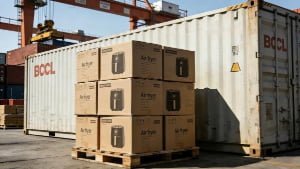
A slow after-sales process turns small air fryer claims into refunds, bad reviews, and supplier disputes. I see this risk before many bulk orders.
Air fryer importers should set up a documented after-sales service process covering claim intake, warranty validation, claim classification, remedy selection, spare-parts control, supplier recovery, and safety escalation before bulk orders begin.

Many importers talk about after-sales service only after the first complaints arrive. I think that is too late. In our OEM and ODM air fryer projects, I prefer to discuss the after-sales process before mass production. The reason is simple. Customer service, warehouse, repair center, quality team, and purchasing team all need the same workflow. If every case is handled by informal messages with the factory, the importer will lose time, evidence, and bargaining power. A clear process helps normal claims move faster and helps serious safety issues rise to the right people early.
What After-Sales Service Process Should Air Fryer Importers Set Up Before Bulk Orders?
A bulk air fryer order should not ship before the buyer knows how claims will be handled. The process must be ready before sales begin.
Before bulk orders, air fryer importers should set up claim intake, warranty validation, defect classification, remedy selection, spare-parts inventory, supplier recovery, and safety escalation procedures.
A good after-sales process starts with one standard claim intake form. Every claim should collect proof of purchase, model number, serial number, batch code, purchase date, sales channel, failure description, photos, and video evidence. The form should also ask direct safety questions. Did the customer report smoke, fire, melting, overheating, burning smell, electrical shock, glass breakage, injury, or property damage? These questions matter because safety-related cases should never be mixed with normal warranty tickets.
Basic Air Fryer After-Sales Workflow
| Step | Main Action | Main Purpose |
|---|---|---|
| Claim intake | Collect customer and product information | Build a complete case record |
| Warranty validation | Check period, channel, and coverage | Confirm if the claim is valid |
| Claim classification | Sort by defect type and risk level | Choose the correct response |
| Remedy selection | Spare part, repair, replacement, refund, or escalation | Control service cost and safety risk |
| Supplier recovery | Record confirmed defects and claim costs | Support compensation from supplier |
| Performance review | Track claim rate, repair time, and response speed | Improve service and product quality |
The process should be written in simple language. Customer service staff should know what to ask. Warehouse staff should know which spare parts can be sent. Repair centers should know which parts require technician repair. The quality team should know which cases need safety review. The purchasing team should know when to push the supplier for free spare parts, replacement units, or credit notes.
For air fryers, this is especially important because the product includes heating parts, control boards, fans, sensors, baskets, handles, and plastic housing. Some claims are simple. Some claims are technical. Some claims are safety-critical. The after-sales process must separate these cases from the first contact.
How Should Air Fryer Importers Classify Air Fryer Warranty Claims, Repair Cases, and Replacement Requests?
If all claims enter the same service path, simple issues become slow and serious issues become hidden. Classification protects both speed and safety.
Air fryer importers should classify claims into simple accessory claims, minor cosmetic or mechanical issues, internal functional failures, and safety-critical failures. Each category should have a different service rule.
Claim classification is the core of after-sales control. It helps the importer decide whether to send a spare part, offer credit, arrange repair, replace the full unit, refund the customer, or escalate the case. Without classification, customer service may send the wrong part, delay a full replacement, or treat a safety risk as a normal complaint.
Air Fryer Claim Classification Table
| Claim Category | Common Examples | Recommended Action |
|---|---|---|
| Simple accessory claim | Missing tray, damaged basket, rubber feet, knob, grill plate | Send spare part directly to customer |
| Minor cosmetic or mechanical issue | Scratched coating, drawer fit issue, small plastic deformation, loose external part | Spare part, partial credit, or replacement based on severity |
| Internal functional failure | No power, fan failure, heating failure, display failure, PCB fault, motor noise, sensor failure | Service center repair or full-unit replacement |
| Safety-critical failure | Smoke, fire, melting, overheating, burning smell, electrical short, exposed wiring, injury | Immediate escalation and quality review |
Consumer-replaceable parts can usually be shipped directly to customers with clear instructions. These include baskets, crisper trays, grill plates, silicone feet, knobs, handles, and some non-electrical accessories. This can reduce refunds and avoid replacing a full air fryer when only one part is missing or damaged.
Service-replaceable parts should be handled differently. PCBs, display boards, fan motors, temperature sensors, thermostats, thermal fuses, drawer switches, power cords, internal wiring, and heating elements should usually be repaired by trained technicians or authorized repair centers. I do not suggest sending internal electrical or heating parts casually to end users. It may create safety risk and may also create new liability for the importer.
For low-value products or complex internal failures, full-unit replacement can be cheaper and safer than repair. The policy should allow this decision.
Which Air Fryer Defects Should Trigger Supplier Responsibility in the After-Sales Service Process?
A supplier should not be responsible for every customer mistake. But confirmed manufacturing defects must create clear supplier responsibility.
Supplier responsibility should be triggered by defects caused by materials, workmanship, manufacturing, wrong components, unstable performance, poor assembly, safety-related production issues, or repeated batch-level failures.
The importer should define supplier responsibility before placing the order. This should be written in the purchase agreement or supplier contract. A simple “one-year warranty” is not enough. The agreement should explain which defects are covered, what evidence is needed, what response time is required, and what remedies the supplier must provide.
Defects That Should Trigger Supplier Responsibility
| Defect Type | Example | Supplier Responsibility |
|---|---|---|
| Material defect | Cracked plastic housing under normal use | Replacement parts, credit, or corrective action |
| Workmanship defect | Loose handle, poor assembly, wrong screw torque | Free parts or repair support |
| Functional defect | No heat, no power, display failure, fan failure | Replacement, credit, or parts support |
| Coating defect | Basket coating peels early under normal use | Basket replacement or credit |
| Safety-related defect | Overheating, smoke, melting, electrical short | Immediate investigation and corrective action |
| Batch-level defect | Same failure appears across many units | Broader supplier remedy and root cause analysis |
Common exclusions can still apply. Misuse, wrong voltage, commercial overuse, unauthorized repair, water damage caused by the user, physical abuse, and normal wear may be excluded. But exclusions should not be used to reject every claim. If the same failure appears many times in the same batch, the importer should treat it as possible supplier responsibility.
I suggest adding a defect-rate threshold to the supplier agreement. For example, if confirmed defects exceed 3% during the warranty period, the supplier should provide broader support. This support may include free spare parts, replacement units, credit notes, refund for confirmed defective units, or shared after-sales cost. Safety-related defects should not wait for a 3% threshold. They should trigger immediate review, batch tracing, and corrective action.
How Can Air Fryer Importers Verify Spare Parts Availability Before Launching After-Sales Service?
A spare parts promise sounds helpful. But it is not useful if parts have no codes, no stock, no lead time, or no repair guidance.
Air fryer importers should verify spare parts availability by checking part codes, stock quantity, MOQ, lead time, pricing, exploded diagrams, repair instructions, compatible models, and long-term supplier support.
Spare parts control should be linked to the warranty process. The importer should know which parts are stored locally, which parts are stored at the supplier, which parts can be sent to consumers, and which parts must go through repair centers. This should be ready before sales launch.
Spare Parts Availability Checklist
| Check Item | What Importer Should Confirm | Why It Matters |
|---|---|---|
| Part code | Each part has a unique code | Prevents wrong part shipment |
| Part photo | Clear image of each spare part | Helps service teams identify parts |
| Compatible model | Which air fryer model and version it fits | Avoids mismatch after design changes |
| Stock quantity | Local and factory stock level | Supports fast service response |
| MOQ | Minimum reorder quantity | Controls spare-parts cost |
| Lead time | Time needed for replenishment | Helps plan warranty inventory |
| Price list | Cost for future orders | Supports service budgeting |
| Exploded diagram | Product structure drawing | Helps repair center locate parts |
| Repair instruction | Basic repair guidance | Reduces repair mistakes |
| Availability period | At least 2–3 years after last shipment | Supports long-term service |
For air fryer importers, I suggest stocking user-replaceable parts in higher quantities. These include baskets, trays, grill plates, knobs, handles, rubber feet, and simple external accessories. These parts can solve many customer complaints quickly.
Internal electrical and heating parts should be controlled more carefully. PCBs, motors, sensors, thermostats, thermal fuses, wiring, and heating elements should normally be held by repair centers or trained technicians. These parts should not be handled like normal accessories.
In our projects, I also suggest that the supplier provide a free initial spare-parts kit with the bulk order. The kit should match the agreed model and order quantity. It should not be random. The importer should inspect the spare-parts kit during pre-shipment inspection.
What Documents Should Air Fryer Importers Collect for Warranty Claims and Supplier Compensation?
Supplier compensation depends on evidence. Without organized documents, the importer may pay for defects that should be recovered from the factory.
Air fryer importers should collect proof of purchase, model number, serial number, batch code, photos, videos, defect description, repair record, customer remedy, and cost records for warranty and supplier compensation.
Every confirmed defect should be recorded in a claim database. This database should not only serve customer service. It should also support supplier recovery, quality tracking, and batch investigation. The importer should be able to show the supplier what happened, when it happened, which batch was involved, what evidence was collected, and how much the remedy cost.
Warranty Claim Document Checklist
| Document or Record | Purpose |
|---|---|
| Proof of purchase | Confirms warranty period and sales channel |
| Model number | Identifies the exact product |
| Serial number | Tracks the individual unit |
| Batch code | Links claim to production batch |
| Failure description | Explains the customer complaint |
| Photos | Show visible defects or damage |
| Videos | Show functional failure, noise, display issue, or no power |
| Repair report | Shows technician findings and action |
| Spare-parts record | Tracks parts used for the claim |
| Customer remedy record | Shows replacement, refund, repair, or credit |
| Cost record | Tracks parts, freight, refund, labor, and replacement cost |
| Safety report | Records smoke, fire, melting, overheating, injury, or property damage |
I suggest sending monthly or quarterly defect reports to the supplier. These reports should include claim rate, main defect types, batch codes, photos, videos, cost records, and proposed corrective actions. This creates a regular review rhythm. It also makes supplier recovery more professional.
If the defect rate exceeds the agreed threshold, the importer should request support based on the contract. This may include free spare parts, replacement units, credit notes, refund, or shared after-sales cost. The better the evidence, the easier the discussion becomes. In our supplier communication, clear data is always stronger than emotional complaints.
How Should Air Fryer Importers Measure After-Sales Service Performance Across Repair Time, Claim Rate, and Customer Response?
After-sales service cannot improve if the importer only reacts to complaints. The process needs numbers that show speed, cost, quality, and risk.
Air fryer importers should measure after-sales performance by tracking first response time, resolution time, claim rate, defect rate by batch, spare-parts fill rate, repair success rate, replacement rate, refund rate, and safety escalation cases.
After-sales service should be reviewed like a business process. The importer should not only ask, “Was the customer satisfied?” The importer should also ask, “How fast did we respond? How much did the claim cost? Which batch created the issue? Which part failed most often? Did we identify safety risks early?”
Air Fryer After-Sales Performance Metrics
| Metric | What It Measures | Why It Matters |
|---|---|---|
| First response time | Time from customer claim to first reply | Affects customer satisfaction |
| Resolution time | Time from claim intake to final solution | Shows process efficiency |
| Claim rate | Claims divided by units sold | Shows overall after-sales pressure |
| Defect rate by batch | Confirmed defects by production lot | Finds batch-level problems |
| Spare-parts fill rate | Parts available when needed | Shows inventory readiness |
| Repair success rate | Repairs completed without repeat failure | Shows service quality |
| Replacement rate | Full-unit replacements as a share of claims | Shows cost pressure |
| Refund rate | Refunds as a share of claims | Shows customer loss risk |
| Safety escalation count | Serious cases separated for review | Protects compliance and brand safety |
| Supplier recovery amount | Credit, parts, or support received | Shows cost recovery strength |
These metrics help the importer make better decisions. If basket claims are high, the coating or packing method may need review. If display failures appear in one batch, the importer should check PCB version and production records. If repair time is too long, local spare parts may be insufficient. If refund rate is high, the claim classification or service policy may be too slow.
The goal is not to repair every unit at all costs. Some air fryers should be repaired. Some should be replaced. Some should be refunded. Some should be quarantined for safety review. A strong after-sales process helps the importer choose the right path quickly. It protects customer satisfaction, reduces unnecessary refunds, supports supplier compensation, and prevents safety complaints from being treated as ordinary service tickets.
Conclusion
A strong air fryer after-sales process helps importers solve normal claims faster and identify warranty, spare-parts, repair, and safety risks earlier.
FAQ:
What after-sales service process should air fryer importers set up?
Air fryer importers should set up claim intake, warranty validation, claim classification, remedy selection, spare-parts control, supplier recovery, performance tracking, and safety escalation before bulk orders are sold.
What information should an air fryer warranty claim form collect?
An air fryer warranty claim form should collect proof of purchase, model number, serial number, batch code, purchase date, sales channel, failure description, photos, videos, and safety-related complaint details.
How should importers classify air fryer warranty claims?
Importers should classify air fryer warranty claims into simple accessory claims, minor cosmetic or mechanical issues, internal functional failures, and safety-critical failures. Each category should have a different remedy rule.
Which air fryer defects should trigger safety escalation?
Air fryer defects involving smoke, fire, melting, overheating, burning smell, electrical shock, glass breakage, exposed wiring, injury, or property damage should trigger immediate safety escalation and supplier notification.
Which air fryer parts can be sent directly to customers?
Consumer-replaceable air fryer parts can usually be sent directly to customers. These include baskets, trays, grill plates, rubber feet, knobs, handles, and simple non-electrical accessories with clear instructions.
Which air fryer parts should only be handled by service centers?
PCBs, display boards, fan motors, sensors, thermostats, thermal fuses, drawer switches, power cords, internal wiring, and heating elements should normally be handled by trained technicians or authorized service centers.
What documents help air fryer importers claim compensation from suppliers?
Useful documents include proof of purchase, serial numbers, batch codes, photos, videos, defect descriptions, repair reports, spare-parts usage records, customer remedy records, freight costs, refund costs, and replacement costs.
How should air fryer importers measure after-sales service performance?
Air fryer importers should track first response time, resolution time, claim rate, defect rate by batch, spare-parts fill rate, repair success rate, replacement rate, refund rate, safety escalation cases, and supplier recovery amount.