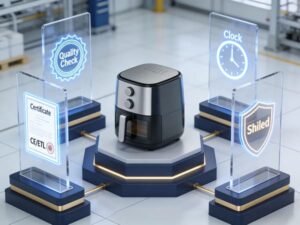
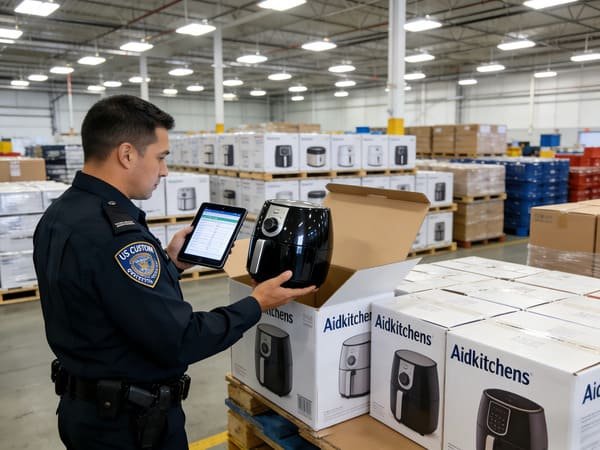
Are you worried your air fryer shipment from China will get stuck at the US border? FDA compliance feels complex, and a single mistake can lead to costly delays or rejection.
To confirm FDA compliance, you must verify that the air fryer’s food-contact materials are safe. This involves obtaining third-party lab test reports from your supplier. The FDA does not pre-approve appliances; the responsibility for proving compliance falls entirely on you, the importer.
Navigating these rules is a key part of the import process. Let’s break down exactly what you need to do to ensure your products enter the US smoothly.
What FDA requirements apply to air fryers imported into the US?
When we design new air fryers for our clients, the first compliance question is always about US regulations. It’s frustrating to invest in a product only to face uncertainty about its legality.
The FDA requires that all materials in your air fryer that touch food, like the basket’s non-stick coating and any plastic parts, are safe. The FDA does not "approve" the entire appliance but regulates these specific food-contact substances to ensure they don’t leach harmful chemicals.
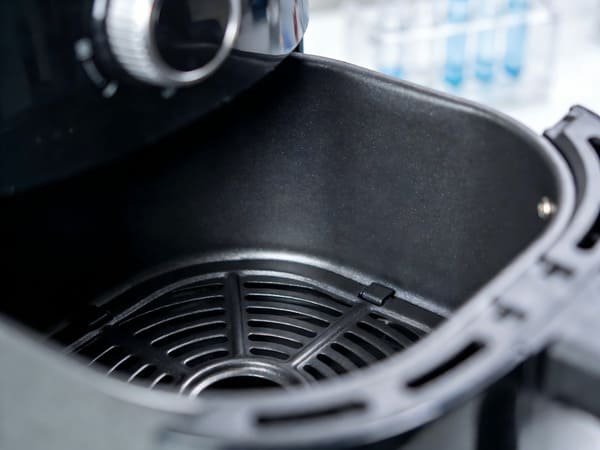
The FDA’s primary concern is public health and safety. For an appliance like an air fryer, this means the materials that come into direct contact with food must be considered "food-grade." The agency sets specific rules for these materials under the Federal Food, Drug, and Cosmetic Act (FD&C Act). This is different from a general "FDA Approval," a term often misused in marketing. The FDA doesn’t issue certificates for kitchen appliances. Instead, it sets performance standards and substance limitations that manufacturers must meet. The importer is responsible for ensuring their products adhere to these standards.
Food-Contact Materials vs. Electrical Safety
It’s crucial to distinguish between different types of compliance. The FDA handles the safety of food-contact materials1. Other independent organizations, like UL (Underwriters Laboratories) and ETL (Intertek), handle electrical safety2. Your air fryer will need both. For example, the non-stick coating inside the basket is an FDA matter, while the power cord and heating element are UL/ETL matters. Many US retailers and online marketplaces will not list your product without a valid UL or ETL certification.
Here is a simple breakdown of the different certifications and regulations:
| Regulation/Certification | Governed By | Purpose | Mandatory for US Market? |
|---|---|---|---|
| Food-Contact Safety | FDA (Government) | Ensures materials touching food are non-toxic. | Yes, for all food-contact items. |
| Electrical Safety | UL/ETL (Private NRTLs) | Prevents electrical shock and fire hazards. | No, but essential for retail and liability. |
| EMC Emissions | FCC (Government) | Prevents interference with radio communications. | Yes, for any device with digital circuitry. |
Understanding these distinctions is the first step. When we work with clients, we provide documentation for all applicable standards, not just one. This ensures a smooth entry into the market without any last-minute surprises.
How can I verify supplier compliance with FDA standards?
Trusting a supplier’s word without proof is a huge business risk. In our factory, we run tests on every batch of raw materials. We expect our clients to demand the same level of proof.
Verify compliance by requesting and examining third-party lab test reports for all food-contact materials. Ensure these reports are recent, from a reputable lab like SGS or Intertek, and match the exact product model you are purchasing. Always cross-reference the supplier’s name on all documents.
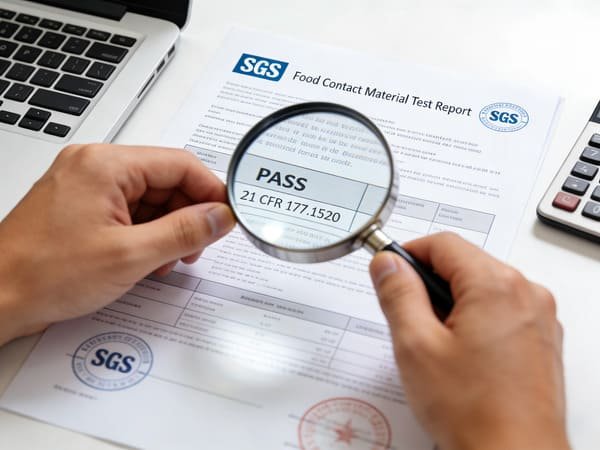
A simple claim of "FDA compliant" on a website or in an email is not enough. You need to perform due diligence. The most reliable way to do this is by reviewing objective evidence provided by the manufacturer. Start by asking for test reports that specifically cover food-contact materials. These reports should analyze the basket, tray, and any other parts that touch food during cooking.
Decoding a Test Report
When you receive a test report, don’t just file it away. You need to know what to look for. A legitimate report will contain specific information that confirms its validity. A common mistake importers make is accepting a test report for a similar, but not identical, product. The report must be for the exact model you are buying. Furthermore, check the date of the report. Material formulations can change, so a report from five years ago may no longer be relevant.
Here are the key items you should check on any test report for food-contact materials:
| Item to Check | Why It’s Important | What to Look For |
|---|---|---|
| Applicant Name | Must match the name of the supplier you are paying. | Your supplier’s official company name. |
| Product Model Number3 | Confirms the test was for the specific product you are buying. | The exact model number from your purchase order. |
| Test Standard4 | Shows which FDA regulation was tested against (e.g., 21 CFR 177.1520 for polymers). | Specific FDA code sections. |
| Testing Laboratory5 | Ensures the test was conducted by a reputable, independent third party. | Logos and names like SGS, Intertek, TÜV, Bureau Veritas. |
| Test Date6 | Confirms the test is recent and relevant to current production. | A date within the last 1-2 years is ideal. |
| Conclusion/Result | Clearly states whether the sample "Passed" or "Failed" the test requirements. | A clear "Pass" statement. |
If your supplier cannot provide these documents or if the information doesn’t match, consider it a major red flag. A reliable manufacturing partner will have this documentation ready and will understand why you need it.
What documentation should I request to prove FDA conformity?
Imagine your shipment arrives at a US port, but you’re missing a key document. This oversight can cause delays that ripple through your entire supply chain. We help our partners avoid this by preparing a full compliance package from the start.
To prove conformity, request a Declaration of Conformity for food-contact materials, complete third-party test reports, and a detailed Bill of Materials (BOM). You should also collect related safety certifications like UL/ETL and FCC to build a comprehensive compliance file.
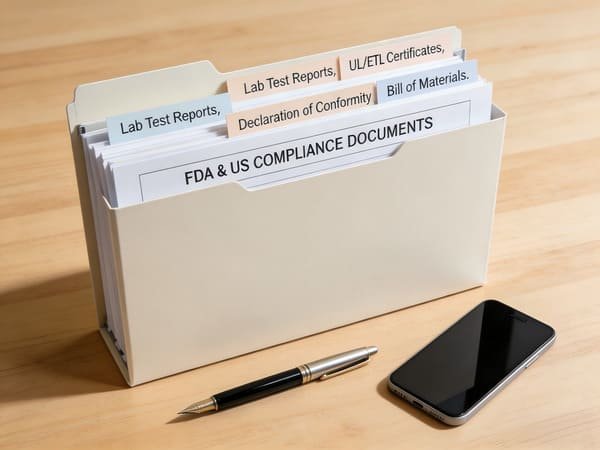
As the importer of record, you are legally responsible for the products you bring into the United States. This means you need to create and maintain a "compliance file" for each product. This file is your proof that you have done your due diligence. It should be organized and ready to present to customs, retailers, or any other authorities upon request. Your supplier should be a partner in helping you build this file. If they are hesitant or unable to provide these documents, they are not the right partner for the US market.
Building Your Compliance File
Your compliance file is more than just a collection of certificates. It’s a structured record of your product’s journey from design to import. It demonstrates a systematic approach to safety and compliance. A good framework to follow is the one outlined in the Foreign Supplier Verification Program (FSVP)7, even if it’s not strictly required for all appliances. This involves evaluating your supplier, verifying product safety, and having a plan for corrective actions.
Your essential documentation checklist should include the following:
| Document Type | Description | Purpose |
|---|---|---|
| Declaration of Conformity8 | A formal statement from the manufacturer that the product complies with specific regulations. | A summary of compliance for your records and for authorities. |
| Lab Test Reports9 | Detailed results from an independent lab showing tests on food-contact parts. | The primary evidence that materials are safe and meet FDA standards. |
| Bill of Materials (BOM) | A list of all raw materials and components used in the product, especially for food-contact areas. | Helps you trace materials and verify that test reports cover them all. |
| UL/ETL Certificate10 | Certification from a Nationally Recognized Testing Laboratory for electrical safety. | Proof of electrical safety, required by most retailers. |
| FCC Report | A report showing the product complies with electromagnetic emission standards. | Required for any electronics with digital components. |
| Supplier Information | Your supplier’s business license, quality management certificates (e.g., ISO 9001), and factory audit reports. | Evidence that you are working with a qualified and legitimate supplier. |
Maintaining this file is not a one-time task. You should review and update it periodically, especially if you change suppliers or if the product design is modified.
How do I handle non-compliance issues discovered during import?
A notification from customs that your shipment is detained is a situation no importer wants. It can cause panic and financial stress. Having a clear action plan is critical, something we advise all our clients to prepare for.
If your shipment is detained by the FDA for non-compliance, contact your customs broker immediately. You will receive a "Notice of FDA Action" explaining the issue. You must then provide evidence, such as test reports, to prove compliance or work to resolve the violation.
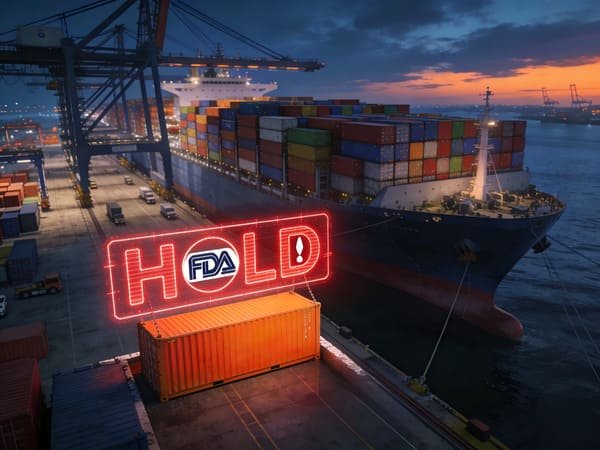
When an FDA-regulated product arrives at a US port, the import information is electronically submitted to the FDA for review. If the system flags an issue, or during a random inspection, the FDA can issue a hold. This is known as "Detention Without Physical Examination" (DWPE) if the manufacturer is already on an import alert, or it could be a standard detention pending review. The first step is to not panic. Understand that there is a process to resolve the issue.
Immediate Steps and Long-Term Solutions
Upon receiving a Notice of FDA Action, you have a limited time to respond. Your customs broker will be your main point of contact and can guide you through the process. Typically, you’ll need to submit the documents from your compliance file to demonstrate that the product is, in fact, compliant. If the issue is labeling, you might be able to re-label the products at a bonded warehouse. If the violation is more serious, such as the use of an unauthorized material, the goods may be refused entry.
If refused, you will be required to either destroy the products or export them out of the US at your own cost. This is a disastrous outcome. It’s also likely that the manufacturer and product will be placed on an FDA Import Alert11, making all future shipments subject to automatic detention. This is why front-end due diligence is so important. Proactive verification is far cheaper and more effective than reactive problem-solving at the border. If you encounter a non-compliance issue, you must also implement a corrective action plan12 with your supplier to ensure it never happens again.
Conclusion
Confirming FDA compliance for air fryers from China requires proactive verification. Focus on obtaining test reports for food-contact materials, building a complete compliance file, and partnering with transparent suppliers.
-
Explore this link to understand the regulations ensuring food-contact materials are safe and non-toxic. ↩
-
Learn about electrical safety standards to ensure your products are safe from hazards and compliant. ↩
-
Discover why the exact model number is vital for product safety and compliance verification. ↩
-
Understanding FDA regulations is crucial for ensuring compliance and safety in food-contact materials. ↩
-
Learn how to choose trustworthy testing labs to ensure your products meet safety standards. ↩
-
Find out the importance of recent test dates to ensure the relevance of safety standards. ↩
-
Understanding FSVP is crucial for ensuring compliance and safety in your supply chain. ↩
-
This document is essential for demonstrating your product’s compliance with regulations. ↩
-
Lab Test Reports provide critical evidence of safety and compliance with FDA standards. ↩
-
This certification is vital for proving electrical safety and gaining retailer trust. ↩
-
Understanding FDA Import Alerts is crucial for compliance and avoiding future shipment issues. ↩
-
Learn about corrective action plans to prevent non-compliance and ensure smooth operations. ↩