
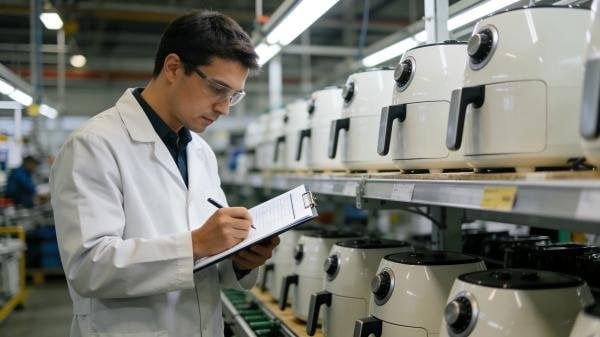
Sourcing air fryers from China can feel overwhelming. A wrong supplier choice often leads to quality nightmares and shipment delays, jeopardizing your brand’s reputation and profits.
When selecting Chinese air fryer suppliers, focus on five key factors: verified certifications for your market, true manufacturing capabilities (not just a trading company), a robust quality control system, solid product performance specifications, and clear, fair commercial terms. Prioritizing these over just the lowest price is crucial.
Navigating the sourcing process requires a clear strategy. Let’s break down how to evaluate potential partners and ensure you make a choice that strengthens your business.
How can I evaluate the reliability of air fryer suppliers in China?
Struggling to tell a reliable factory from a risky one? This uncertainty can lead to production issues and financial loss, a common fear we see in new buyers.
To evaluate reliability, verify the supplier’s business license, conduct an on-site or video factory audit, and check their quality management certifications like ISO 9001. A truly reliable partner will be transparent and able to provide these documents without hesitation, demonstrating their legitimacy and commitment.

A supplier’s reliability is the foundation of a successful partnership. It goes beyond just their ability to produce a product. It encompasses their business ethics, financial stability, and commitment to quality. Without this, even the best product design can fail due to inconsistent production or poor service.
Verify Business Legitimacy
First, confirm you are dealing with a legitimate, registered company. Don’t take their word for it. Ask for a copy of their Business License. This document confirms their legal status, registered capital, and business scope. The business scope is important; it will state "manufacturing" or "production", if they are a genuine factory. If it only lists "trading" or "wholesale", they are likely a middleman. You can often use third-party services to verify this information for a small fee, which is a worthwhile investment.
Assess Manufacturing Capability
A reliable supplier has the right infrastructure. During a factory tour (either in person or via a detailed video call), look for evidence of an organized production environment.
| Area to Inspect | What to Look For | Red Flag |
|---|---|---|
| Production Lines | Organized assembly stations, clear workflow, modern equipment. | Cluttered, chaotic lines; outdated or poorly maintained machines. |
| Warehouse | Neat storage of raw materials and finished goods. | Disorganized piles of components, exposure to dust or moisture. |
| R&D Department | A dedicated space with engineers and testing equipment. | No visible R&D area or team. |
| Quality Control Lab | Equipment for testing product life, safety, and performance. | Lack of basic testing tools (e.g., hi-pot tester, power meter). |
We always encourage potential partners to see our production lines firsthand. It builds trust and shows our commitment to transparency and quality manufacturing. A supplier who resists a factory audit1 is a major red flag.
What criteria should I use to compare different air fryer manufacturers?
Comparing suppliers based on price alone is a common mistake. It often ignores critical differences in quality and service that can cost you much more in the long run.
Compare manufacturers using a scorecard covering product compliance (CE, ETL, etc.), QC processes, R&D capabilities for customization, production capacity, and communication responsiveness. A strong partner excels in all areas, not just one. Price should be the last consideration after quality is confirmed.
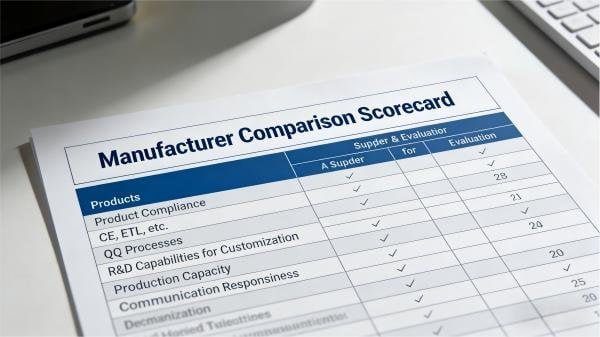
When you receive quotes from multiple suppliers, the real work begins. Creating a structured comparison helps you make an objective, data-driven decision rather than an emotional one. A simple scoring system can be incredibly effective. By assigning a weight to each criterion based on your business priorities, you can clearly see which supplier is the best overall fit.
Compliance and Certifications
This is non-negotiable. Air fryers are electrical products that contact food, so safety is paramount. Ask for copies of certificates relevant to your target market. A supplier who has already invested in certifications for major markets like Europe (CE, RoHS, LFGB) or North America (ETL, FCC) shows experience and commitment. Be specific. Don’t just ask if they are "certified." Ask for the CE certificate for model X, valid for the EU market.
Quality Control Systems2
A factory’s approach to quality tells you everything. Do they build quality into the process, or do they just inspect at the end? On our production floor, we implement multiple quality checkpoints.
| QC Stage | Purpose | Key Activity |
|---|---|---|
| IQC (Incoming Quality Control) | To check raw materials and components before production. | Verifying material specs, testing electronic components. |
| IPQC (In-Process Quality Control) | To catch issues during the assembly process. | Patrolling assembly lines, checking connections and fitment. |
| FQC (Final Quality Control) | To test the finished product before packaging. | 100% functional test, cosmetic check, safety tests (hi-pot). |
| OQC (Outgoing Quality Control) | To conduct a final random inspection before shipment. | Simulating customer use, checking packaging and labels. |
Ask suppliers to detail their QC process. A confident manufacturer will gladly share this information.
Product Performance
Beyond paperwork, the product itself must perform. Request samples and test them rigorously. Compare heating speed, temperature accuracy, cooking evenness, and noise levels. The details matter, from the quality of the non-stick coating to the feel of the buttons. These small things impact customer satisfaction and your brand’s image.
How do I assess the supplier’s experience and export track record?
Working with a factory new to exporting can be risky. They may lack knowledge of your country’s regulations, logistics, and documentation, leading to costly customs delays or compliance failures.
Assess a supplier’s export experience by asking for their main export markets, requesting case studies or references from your region, and reviewing their compliance documents (e.g., CE, ETL, SASO). An experienced exporter will understand your market’s specific requirements and provide smooth logistics.
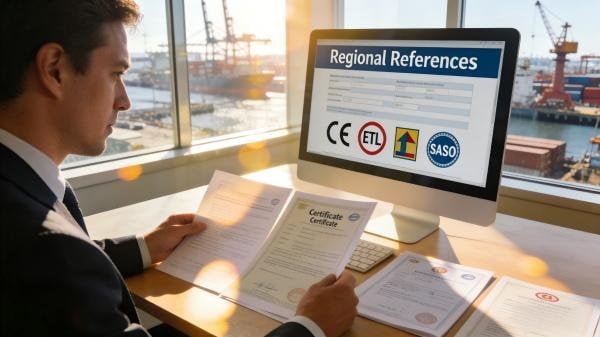
A supplier’s export history is a strong indicator of their ability to handle your orders smoothly. An experienced exporter has already navigated the complexities of international trade, from creating compliant products to preparing the correct shipping documents. This experience saves you time, money, and headaches. When we work with clients from new regions, our first step is always to review their market’s specific standards to ensure our products are fully compliant from day one.
Ask About Main Markets
Start with a direct question: "What are your top three export markets?" A supplier with significant experience in North America or Europe will be familiar with the high standards for quality and safety required there. If their main markets are regions with lower regulatory hurdles, you may need to invest more time in verifying their quality management systems. Their answer will tell you a lot about their typical quality level and regulatory awareness.
Request Proof and References
Don’t just take their word for it. Ask for evidence. This could include:
- Case Studies: A brief description of a project they completed for a client in a similar market.
- Bill of Lading (B/L) Copies: Ask for redacted B/L copies showing shipments to your country or region. This is hard proof of actual export activity.
- References: While many factories are hesitant to share client information due to NDAs, some may be able to provide a reference if they have a strong relationship.
Review Market-Specific Certifications
This is one of the most reliable ways to verify export experience. A factory claiming to export to Germany should be able to produce GS and LFGB reports. A supplier focused on the US market must have ETL/UL and FCC documentation.
| Target Region | Key Certifications to Request |
|---|---|
| European Union | CE-LVD, EMC, RoHS, LFGB/Regulation (EC) 1935/2004 |
| North America | ETL/UL (for safety), FCC (for electronics), Prop 65 (for California) |
| United Kingdom | UKCA |
| Australia/New Zealand | RCM |
| Saudi Arabia | SASO CoC |
The ability to produce these documents quickly shows they are not scrambling to become compliant; they are already prepared for your market.
What red flags should I watch for when choosing a Chinese air fryer supplier?
It’s easy to be tempted by a low price or a slick sales pitch. However, overlooking warning signs during the vetting process can lead to disastrous partnerships and failed projects.
Key red flags include an unwillingness to provide a business license or key certifications, poor or slow communication, an inability to answer technical questions, and extremely low prices that seem too good to be true. These often indicate a trading company or a factory that cuts corners.
Knowing what to avoid is just as important as knowing what to look for. In our years of manufacturing, we have seen buyers fall into predictable traps. These red flags are not just minor issues; they are often symptoms of deeper problems with a supplier’s operations, honesty, or capabilities. Paying attention to these warning signs early on can save you from a partnership that will inevitably fail.
Communication and Transparency Issues
A reliable partner communicates clearly and promptly. If a salesperson is slow to respond, evades direct questions, or cannot provide basic technical details, be cautious. This often means they are a trader with little control over the factory or that the company culture is disorganized. A major red flag is any hesitation to provide fundamental documents like a business license or ISO 9001 certificate. Honest factories are proud of their credentials.
Unrealistic Prices and Promises
If a quote is dramatically lower than all others, you must ask why. While a large, efficient factory can have cost advantages, an impossibly low price usually means something is being sacrificed. This could be:
- Substandard Materials: Using cheaper, non-food-grade plastics or thinner-gauge steel.
- Recycled Components: Refurbishing or using second-rate motors or heating elements.
- Skipping QC Steps: Eliminating crucial safety or functional tests to save on labor.
- Unethical Labor: Paying workers below legal wages or forcing excessive overtime.
A supplier who promises a 15-day lead time when the industry average is 35-45 days is also a cause for concern. Ask them to explain how they can achieve this. It may be possible, but you need to understand the process to ensure it’s not at the expense of quality.
Mismatches Between Claims and Reality
Verify what the supplier tells you. If they claim to have a large R&D team but cannot discuss your customization ideas in detail, they are likely exaggerating. If their website shows a massive, modern facility but the address points to an office building on a map, be suspicious. A small amount of due diligence can uncover major inconsistencies that signal a dishonest or unreliable supplier.
Conclusion
Choosing the right supplier is the most critical step. Focus on reliability, certified quality, and transparent communication, not just the unit price, to build a truly profitable partnership.