
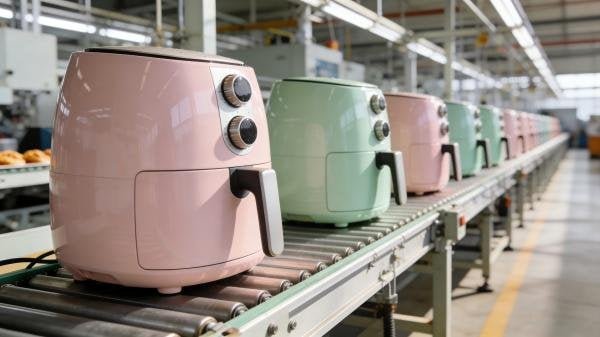
Starting to source air fryers from China can feel overwhelming. With so many suppliers, it’s easy to make a costly mistake, leading to quality issues or delays. We’ve seen many new buyers struggle, but a structured approach makes all the difference.
To start sourcing air fryers from China, first clearly define your product specifications and compliance needs. Then, identify and vet potential suppliers through online platforms and trade fairs. Request quotations and samples from a shortlist, negotiate terms, and place a small, controlled trial order.
This guide breaks down the entire process into simple, actionable steps. Let’s walk through how to navigate each stage effectively to build a reliable supply chain.
What initial steps should I take to begin sourcing air fryers from China?
When clients first approach us, the most successful ones have already done their homework. Jumping straight into finding factories without a clear plan often leads to mismatched quotes and wasted time. A little preparation goes a long way.
Your initial steps should be defining your product needs and market requirements. This means specifying the air fryer’s capacity, features, and materials, and confirming the mandatory safety and compliance certifications for your target country before you even start searching for suppliers.
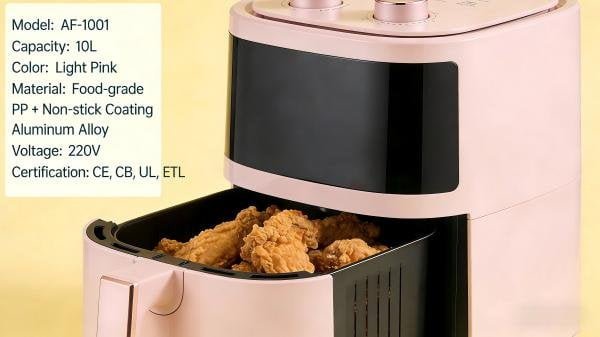
Before you send a single inquiry, you need a clear blueprint of what you want to buy. This crucial first step ensures you are targeting the right manufacturers and can compare their offers effectively. Without this clarity, you cannot properly evaluate if a supplier is a good fit.
Nailing Down Your Product Specifications
Think of this as creating a "wish list" for your ideal air fryer. The more detailed you are, the better. On our production lines, we can customize nearly every aspect of an air fryer, but we need your input to get it right.
Start with the basics:
- Capacity: How many liters? (e.g., 3.5L for individuals, 5.5L for families, or 8L+ for dual-basket models).
- Power: What wattage is suitable for your market? (e.g., 1500W, 1700W).
- Controls: Do you want simple analog dials or a sleek digital touchscreen with presets?
- Features: Are you interested in advanced functions like a dual basket1, a viewing window, or smart connectivity?
- Materials: What are your requirements for the housing (e.g., PP plastic, stainless steel) and the non-stick coating on the basket?
Having these details ready allows a manufacturer like us to provide an accurate quote quickly.
Understanding Compliance and Certifications
This is non-negotiable. Every country has its own safety and electrical standards. Selling a non-compliant product can lead to fines, recalls, and a ban from the market. Before you contact suppliers, know which certificates are required for your sales region. For example, products we ship to Europe must have CE and RoHS2, while those for North America need UL or ETL certification.
Here is a quick reference for common certifications:
| Certification | Primary Region | What It Covers |
|---|---|---|
| CE | European Union (EU) | Safety, health, and environmental protection standards. |
| RoHS | European Union (EU) | Restriction of Hazardous Substances in electronics. |
| UL / ETL | USA & Canada | Product safety and electrical standards. |
| CB Scheme | International | Mutual recognition of test results among members. |
| GS Mark | Germany (Recognized in EU) | "Tested Safety," goes beyond basic CE requirements. |
Ask potential suppliers for existing copies of these certificates for similar models. It’s a great way to verify their experience and capability.
How can I identify reliable channels for finding air fryer suppliers in China?
Finding a supplier is easy, but finding the right partner is hard. Many buyers get stuck with middlemen who add no value, or factories that aren’t a good fit. We know from experience that using a multi-channel approach is the most effective way to build a list of strong candidates.
To find reliable air fryer suppliers, use a mix of channels. Search B2B platforms like Alibaba and Global Sources, filtering for verified manufacturers. Also, consider attending trade fairs like the Canton Fair or hiring a local sourcing agent who knows the industry well.
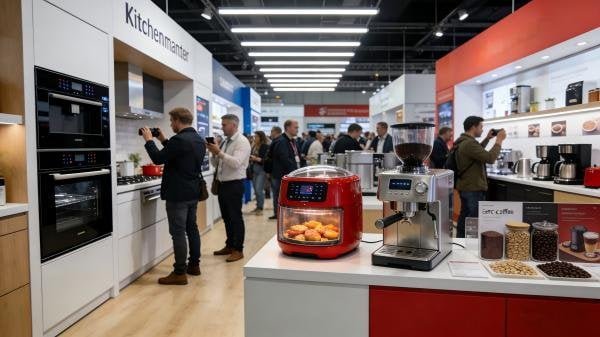
Relying on a single source limits your options and increases risk. A combination of online research and offline verification will give you a much clearer picture of the supplier landscape. Think of it as casting a wide net and then systematically narrowing it down to the best catches.
Using B2B Platforms Effectively
Platforms like Alibaba, Made-in-China.com, and Global Sources are powerful tools if used correctly. Don’t just search for "air fryer." Use filters to narrow your results:
- Supplier Type: Filter for "Manufacturer" and "Verified Supplier." This helps screen out most pure trading companies.
- Experience: Look for suppliers with at least 5-10 years of export experience. This indicates they understand international trade processes.
- Main Markets: Check if they already export to your region. A factory that primarily ships to Southeast Asia might not have the right certifications for the EU market.
When you find a potential supplier, review their company profile, look at their product range, and check for factory photos or virtual tours.
The Value of Trade Fairs and Sourcing Agents
While online platforms are great for initial discovery, nothing beats face-to-face interaction.
- Trade Fairs: Events like the Canton Fair in Guangzhou or appliance-specific fairs in cities like Cixi and Zhongshan allow you to meet suppliers in person, touch their products, and ask detailed questions. This is the fastest way to assess a company’s professionalism and product quality.
- Sourcing Agents: For those who cannot travel to China, a reputable sourcing agent can be invaluable. They act as your local team, using their network to find and vet factories that match your exact needs. They can also manage communication, quality control, and logistics.
Vetting Your Shortlist
Once you have a list of 5-10 potential suppliers, it’s time to screen them. This is a critical step to avoid problems later. We are always prepared to provide this information to serious buyers.
| Vetting Question | Why It’s Important |
|---|---|
| Can you provide your business license? | Confirms they are a legally registered company and a manufacturer, not a trader. |
| What are your main export markets? | Shows if they have experience with your country’s standards and logistics. |
| What is your production capacity and lead time? | Helps you understand if they can handle your order volume and meet your deadlines. |
| Can you share existing certifications/reports? | A quick way to verify their compliance capabilities and product quality. |
This initial screening will help you eliminate unqualified suppliers and focus your energy on the most promising candidates.
What information do I need to prepare before contacting Chinese air fryer manufacturers?
The first contact you make with a supplier sets the tone for the entire relationship. We receive hundreds of inquiries. The ones that get our immediate attention are clear, professional, and detailed. Vague messages like "how much for air fryer?" are often ignored.
Before contacting manufacturers, prepare a detailed Request for Quotation (RFQ). It should include your complete product specifications, estimated order quantity, packaging requirements, target price, and any OEM/ODM customization needs. This shows you are a serious and professional buyer.

A well-prepared RFQ not only makes you look professional but also serves as a checklist to ensure you get all the information you need. It forces you to think through every detail, which minimizes misunderstandings down the road. An effective RFQ acts as a clear and concise brief for the manufacturer, allowing them to provide a precise and relevant quotation.
Crafting a Professional RFQ
Your RFQ is your first impression. Make it count. Instead of a simple email, consider a structured document or a detailed list. This demonstrates that you have a clear business plan and are not just a casual shopper. Here’s what we look for in a great RFQ from a potential partner:
- Company Introduction: Briefly introduce your company, your market, and your sales channels (e.g., e-commerce, retail). This helps us understand your business context.
- Detailed Product Specifications: Refer back to the list you created in the first step. Include capacity, power, materials, control type, and special features. If you have a reference product, include a link or photo.
- Order Quantity: Provide an estimated order quantity (EOQ), such as for a 20ft or 40ft container. This is crucial for pricing, as costs vary significantly with volume.
- Customization Needs (OEM/ODM)3: Clearly state if you need your logo on the product (OEM) or require more extensive design changes (ODM). For OEM, specify packaging design requirements (e.g., custom gift box, instruction manual language).
- Compliance Requirements: List the specific certifications you need (e.g., CE, ETL).
- Target Price: Sharing your target price (or retail price) is helpful. It allows us to propose the right model or suggest specification adjustments to meet your budget without sacrificing quality.
Example RFQ Snippet
Here is an example of what a clear and concise specification section in an RFQ could look like:
| Parameter | Requirement |
|---|---|
| Product | Digital Air Fryer |
| Capacity | 5.5 Liters |
| Power | 1700W, 220-240V, 50/60Hz |
| Control Panel | Digital LED Touchscreen with 8 Presets |
| Color & Finish | Matte Black Body, Stainless Steel Accent |
| Customization | OEM: Logo on unit, custom-designed gift box |
| Certifications | CE, RoHS, GS |
| Estimated Quantity | 1,000 units (First Order) |
Providing this level of detail ensures you receive quotes that are accurate and easy to compare. It saves time for both you and the supplier.
How can I streamline my sourcing process to avoid common pitfalls?
Many buyers get bogged down by endless back-and-forth communication, unexpected delays, and quality issues. The key to avoiding these problems is to treat sourcing as a project to be managed, not just a transaction. A streamlined process is built on clear communication, verification, and starting small.
Streamline your sourcing by moving methodically from vetting to a trial order. After shortlisting suppliers, test their samples thoroughly. Negotiate all terms—price, payment, and shipping—in writing. Finally, place a small trial order with a third-party inspection before shipment to validate the supplier.
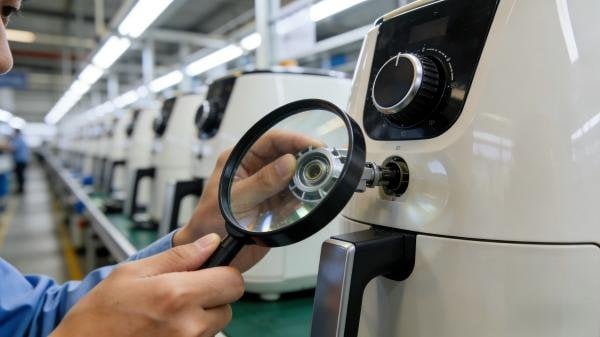
This systematic approach minimizes risk at every stage. The goal is not just to buy a cheap product but to build a reliable, long-term supply chain. Each step is a checkpoint to ensure you are still on the right path. Rushing any of these stages is the most common pitfall we see new importers make, and it often leads to costly rework, delays, or defective products.
From Samples to Trial Order
Once your RFQ has returned several promising quotes, the real work begins.
- Order Samples: Never place a bulk order without testing a physical sample. We recommend ordering samples from your top 2-3 choices. When they arrive, don’t just look at them. Use them. Cook with them. Test their performance, noise level, safety features, and overall user experience. Compare them against each other and against your market’s leading brands.
- Negotiate Terms: Once you’ve selected your preferred supplier based on the sample, it’s time to negotiate. Finalize the unit price, Minimum Order Quantity (MOQ), payment terms (a common structure is 30% deposit, 70% balance before shipment), and lead time. Also clarify Incoterms, like FOB (Free On Board), which defines who is responsible for shipping costs and risks.
- Place a Trial Order: Your first order should be a "trial" order. Keep the quantity modest (e.g., a few hundred units if the factory’s MOQ allows). This limits your financial risk while you validate the supplier’s ability to deliver consistent quality on a mass-production scale. Use a formal Purchase Order (PO) or contract that details every specification, packaging requirement, and quality standard.
The Importance of Quality Control
Trust, but verify. For your first order—and every order after—quality control is essential. Even with the best suppliers, mistakes can happen on a busy production line.
- Pre-Shipment Inspection (PSI): Before the final payment is made and the goods are shipped, hire a third-party inspection company. They will go to the factory and check a random sample of your products against your quality checklist. They verify quantity, appearance, function, packaging, and labeling. A PSI report gives you a clear snapshot of your order’s quality before it leaves China. It’s a small investment that can save you from a disastrous shipment.
By following this streamlined, step-by-step process, you transform sourcing from a game of chance into a managed business function.
Conclusion
Sourcing air fryers from China is a straightforward process when broken down into logical steps. Define your needs, find suppliers, verify them, test their products, and start with a controlled trial order.
-
Exploring these features can enhance your product’s appeal and functionality. ↩
-
These certifications ensure your product meets essential safety and environmental standards in Europe. ↩
-
This link will clarify the distinctions between OEM and ODM, helping you articulate your customization requirements effectively. ↩