
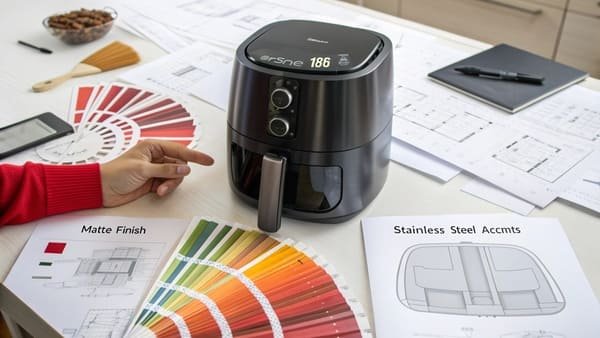
We often see clients struggle to translate a brilliant product idea into a final, manufactured unit. Miscommunication on custom features can lead to costly sample rounds, production delays, and disappointment.
To customize air fryers from China, first clarify if you need ODM (modifying an existing design) or OEM (a completely new design). Then, provide a detailed "Tech Pack" specifying Pantone colors, material finishes, precise logo placements, and functional logic flowcharts to prevent any misunderstanding.
This guide will walk you through the exact steps to ensure your supplier understands your vision perfectly. Let’s break down how to communicate like a seasoned pro.
What details should I specify when requesting air fryer customization?
Struggling to get the exact look you want? It’s frustrating when you ask for "Apple Red" and receive something completely different. These vague descriptions often lead to incorrect samples and production headaches.
You must specify visual standards using precise codes and measurements. For appearance, provide Pantone (PMS) codes for colors. For materials, define the exact finish. For logos, supply a mockup with dimensions. For electricals, state the plug type, voltage, and frequency.
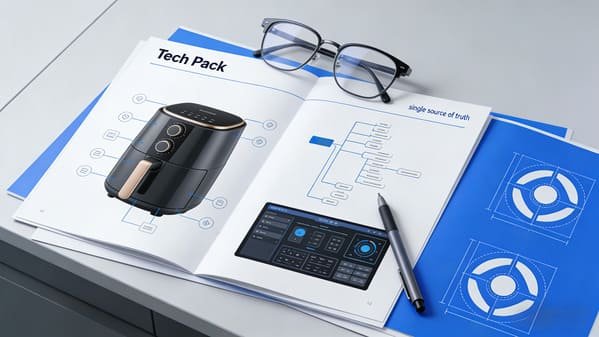
To prevent errors, you need to be hyper-specific. Ambiguity is the enemy of efficient manufacturing. When we receive customization requests, the more detail we have, the faster and more accurately we can create a sample that matches your vision. Think of it as giving us a blueprint. Without it, we are just guessing.
Appearance Specifications
For visual elements, words are not enough. You must provide objective standards that can be measured and verified.
- Color: Never use subjective names like "sky blue." Always use a universal color matching system. The industry standard is Pantone (PMS)1. For example, specify "Logo in Pantone 186 C." This leaves no room for interpretation.
- Logo & Graphics: Don’t just email a PNG file. You must create a mockup2. This is a simple image showing the air fryer with the logo placed on it. Add dimensions and positioning notes, such as "Logo width: 45mm, centered 20mm below the top edge of the housing."
- Materials and Finishes: Be explicit about the texture and type of materials. Instead of "a nice handle," specify "Handle in matte finish PP plastic, color Pantone Cool Gray 9 C." For coatings, be clear: "Basket with non-stick Teflon coating, PFOA-free3."
This table illustrates the difference between a vague and a specific request:
| Feature | Vague Request (Likely to Fail) | Specific Request (Clear for Production) |
|---|---|---|
| Color | "A nice red color" | "Housing in Pantone 186 C, high-gloss finish" |
| Logo | "Put our logo on the front" | "Logo file attached. Place centered on front panel, 45mm wide" |
| Material | "A metal handle" | "Handle in brushed stainless steel, SUS304 grade" |
Electrical and Packaging Specifications
Do not assume the factory knows your target market’s standards. These must be explicitly stated.
- Plug & Voltage: Clearly state the requirements for your region. For example: "US Standard 2-pin polarized plug, 110-120V/60Hz."
- Packaging: If you need custom packaging, provide the design files in AI or PDF vector format. Specify the cardboard type (e.g., "3-ply corrugated box4") and any protective inserts like EPE foam.
How can I ensure clear communication of my design and function requirements?
Worried your new function idea will get lost in translation? Simply listing features in an email is risky. Functional changes require documenting the machine’s "logic" to avoid bugs and user confusion.
Create a comprehensive "Tech Pack" in PDF format that centralizes all requirements. For functional changes, include logic flowcharts for presets and UI behavior. For smart features, specify the required SDK/API access (e.g., Tuya compatibility) and performance needs.
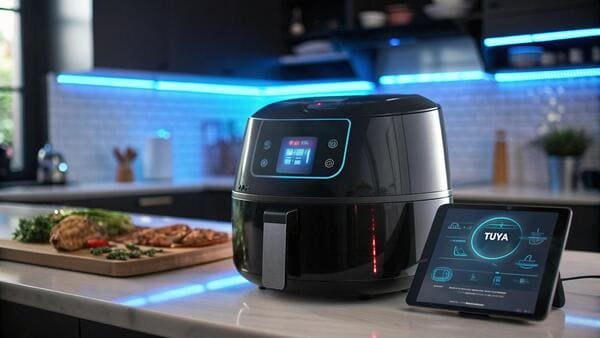
In our production lines, the most successful custom projects are always backed by a single, comprehensive document. This "Tech Pack" becomes the single source of truth for our engineers, quality control team, and production managers. It prevents critical details from getting buried in email chains or WeChat messages. Relying on chat history is a recipe for error. Your Tech Pack should be a formal document that consolidates every single detail of your project.
Documenting Functional Customizations
Functional changes are more complex than cosmetic ones and carry a higher risk of error. You must clearly define the user experience and machine behavior.
Digital Interface (UI) & Presets:
If you want to modify the control panel, such as adding a "Dehydrate" button or changing cooking presets, you must map out the logic.
- Create a Logic Flowchart5: A simple diagram is far more effective than a text description. For example: "User presses ‘Steak’ button -> LED for ‘Steak’ lights up -> Display shows 400°F and 12 minutes -> Heating element and fan activate."
- Define Display Behavior: Specify exactly what the screen should show in different states. For example: "During preheating, the fan icon blinks. When the cooking cycle is complete, the unit should beep 3 times and the screen should display ‘END’."
Smart/WiFi Features6:
If you are developing an app-controlled air fryer, the technical requirements are even more critical.
- Platform & API: Ask the supplier if their chipset supports a common IoT platform like Tuya. This is often the fastest and most cost-effective route. If you are building a custom app, ask about their SDK (Software Development Kit) and API access.
- Performance: Specify performance expectations, like "App commands must execute on the device in under 2 seconds."
Assembling Your Tech Pack
Your Tech Pack is the master document. It should include:
| Document Section | Content to Include | File Format |
|---|---|---|
| Bill of Materials (BOM)7 | List of all components, especially custom ones (e.g., "Quieter fan, max 45dB") | Excel, PDF |
| 3D CAD Files | For any changes to the product’s physical shape or housing. | STP, IGES |
| 2D Design Files | For logos, control panel overlays, rating labels, and packaging artwork. | AI, PDF (Vector) |
| Functional Spec Doc8 | Includes your logic flowcharts and UI behavior descriptions. | PDF, Word |
What questions should I ask about the customization process and lead time?
Excited about your custom product but worried about hidden delays? Simply asking "When will it be ready?" is not enough. The customization process involves multiple stages, and you need clarity on each one.
Ask for a detailed timeline with specific milestones: mold creation, sample approval, and mass production. Inquire about the MOQ for different customization levels, as changing a color is much simpler than redesigning a control board, which has a higher MOQ.
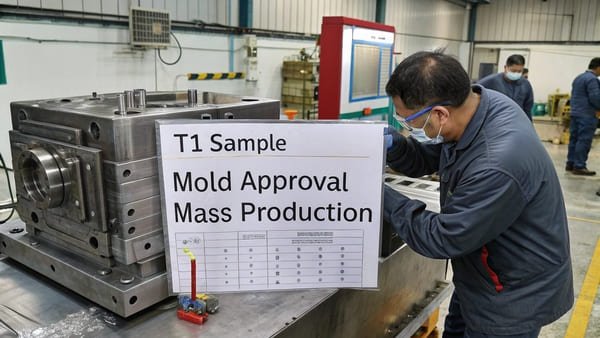
When we map out a project for a client, we provide a clear, stage-by-stage timeline. Understanding this process helps you manage your inventory and marketing launch. Different customizations have vastly different impacts on cost and time. A simple color change might add a week, but creating a new mold for a unique shape (a full OEM project) can take over a month. Asking the right questions upfront helps you avoid surprises and plan your business operations effectively. You need to know not just the "what" but also the "how" and "how much."
Key Questions for Your Supplier
Organize your questions into categories to ensure you cover all bases.
About the Process:
- Can you provide a detailed project timeline with milestones for:
- Mold development (if OEM)?
- First sample (T1) delivery?
- Production sample approval?
- Mass production start and end dates?
- What is your process for sample revisions? How many rounds of revisions are included in the development fee?
- Who will be my dedicated point of contact throughout the development and production process?
About Costs and MOQ:
- What is the MOQ (Minimum Order Quantity9) for a custom color?
- What is the MOQ for a custom-printed box?
- What is the MOQ for customizing the control board functions? (This is usually much higher).
- Please provide a cost breakdown for development fees, tooling/mold costs, and the final unit price.
About Intellectual Property:
- Do you have an NNN (Non-Use, Non-Disclosure, Non-Circumvention10) agreement you can sign before I share my proprietary designs? (Crucial for OEM projects).
- Who owns the mold once it is paid for? Can I transfer it to another factory if needed?
How do I handle revisions and approvals during development?
The first sample is rarely perfect. So how do you manage feedback without creating confusion or endless delays? Sending scattered notes over email is a common mistake that causes major problems.
Establish a formal revision process. Consolidate all feedback on a sample into a single, detailed document with photos and clear instructions. Always require a "production sample" from the first mass-production run for final approval before authorizing the full shipment.
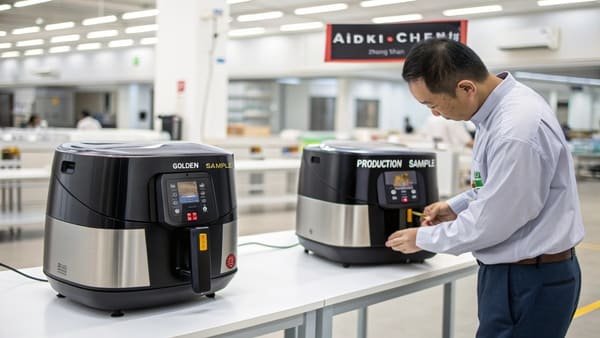
From our experience, the most challenging part of custom development can be the feedback loop. When a client sends multiple emails with conflicting notes, our engineers get confused. A structured approach is essential. The "Golden Sample" trap is also a real risk: a supplier sends a perfect, hand-made sample but the mass-produced units are of lower quality. The only way to protect yourself is by inspecting a sample from the actual assembly line. This is your final quality gate before your product is made in the thousands.
A Structured Revision and Approval Workflow
-
Consolidate Feedback: When you receive a sample, test it thoroughly. Then, compile all your feedback into one document. Use photos to illustrate issues. Instead of saying "the button feels loose," take a video and write, "The ‘Power’ button requires less than 50g of force to activate; it should require 120g ± 20g."
-
Use a Revision Tracking Sheet11: A simple table can prevent miscommunication.
| Sample Version | Date Received | Issue Found | Proposed Solution | Status |
|---|---|---|---|---|
| T1 (First) | 2023-10-25 | Color is Pantone 185 C, not 186 C as specified | Remake sample with correct Pantone 186 C color. | Awaiting T2 |
| T1 (First) | 2023-10-25 | Unit beeps 5 times at end of cycle, not 3. | Reprogram firmware to beep 3 times as per spec doc. | Awaiting T2 |
| T2 (Second) | 2023-11-10 | Color is correct. Beep is correct. | Approved for production sample. | Approved |
- The "Golden Sample12" vs. "Production Sample":
- Golden Sample12: This is the final approved prototype, often made carefully by R&D engineers. You sign this and send it back to the factory. It becomes the master standard.
- Production Sample (or Pre-Production Sample): This is a unit taken from the very first run on the main assembly line. You must get this sample and approve it before the factory produces the entire order. It confirms they can replicate the Golden Sample12‘s quality at scale.
This final approval step is your most important safeguard against quality fade between the prototype and the final product.
Conclusion
Effectively communicating your customization needs is crucial. Use precise terms, provide a detailed Tech Pack, and establish a clear revision process to turn your vision into a successful product.
-
Understanding the Pantone system is crucial for accurate color specifications in design and branding. ↩
-
Creating a mockup is essential for visualizing product designs and ensuring accurate representation before production. ↩
-
Learn about the importance of PFOA-free materials for health and safety in consumer products. ↩
-
Discover the benefits of using 3-ply corrugated boxes for packaging and shipping products safely. ↩
-
Understanding Logic Flowcharts can enhance your UI design process, making it clearer and more effective. ↩
-
Exploring Smart/WiFi Features will help you grasp the latest trends in IoT technology and improve your product’s connectivity. ↩
-
Learning about BOMs is crucial for effective project management and ensuring all components are accounted for. ↩
-
A well-crafted Functional Spec Doc is essential for clear communication and successful project execution. ↩
-
Understanding MOQ is crucial for budgeting and planning your production effectively. ↩
-
Exploring this agreement helps protect your intellectual property when working with suppliers. ↩
-
Understanding a Revision Tracking Sheet can enhance your workflow efficiency and ensure clear communication during revisions. ↩
-
Exploring the concept of a Golden Sample can help you grasp its significance in maintaining product quality from prototype to production. ↩ ↩ ↩