
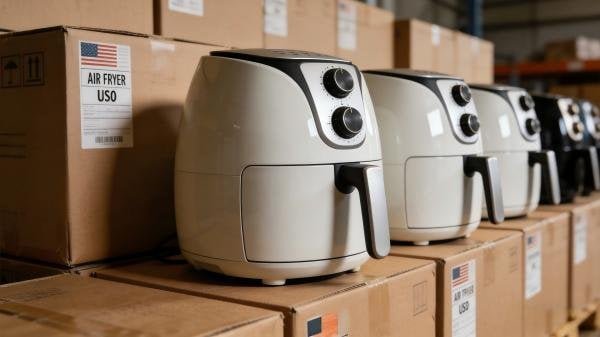
Sourcing air fryers for the US market can be complex; a shipment held up at customs is a profit killer. From our production lines, we see firsthand what separates a smooth import from a disaster.
To determine if a Chinese air fryer can be easily sold in the US, you must verify its product certifications and secure your own business licenses. The product needs UL or ETL for safety, FCC for electronics, and FDA-compliant food-contact materials.
Let’s break down exactly what you need to check to ensure your products sail through customs and onto store shelves.
What are the requirements for air fryer sales licenses in the US?
Navigating the web of US regulations can feel overwhelming. In our experience exporting to the US, we’ve found that focusing on the core, non-negotiable standards simplifies the entire process.
The primary US requirements are not single "sales licenses" but a set of key product certifications: UL/ETL for electrical safety, FCC for electromagnetic interference, and FDA compliance for any parts touching food. These are essential for market access and liability protection.
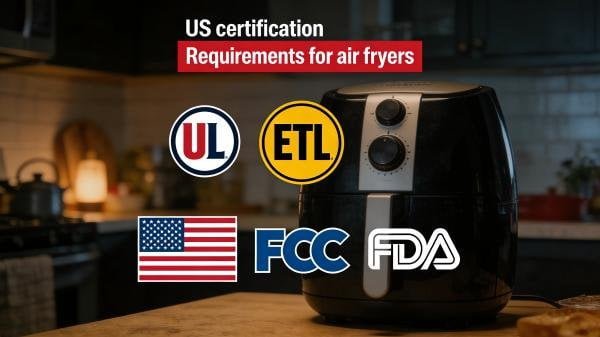
These requirements are gatekeepers for the US market. Major retailers like Amazon, Walmart, and Target will not list your product without proof of electrical safety certification. Insurers may also deny claims related to uncertified products. Failing to comply isn’t just a business risk; it’s a barrier to entry.
Electrical Safety: The UL/ETL Mandate
Underwriters Laboratories (UL) and Intertek (ETL) are Nationally Recognized Testing Laboratories (NRTLs) that test products to ensure they don’t pose a fire or electrical shock hazard. While not always federally mandated by law, they are a de facto requirement for retail. Without a UL or ETL mark1, you face immense liability and will be rejected by almost all major sales channels. When we design a new air fryer model, getting this certification is one of the first milestones in our development plan.
Electronic Emissions: FCC Compliance
Any electronic device that can emit radiofrequency energy needs to be tested for Federal Communications Commission (FCC) compliance. This includes air fryers with digital displays, Wi-Fi connectivity, or even simple electronic timers. The goal is to ensure your product doesn’t interfere with other electronic devices. An FCC mark confirms the product’s emissions are within acceptable limits.
Food-Contact Materials: FDA Compliance
The Food and Drug Administration (FDA) regulates materials that come into contact with food. For an air fryer, this applies to the basket, tray, and any non-stick coatings. These materials must be proven safe and not leach harmful chemicals into food during cooking. Reputable manufacturers use FDA-compliant materials and can provide test reports to prove it.
| Certification | Purpose | Why It’s Crucial |
|---|---|---|
| UL / ETL | Electrical Safety Testing | Prevents fire/shock hazards; required by most retailers. |
| FCC | Electromagnetic Compatibility | Prevents interference with other electronics. |
| FDA | Food-Contact Material Safety | Ensures no harmful chemicals leach into food. |
How can I verify if a product meets licensing criteria?
Receiving a PDF certificate from a supplier isn’t enough; we’ve seen clients burned by documents that were expired, forged, or for a different product. Verification is a critical step we build into our own quality assurance process.
To verify a product’s compliance, request certificates for the exact model number you are buying. Then, use the public online databases for UL and FCC to check if the file numbers and company names are valid and current. This is a crucial due diligence step.

Authenticating compliance documents protects you from costly mistakes. A supplier who readily provides verifiable certificates demonstrates professionalism and has likely already invested in making their product suitable for the US market. A supplier who hesitates or provides vague documentation is a major red flag.
Step 1: Requesting the Right Documents
Be specific. Don’t ask for "safety certification." Ask for the "UL or ETL certificate and full test report for model number AF-5502." Also, request the FCC Declaration of Conformity3 and the food-contact material test reports. The company name on the certificate should match the supplier you are dealing with or their parent manufacturing facility. Discrepancies here can indicate you are working with a trading company that may not have full control over the product.
Step 2: Cross-Referencing with Public Databases
Once you have the documents, use the certificate or file number to check them online.
- UL: You can search the UL Product iQ™ database.
- ETL: Intertek has a directory of listed products.
- FCC: You can search the FCC ID in their official database.
This independent verification takes only a few minutes but provides immense peace of mind. It confirms the certificate is real, current, and applies to the specific product you intend to import.
| Verification Step | Action Required | What to Look For |
|---|---|---|
| Request Documents | Ask supplier for specific certificates and test reports. | Model number match, correct company name, recent test dates. |
| Check Databases | Use file/ID numbers to search UL, ETL, and FCC sites. | Valid listing, matching product description, active status. |
| Assess Supplier | Note the supplier’s willingness and speed to provide info. | Transparency is a good sign; hesitation is a red flag. |
What documentation do I need to support license applications?
A smooth customs clearance and retail onboarding process depends entirely on having your paperwork in order. When we prepare a shipment, we compile a complete compliance package to ensure there are no delays.
You need a complete compliance package from your supplier. This includes full test reports from a reputable lab (like SGS or Intertek), a Declaration of Conformity for the US market, factory quality certifications like ISO 9001, and a Bill of Materials.
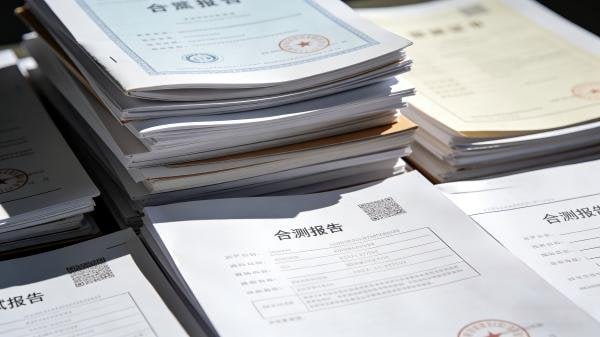
Having these documents ready before you even ship demonstrates that you are a serious importer who understands US regulations. It simplifies the process for customs brokers, freight forwarders, and retail partners. A supplier who can provide this package upfront is organized and reliable.
The Core Compliance Package
A complete package goes beyond just the final certificate. It should include:
- Full Test Reports4: These documents show the detailed results of all tests performed on the product. They provide undeniable proof that the product meets specific standards.
- Declaration of Conformity (DoC): This is a formal statement by the manufacturer that the product meets all applicable US requirements. It lists the standards the product conforms to and identifies the responsible party.
- Factory Certifications: An ISO 9001 certificate shows that the factory has a robust quality management system in place. This gives you confidence in their ability to produce consistent, high-quality products.
Why a Bill of Materials (BOM)5 Matters
For an air fryer, the Bill of Materials is especially important. It lists every component used in the product. You should ask for a BOM that specifically identifies the materials and coatings used in all food-contact parts. This, combined with FDA-compliance test reports, proves that the product is safe for cooking.
| Document | Purpose | Why You Need It |
|---|---|---|
| Full Test Report | Provides detailed evidence of compliance testing. | Proof for customs, retailers, and in case of liability claims. |
| Declaration of Conformity | Manufacturer’s official statement of compliance. | A key legal document required for many electronic products. |
| ISO 9001 Certificate | Shows the factory has a quality management system. | Indicates reliability and consistent production quality. |
| Bill of Materials (BOM)5 | Lists all product components and materials. | Verifies food-contact parts are made from safe, FDA-compliant materials. |
How do I address licensing challenges with suppliers?
Conversations about compliance can sometimes be difficult, especially if a supplier is evasive. We’ve learned that making our requirements clear from the very beginning prevents nearly all of these issues.
Address licensing challenges by making compliance a non-negotiable term in your purchase agreement. Ask for all certificates and reports for verification before making any payment. A supplier unable or unwilling to provide this is a high-risk partner you should avoid.

Your approach to this topic sets the tone for your business relationship. By being firm and clear about compliance, you signal that you are a professional buyer focused on quality and safety. This will attract reliable suppliers and deter those who cut corners.
Setting Clear Expectations
From your very first inquiry, state your requirements. Your RFQ (Request for Quotation) should include a line like: "Product must be fully certified for the US market with valid UL/ETL and FCC certifications, and all food-contact materials must be FDA-compliant6. Verifiable documentation is required before order confirmation." This simple step filters out non-compliant suppliers immediately.
Red Flags to Watch For
Be cautious if a supplier:
- Offers certificates for a "similar" model: This is a major red flag. Certifications are model-specific. A small change in electronics or materials can invalidate the certificate.
- Hesitates or delays providing documents: Professional suppliers who export to the US have these documents ready. Delays often mean they don’t actually have them.
- Claims "our products are good quality, no certificate needed": This shows a fundamental misunderstanding of the US market’s requirements and is a sign of an inexperienced or untrustworthy factory.
Ultimately, if a supplier cannot provide the necessary proof of compliance, the risk falls entirely on you, the importer. It is better to walk away and find a different partner than to import a product that could be seized, rejected by retailers, or cause harm to a consumer.
Conclusion
Verifying US certifications like UL, FCC, and FDA compliance before you buy is the key to a smooth and successful air fryer import process. Be diligent and demand proof.
-
Understanding the significance of UL or ETL marks can help you ensure product safety and compliance, crucial for market acceptance. ↩
-
Understanding the significance of these certifications ensures product safety and compliance, crucial for importers. ↩
-
Exploring this resource will clarify the FCC’s role in product compliance, essential for legal imports. ↩
-
Understanding Full Test Reports is crucial for ensuring product safety and compliance with standards. ↩
-
Exploring the significance of a BOM helps ensure that products meet safety standards and regulations. ↩ ↩
-
Understanding FDA compliance is crucial for ensuring food safety and regulatory adherence in your products. ↩