

Are you struggling with inconsistent pricing and unreliable delivery for your air fryer orders? One-off deals often lead to fluctuating costs and quality, hurting your brand’s reputation and bottom line.
To negotiate long-term terms for air fryers, focus on mutual benefits and building trust (guanxi). Demonstrate your commitment with clear volume projections and consistent communication. This strategy helps secure better pricing, flexible terms, and priority service from Chinese suppliers.
Building a lasting and profitable partnership is a journey. It requires a clear strategy and an understanding of what truly matters to your supplier. Let’s break down the key steps to secure a deal that benefits both sides for years to come.
What benefits can I secure through long-term agreements with suppliers?
Are you tired of being treated like just another order number? In our experience, short-term purchasing limits your access to better deals, dedicated support, and real collaboration, leaving you at a disadvantage.
Long-term agreements offer significant benefits, including preferential pricing, lower MOQs, and priority production slots. You can also gain access to new designs, dedicated support, and more flexible payment terms, which are crucial for stable growth and higher profit margins.
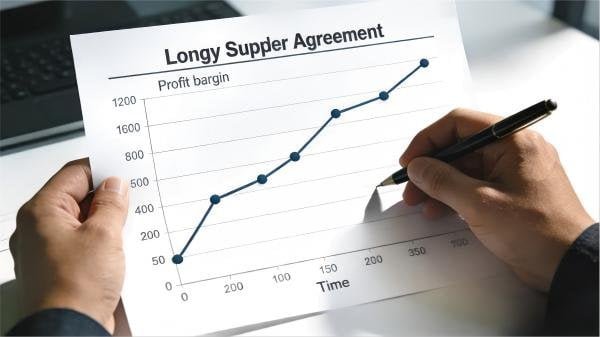
When we work with clients on an ongoing basis, the relationship evolves from a simple transaction to a strategic partnership. This shift unlocks value that goes far beyond a single invoice. The primary advantage is financial. With a predictable order flow, we can plan our material procurement and production schedules more efficiently, and we pass those savings on to our partners through volume-based discounts. A long-term commitment signals that you are a serious partner, which makes suppliers more willing to invest in the relationship.
Financial and Operational Advantages
Securing a long-term agreement immediately impacts your financial stability. You can negotiate tiered pricing1, where the unit cost decreases as your cumulative order volume increases over the year. This protects your margins from market volatility. Operationally, you gain immense stability. Your orders get priority in the production queue, which is critical during peak seasons like the months leading up to Q4 holidays or just before Chinese New Year. This priority minimizes the risk of stockouts and delayed shipments, ensuring your business runs smoothly.
Strategic Growth and Collaboration
Beyond immediate perks, a long-term view fosters collaboration. Suppliers are more likely to offer you exclusive access to new designs or co-invest in developing custom features for your market. At our facility, our most innovative products have come from deep collaboration with partners2 who share their market insights with us. This partnership allows you to build a unique product line that competitors can’t easily copy.
| Benefit Category | Short-Term (Transactional) | Long-Term (Partnership) |
|---|---|---|
| Pricing | Standard or market rate | Tiered discounts, fixed pricing periods |
| Production | Standard queue, risk of delays | Priority scheduling, guaranteed capacity |
| MOQ | Standard, often inflexible | Lower or negotiable MOQs |
| Support | Basic sales support | Dedicated account manager, technical support |
| Innovation | Access to standard catalog | Early access to new models, co-development |
How can I structure contracts for ongoing cooperation?
Worried that a long-term contract might lock you into a bad deal? A poorly structured agreement can create more problems than it solves, leading to disputes over quality, delivery, or payment.
Structure your contract with clear clauses on quality standards (AQL), delivery schedules, and intellectual property protection. Include performance review periods and an exit clause. Start with a smaller trial order before committing to a larger, multi-year master supply agreement.

A well-drafted contract is the foundation of a successful long-term relationship. It provides clarity and protects both parties. Instead of creating a new contract for every order, we recommend a Master Supply Agreement (MSA). An MSA sets the general terms and conditions for the entire partnership. Then, each individual order can be placed using a simpler Purchase Order (PO) that refers back to the MSA. This approach streamlines the process and ensures consistency. Your MSA should be a living document, not a rigid set of rules.
The Master Supply Agreement (MSA) Framework
The MSA is your rulebook. It should define the scope of your cooperation without being overly restrictive. Key elements include the duration of the agreement (e.g., two years), terms for renewal, and conditions for termination. It should also clearly state that individual POs will govern specifics like quantity and delivery dates but will fall under the MSA’s overarching terms. This creates a flexible yet stable framework for your business dealings.
Key Clauses to Include
Your contract must be detailed. Ambiguity is the enemy of good business. In every ODM/OEM agreement we sign, we ensure clauses covering quality, delivery, and payment are crystal clear. For quality, specify the Acceptable Quality Limits (AQL)3 for inspections. For delivery, define the Incoterms2 (e.g., FOB, EXW) and agree on penalties for delays. For payment, outline the terms, such as a 30% deposit and 70% balance upon shipment confirmation. Protecting your intellectual property is also critical, so include clauses that prevent the supplier from selling your custom designs to others.
| Essential Clause | Description | Why It’s Important |
|---|---|---|
| Quality Standards | Defines AQL levels for major/minor defects and inspection protocols. | Prevents disputes over what constitutes a "defective" product. |
| Delivery & Lead Time | Specifies Incoterms4, production lead times, and penalties for delays. | Ensures timely shipments and clarifies responsibility for logistics. |
| Payment Terms | Outlines deposit, balance payment schedule, and currency (e.g., USD, RMB). | Provides financial clarity and manages cash flow for both parties. |
| Intellectual Property5 | Protects your custom designs, branding, and tooling ownership. | Prevents your unique product from being sold to competitors. |
| Termination Clause | Defines conditions under which either party can end the agreement. | Offers a clear exit strategy if the partnership is not working. |
What questions should I ask about price stability and support?
Do sudden price hikes from your suppliers destroy your budget and profit forecasts? Relying on spot prices leaves you vulnerable to material cost fluctuations and erodes your competitive edge.
To ensure stability, ask suppliers if they can offer a fixed-price validity period, such as 6-12 months. Inquire about their strategies for managing raw material costs and what level of dedicated support, like a single point of contact, you will receive.

Predictability is key to running a successful business. When our partners approach us about long-term cooperation, one of the first topics we discuss is price stability. A good supplier should be transparent about their pricing structure and what influences it. While no one can completely escape the reality of fluctuating raw material and labor costs, a partner invested in a long-term relationship will work with you to mitigate these impacts. Don’t just focus on the unit price; explore the supplier’s entire support system. A low price is worthless if you can’t get a response when a problem arises.
Securing Price Stability
Start by asking for a fixed-price guarantee6 for a specific period, typically 6 to 12 months. This allows you to set your retail prices with confidence. You should also ask how they handle significant cost increases. A reliable partner might propose a cost-sharing model or give you several months’ notice before implementing a price change, allowing you to adjust your strategy. Inquire about their supply chain for key components like heating elements or microchips. A supplier with a diversified and stable component supply chain is less likely to face sudden production disruptions that lead to price hikes.
Evaluating the Support System
Your supplier’s support system is just as valuable as their pricing. Ask if you will be assigned a dedicated account manager7 who understands your business and can provide quick answers. This single point of contact is invaluable. Furthermore, ask about their technical and after-sales support. What happens if a container of air fryers arrives with a firmware issue? Will they provide technical assistance to resolve it? A strong partner will have a clear process for handling such issues, including providing spare parts or offering credit for defective units.
Here are some crucial questions to guide your conversation:
| Topic | Key Questions to Ask |
|---|---|
| Pricing | 1. Can you offer a fixed price for 6 or 12 months? 2. What is your policy for communicating price changes related to raw materials? 3. Do you offer tiered pricing based on annual volume? |
| Support | 1. Will we have a dedicated account manager7? 2. What is your process for handling quality issues or defects post-shipment? 3. Can you provide engineering support for product customization? |
| Cost Management | 1. How do you manage your supply chain for critical components8? 2. Are there opportunities to reduce costs through design modifications? 3. What are the cost implications of different packaging options? |
How do I ensure mutual commitment and trust?
Are you concerned that your supplier might not honor their promises once a contract is signed? A piece of paper alone cannot guarantee a successful partnership; it requires ongoing effort from both sides.
Build mutual commitment by maintaining open and consistent communication, paying invoices promptly, and showing respect for their business culture. Schedule regular performance reviews and visit the factory when possible to transform the relationship from transactional to a true partnership.

In our years of manufacturing and exporting, we’ve learned that trust, or guanxi, is the most valuable asset in any business relationship. Contracts are necessary, but they are a backstop. True commitment comes from mutual respect and the understanding that both parties’ success is linked. This isn’t something that happens overnight. It’s built through consistent actions over time. When a client pays on time, provides clear feedback, and understands the challenges of production, it fosters a deep sense of loyalty from our side. We, in turn, go the extra mile to meet their needs.
Fostering Open Communication
Communication is the lifeblood of trust. Don’t just communicate when there’s a problem or an order to place. Share your sales forecasts, market feedback, and even your business challenges. Use tools like WeChat for quick, informal updates, but follow up with email for important matters to keep a clear record. When we understand our client’s goals, we can be proactive. For example, if we know you have a major promotion coming up, we can pre-book materials and production capacity to ensure on-time delivery. Regular video calls to review progress also help build a personal connection.
Demonstrating Your Commitment
Actions speak louder than words. Paying your invoices promptly is one of the most powerful ways to show you are a reliable partner9. It demonstrates respect for the supplier’s cash flow and builds immense goodwill. When possible, visit the factory. Meeting the team face-to-face, seeing the production line, and sharing a meal can transform your relationship. It shows you are invested beyond the numbers. Finally, be fair. If there is an issue, approach it collaboratively rather than confrontationally. Work together to find a solution. This approach proves you are in it for the long haul, and your supplier will be too.
Conclusion
Negotiating long-term cooperation is about building a strategic partnership, not just securing a low price. Focus on mutual benefits, clear contracts, and trust to create a stable and profitable supply chain.
-
Understanding tiered pricing can help you negotiate better deals and optimize your purchasing strategy. ↩
-
Exploring collaboration strategies can lead to innovative solutions and competitive advantages in your market. ↩ ↩
-
Understanding AQL is crucial for ensuring product quality and minimizing defects in your supply chain. ↩
-
Learn how Incoterms can clarify shipping responsibilities and costs, ensuring smoother logistics. ↩
-
Discover strategies to safeguard your designs and innovations from competitors effectively. ↩
-
Understanding fixed-price guarantees can help you negotiate better terms with suppliers. ↩
-
Learn how a dedicated account manager can enhance your supplier relationship and streamline communication. ↩ ↩
-
Explore strategies for managing supply chains to avoid disruptions and ensure price stability. ↩
-
This link will offer strategies and tips on building reliability and trustworthiness in business partnerships. ↩