

Struggling with fluctuating air fryer prices and unreliable delivery times? This instability can hurt your profits and brand reputation. A well-negotiated annual procurement agreement is the key to securing stability.
To negotiate an annual air fryer agreement, you must prepare thoroughly, define clear contract terms for volume and quality, and aim to build a long-term partnership. This strategy ensures stable pricing, consistent supply, and mutual growth with your Chinese supplier.
By focusing on partnership over simple price haggling, you create a more resilient supply chain. Let’s explore the critical components of a successful annual agreement, step by step.
What terms should I include in an annual procurement agreement?
Worried your agreement has dangerous loopholes? An unclear contract often leads to quality disputes, unexpected costs, and production delays. We’ve seen it happen, and it always strains the partnership.
Your agreement must clearly define pricing mechanisms, MOQs, lead times, strict quality control protocols, payment schedules, and intellectual property rights. Including these specifics prevents future disputes and ensures clarity for both parties.
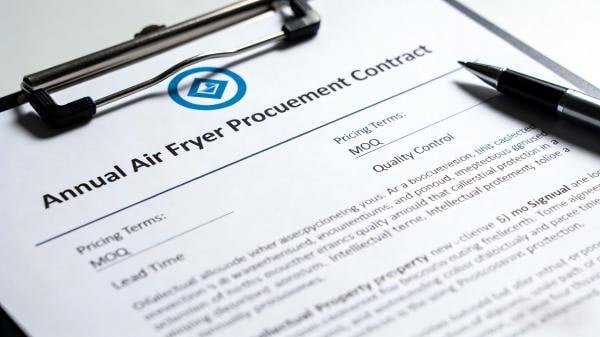
A strong annual procurement agreement acts as the foundation for your entire partnership. From our experience on the factory floor, ambiguity is the enemy of smooth production. When our clients provide clear, detailed agreements, our teams can plan material sourcing, production line schedules, and quality checks far more effectively. A vague contract leads to constant back-and-forth communication, which wastes time and introduces the risk of errors. Below are the essential terms you must include to protect your investment and ensure a predictable supply of high-quality air fryers.
H3: Core Commercial Terms
These terms dictate the financial and logistical framework of your agreement. They should be specific, measurable, and agreed upon before any production begins. This clarity prevents misunderstandings about costs and order quantities down the line.
| Term | Recommended Specification |
|---|---|
| Pricing | Fixed for 12 months. Alternatively, include a clause for review if specific raw material costs fluctuate by over 10%. |
| Minimum Order (MOQ)1 | Specify both the MOQ per individual order and the total committed annual volume to justify the agreed-upon pricing. |
| Payment Terms | A common structure is 30% deposit to start production and 70% balance after the goods pass a third-party final inspection. |
| Lead Time | Define the number of days from deposit payment to goods being ready for shipment (e.g., 45-60 days for the first order). |
H3: Quality Control and Compliance2
Quality should never be an assumption. It must be contractually defined. Specify your standards clearly so that your supplier knows exactly what is expected. This includes cosmetic standards, functional performance, and packaging integrity. On our end, receiving a clear quality standard allows us to calibrate our assembly line and QC teams correctly from day one.
H3: Legal and Logistical Protections
Legal terms protect your business and intellectual property, while logistical terms ensure your products get to you correctly. Do not overlook these clauses. They are your safety net if something goes wrong. It’s crucial to define who is responsible for what at each stage of the shipping process and how any potential disputes will be handled fairly and efficiently.
How can I secure favorable pricing and supply commitments?
Are your price negotiations always a battle? This adversarial approach rarely leads to the best long-term deals. When a potential partner focuses only on squeezing the price, it signals a short-term view.
Secure better terms by presenting a clear annual volume forecast and committing to a long-term partnership. Offer non-price concessions, like flexible payment terms or marketing support, to build trust and achieve mutually beneficial fixed pricing.

From a manufacturer’s perspective, a reliable partner is more valuable than a one-time, high-margin order. When we receive a solid annual forecast, it allows us to do our job better. We can plan raw material purchases when prices are low, dedicate specific production lines, and train staff for your product’s unique requirements. This efficiency translates into cost savings, which we can then pass on to you. A buyer who understands this dynamic and approaches negotiation as a collaborative process is far more likely to get our best pricing and dedicated support. It’s about creating a win-win scenario where your sales growth directly supports our production stability.
H3: The Power of a Clear Forecast
A detailed annual volume forecast3 is your most powerful negotiation tool. It’s not just a number; it’s a statement of commitment. It shows us that you have a serious plan for the market. This allows us to offer tiered pricing, rewarding your commitment with better rates.
| Annual Volume Tier | Example Price Per Unit | Comments |
|---|---|---|
| 1,000 – 4,999 Units | $35.00 | Standard pricing for entry-level volume. |
| 5,000 – 9,999 Units | $33.00 | Discount reflects improved efficiency from larger, more consistent runs. |
| 10,000+ Units | $31.00 | Best pricing, reflecting significant raw material and production savings. |
H3: Negotiating Beyond the Price Tag
Smart negotiators look for value beyond the unit cost. If your budget is firm, consider offering other concessions. For example, offering a 50% deposit instead of 30% can improve our cash flow and might persuade us to absorb a small increase in material costs. Likewise, sharing your marketing plans or committing to co-promoting our partnership can be seen as added value. These gestures show you’re invested in a long-term relationship, which is a currency we highly value. It builds trust and encourages us to be more flexible on pricing and supply commitments.
What questions should I ask about volume discounts and delivery schedules?
Unsure what to ask your supplier to get the clarity you need? Vague questions get vague answers, leading to future problems. We often see buyers fail to dig deep enough on these critical points.
Ask for a tiered pricing structure based on annual volume, not just per-order quantity. For delivery, ask about production lead times versus shipping times and inquire about the factory’s peak seasons to plan your orders accordingly.
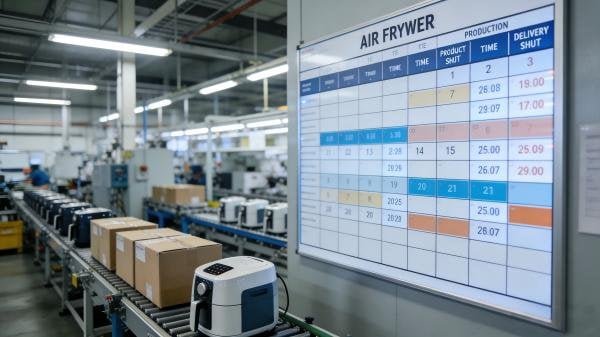
Asking precise questions is crucial for effective planning. When a client asks, "What’s the lead time?" the answer can be misleading if it doesn’t specify what starts the clock. A better question is, "How many days from the day you receive our deposit until the goods are packed and ready for our forwarder to pick up?" This level of detail removes ambiguity. Similarly, for discounts, don’t just ask for a better price. Ask, "If we commit to 10,000 units over 12 months, with a minimum of 2,000 units per order, what unit price can you offer?" This shows you are a serious, professional buyer and helps us provide a concrete, favorable quote based on predictable volume.
H3: Key Questions for Volume Discounts
To get the best possible pricing, you need to understand how the supplier structures their discounts. The goal is to tie your commitment to their cost savings.
- "Can you provide a tiered pricing table4 based on annual committed volumes of 5,000, 10,000, and 20,000 units?"
- "Does this pricing apply if the annual volume is spread across multiple SKUs, or is it for a single model?"
- "If raw material costs decrease during our contract term, can we share in the savings?"
- "Are there any additional discounts for making a larger upfront deposit or paying the balance early?"
H3: Essential Questions for Delivery Schedules
Consistent delivery is just as important as price. Production delays can cause stockouts and damage your reputation.
| Question Category | Specific Question to Ask |
|---|---|
| Lead Time | "What is your standard production lead time5 for a repeat order versus a new order?" |
| Peak Seasons | "What are your factory’s busiest months, and how much does lead time increase during those periods?" (e.g., pre-CNY) |
| Capacity | "What is your maximum monthly production capacity for this air fryer model?" |
| Shipping | "Can you provide a timeline that breaks down production, final QC, and port delivery?" |
By asking these specific questions, you demonstrate your expertise and get the detailed information needed to manage your supply chain effectively.
How do I manage contract renewals and adjustments?
Thinking your work is done once the contract is signed? A procurement agreement is a living document. Market conditions change, and failing to manage the contract actively can lead to missed opportunities.
Manage renewals by scheduling quarterly performance reviews to discuss quality, delivery, and upcoming forecasts. For adjustments, use these meetings to negotiate changes based on performance data and new volume projections, formalizing any updates in a signed addendum.

Active contract management is a sign of a true partner. The clients we have the best relationships with don’t just disappear between orders. They check in, provide feedback (both good and bad), and share updates on their market. This regular communication allows us to anticipate their needs and proactively address potential issues. For example, if a client tells us in a quarterly review that they plan a big promotion in Q4, we can book production capacity and order materials in advance, ensuring on-time delivery. We recommend starting renewal discussions at least 90 days before the current agreement expires. This provides ample time to negotiate new terms without the pressure of an impending deadline, which always leads to better, more thoughtful outcomes for both sides.
H3: The Quarterly Business Review (QBR)
The QBR is your primary tool for managing the agreement. It’s a formal meeting to review performance against the contract’s KPIs. This isn’t about finding fault; it’s about optimizing the partnership.
Key QBR Agenda Points:
- Performance Review: Discuss on-time delivery rates, product defect rates (based on inspection reports), and communication responsiveness.
- Forecast Update: Share your updated sales forecast for the next 3-6 months. This helps the factory with their planning.
- Market Feedback: Provide feedback from your end-customers about the air fryers. This is invaluable for future product improvements.
- Problem Solving: Collaboratively address any issues that arose in the previous quarter and agree on corrective actions.
H3: Adjusting and Renewing the Agreement
Never let a contract auto-renew without a review. Use the renewal process as an opportunity to strengthen the terms based on the past year’s performance. If you consistently exceeded your volume commitment, leverage that to negotiate better pricing for the next year. Conversely, if there were persistent quality issues, you can insist on tighter inspection protocols or penalties. Any changes should be documented in a formal, signed addendum to the original contract. This keeps the legal standing of your agreement clear and enforceable.
Conclusion
Negotiating annual air fryer agreements in China is about building a strategic partnership, not just haggling over price. Prepare well, define every term clearly, and manage the relationship actively.
-
Understanding MOQ can help you negotiate better terms and ensure efficient production planning. ↩
-
Exploring this topic can enhance your knowledge on maintaining high standards and avoiding costly mistakes. ↩
-
Understanding the significance of an annual volume forecast can enhance your negotiation strategies and strengthen business relationships. ↩
-
Understanding tiered pricing can help you negotiate better deals and maximize savings with suppliers. ↩
-
Exploring production lead time factors can enhance your supply chain management and ensure timely deliveries. ↩