
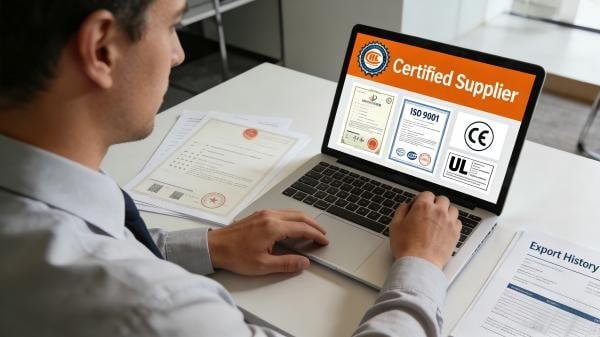
Struggling to find a trustworthy air fryer supplier in China? We’ve seen many clients face product quality issues that harm their brand. The key is knowing the right verification steps.
To identify high-quality Chinese air fryer suppliers, you must use a multi-step verification process. This includes checking for verifiable credentials on B2B platforms, demanding essential international certifications like CE and UL, reviewing third-party factory audits, and thoroughly testing product samples before committing to bulk orders.
Sourcing from a distance can feel like a gamble. But with the right strategy, you can confidently vet potential partners. Let’s break down the exact methods you can use to protect your investment and ensure you receive top-quality products.
What signs indicate that a Chinese air fryer supplier is reputable and reliable?
It’s easy to get lost in a sea of suppliers who all look great online. Choosing the wrong one based on a slick website can lead to major headaches down the road.
A reputable supplier shows clear signs of reliability. Look for verifiable "Verified Supplier" status on Alibaba, a comprehensive set of international certifications (ISO 9001, CE, UL), a documented export history to major markets, and consistently prompt, professional communication. These are non-negotiable indicators.
A supplier’s true reliability is revealed through their credentials and transparency, not just their marketing claims. When we engage with new partners, our first step is always to look past the sales pitch and dive into the hard evidence. A trustworthy manufacturer will be proud to show you their qualifications and will have a track record to back them up.
Platform Verification and Business Credentials
Start your search on established B2B platforms like Alibaba, but don’t take their marketing at face value. Prioritize suppliers holding the "Verified Supplier" badge, which means a third party has audited their factory and legal status. A "Gold Supplier" badge alone is insufficient, as it’s often just a paid membership.
A reliable supplier will readily provide their business license and company registration details. You can use this information to cross-verify their legitimacy through official Chinese business registries. If a supplier hesitates or refuses to provide this documentation, consider it a major red flag. They should operate with transparency.
Critical Red Flags to Watch For
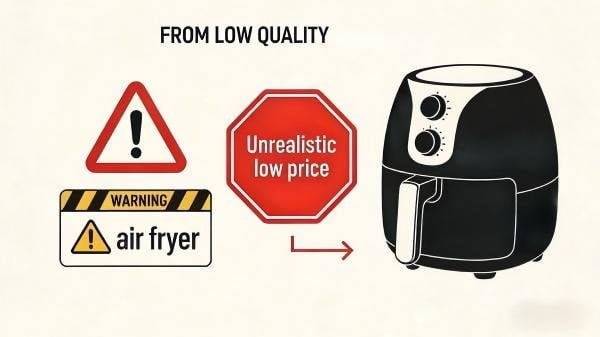
Conversely, several warning signs can help you quickly disqualify low-quality or fraudulent operations. Unrealistically low prices are a major concern. If a quote is significantly below the market average, the supplier is likely cutting corners on materials, components, or quality control. In our production lines, we know that quality components have a fixed cost; prices that seem too good to be true always are.
| Red Flag | What It Likely Means |
|---|---|
| Unrealistically Low Prices | Inferior raw materials, no real QC, or a potential scam. |
| Poor Communication | Lack of professionalism, understaffed team, or language barriers. |
| Refusal to Provide Documents | Hiding something, not a legally registered business, or a fake factory. |
| No Verifiable Export History | Inexperienced with international logistics, compliance, and quality standards. |
| Vague Production Claims | They are likely a small trading company, not a real manufacturer. |
Poor communication is another signal. Professional teams should respond to inquiries clearly and within 24-48 hours. Delays, evasive answers, or a lack of product knowledge from the sales representative point to an unprofessional organization.
How can I verify the quality standards of potential suppliers?
Every supplier will claim they produce "high-quality" products. But these claims are meaningless without proof, and a shipment of faulty air fryers can lead to customer complaints and returns.
Verify quality standards by requesting and authenticating key international certifications like CE, UL, and RoHS. Ask for their quality management system documents, such as ISO 9001, and inquire about their specific QC testing procedures for air fryers, like temperature accuracy and overheat protection tests.
When we develop a new air fryer model, it undergoes hundreds of hours of testing to meet specific standards before the first unit is even assembled. A serious manufacturer understands that quality is built into the process, not just checked at the end. You need to confirm your potential supplier follows a similar, rigorous approach. The best way to do this is by checking their certifications and understanding their internal QC processes.
Essential International Certifications
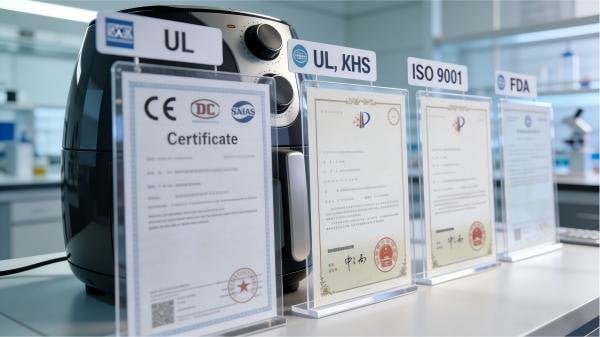
Certifications are non-negotiable proof that a product meets safety and regulatory requirements for your target market. A high-quality air fryer manufacturer must hold these. For example, products sold in the EU require CE1 marking, which confirms compliance with safety directives. For North America, UL or ETL certification is crucial for electrical safety.
Here is a breakdown of the most important certifications:
| Certification | Purpose | Primary Market(s) |
|---|---|---|
| CE1 | Confirms compliance with EU safety, health, and environmental standards. | European Union |
| UL / ETL2 | Validates product safety for electrical components and systems. | North America |
| RoHS | Restricts the use of specific hazardous materials in electronics. | EU, Global |
| ISO 90013 | Demonstrates the supplier has a certified quality management system. | Global |
| FDA / LFGB | Confirms food-contact materials (like the basket) are safe. | USA / Germany (EU) |
Don’t just accept a PDF of the certificate. Always verify the certificate number on the issuing organization’s official database.
Factory Audits and QC Systems
The most direct way to verify quality is through a factory audit. While a personal visit is ideal, hiring a third-party inspection service like SGS, QIMA, or Testcoo is a cost-effective alternative. For a few hundred dollars, they can send an inspector to the factory and provide a detailed report on the supplier’s production capacity, equipment, and quality control systems.
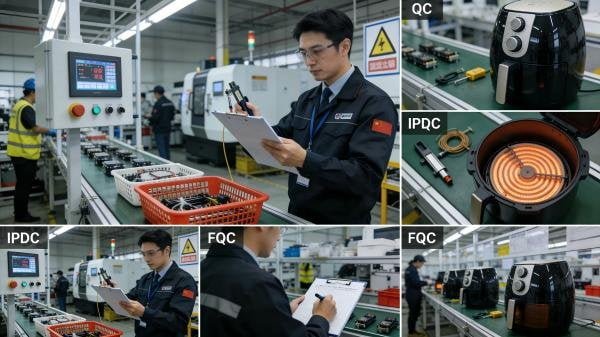
Ask potential suppliers about their QC process. A reputable manufacturer will have a multi-stage system:
- Incoming Quality Control (IQC): Inspecting raw materials and components before production.
- In-Process Quality Control (IPQC): Checks at various stages of the assembly line.
- Final Quality Control (FQC): Thorough testing of finished products before they are packaged. This should include functional tests, temperature checks, and visual inspection.
What methods can I use to check supplier references and reviews?
A supplier can provide a list of happy clients, but how do you know if they’re authentic? Relying solely on the references a supplier gives you can be misleading.
To reliably check references, ask for their transaction history on platforms like Alibaba to see real buyer reviews and ratings. Request references from clients in non-competing industries and verify their existence. Also, search for the supplier’s company name on professional networks like LinkedIn.
Verifying a supplier’s reputation requires looking beyond their own marketing materials. When we work to build long-term partnerships, we know that our track record with existing clients is our most valuable asset. A supplier who is confident in their service will have no problem with you doing some digging. Their export history and client feedback should be an open book.
Analyzing Export History and Transaction Data
A supplier with a strong export history, especially to regulated markets like the USA, EU, or Australia, is more likely to be reliable. These markets have strict quality and compliance standards, and experience exporting to them proves the supplier can meet those demands.
On Alibaba, you can review a supplier’s transaction history. Look for:
- High Star Ratings: Aim for suppliers with a rating of 4.5 stars or higher.
- Repeat Buyers: Evidence of customers placing multiple orders over time is a strong sign of satisfaction.
- Transaction Volume: A high volume of transactions indicates experience and an established business.
Contacting Customer References
When you ask for references, a savvy supplier might only give you their happiest customers. To get a more balanced view, ask for contacts from clients who have been with them for over three years. Long-term relationships often mean the supplier has successfully navigated problems and maintained quality over time.
Before you contact a reference, do a quick search to confirm the reference company is a legitimate business. Prepare specific questions to ask them:
- How long have you worked with this supplier?
- How do you rate their communication and responsiveness?
- Have you had any quality issues, and how did they resolve them?
- Were there any significant delays in production or shipping?
A supplier who is hesitant to provide references or whose references are vague and unhelpful is a major red flag.
How do I ensure the supplier meets my quality expectations?
After all the initial research, how do you guarantee the final product in your warehouse matches the quality you agreed upon? Verification doesn’t stop once you’ve chosen a supplier.
Ensure a supplier meets your expectations by starting with rigorous sample testing. Then, place a smaller trial order to check for consistency. Finally, clearly define your quality standards in a detailed purchase agreement and use third-party pre-shipment inspections for every large order.
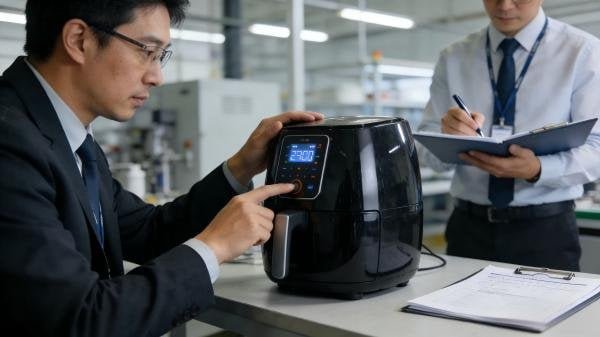
From our experience on the factory floor, clear communication is everything. Ambiguity in product specifications is the number one cause of disputes. We work with clients to create a detailed "golden sample" and technical sheet that becomes the standard for every unit produced. This upfront work prevents costly mistakes and ensures the final delivery is exactly what you expect.
The Importance of Sample and Trial Orders
Never commit to a large order without first testing the product yourself. Request 5-10 sample units, ideally from different production batches, to check for consistency.
When you receive the samples, conduct thorough tests:
- Performance: Does it cook food evenly and efficiently?
- Temperature Accuracy: Use a thermometer to verify the temperature settings are accurate.
- Durability: Assess the build quality of the basket, housing, and controls.
- User Experience: Is the interface intuitive? Are the instructions clear?
After successful sample testing, place a small trial order (e.g., 500-1,000 units). This allows you to evaluate the supplier’s ability to maintain quality at a larger scale before you commit significant capital.
Pre-Shipment Inspection (PSI)
For any order of significant value, a pre-shipment inspection is essential. This is your last chance to catch any quality issues before the products leave the factory and you make the final payment. A third-party inspector will visit the factory and check a random sample of your finished products against a checklist that you provide.
Your inspection checklist should be detailed and cover all critical aspects:
| Inspection Category | Key Checkpoints |
|---|---|
| Workmanship & Aesthetics | Scratches, dents, misaligned parts, color consistency. |
| Functional Testing | Power on/off, control panel response, heating function, timer accuracy. |
| Safety Checks | Overheat protection test, cord and plug integrity, stability on a flat surface. |
| Packaging & Labeling | Barcode scanning, shipping mark accuracy, drop test for packaging durability. |
If the inspection fails, you have leverage to ask the supplier to rework or replace the defective units before you release the final payment. This simple step can save you from receiving a container full of unsellable products.
Conclusion
Identifying high-quality air fryer suppliers in China is a systematic process of verification. By checking credentials, verifying certifications, confirming references, and conducting rigorous inspections, you can build reliable, long-term partnerships.
-
Understanding CE marking is crucial for ensuring your products meet EU safety standards, enhancing market access. ↩ ↩
-
Explore UL and ETL certifications to ensure your products are safe for North American markets, boosting consumer trust. ↩
-
Learn about ISO 9001 to understand how it can improve your supplier’s quality management and operational efficiency. ↩