A low air fryer quote can look like a win, but hidden quality, compliance, and after-sales gaps can erase the profit fast.
The biggest mistakes importers make when buying air fryers from China are choosing only by price, ignoring food-contact parts, accepting vague certificates, missing market-specific compliance, failing to control production changes, and underestimating after-sales risk.
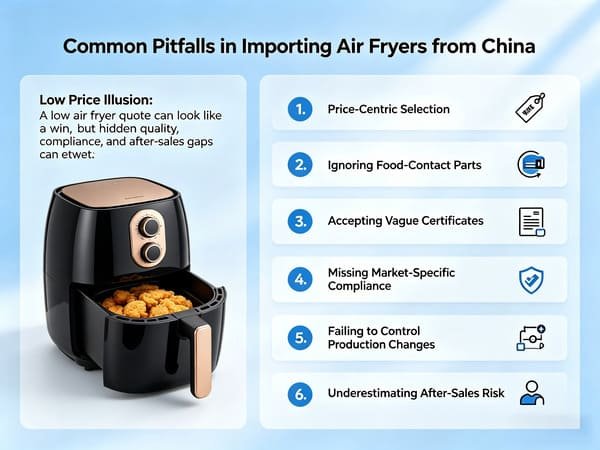
When we work with air fryer buyers, I often see the same problems appear before bulk orders. Some importers focus too much on unit price. Some only ask for CE or RoHS. Some accept “PFOA-free” or “food grade” without checking the coating code, migration report, or finished basket test. Some approve a good sample but do not lock the same materials for mass production.
Buying air fryers from China can be very profitable when the process is controlled. But an air fryer is not a simple product. It has electrical parts, food-contact parts, coatings, plastics, heating systems, fans, packaging, manuals, labels, and sometimes smart app functions. Each part can create risk if the importer only trusts supplier claims. The safer way is to verify the exact product, exact factory, exact coating, exact compliance file, exact labels, and exact production materials before bulk order.
What Supplier Verification Mistakes Do Importers Make When Buying Air Fryers from China?
A supplier website or low quotation is not enough proof. I always check whether the supplier can control the real product behind the offer.
Importers often make supplier verification mistakes by choosing air fryer suppliers only by price, Alibaba ranking, fast replies, or sample appearance without checking factory capability, product knowledge, compliance support, and after-sales responsibility.
The first mistake is treating every supplier as equal. Some suppliers are factories. Some are trading companies. Some have strong engineering and QC teams. Some only resell existing models. A buyer may receive the same product picture from several suppliers, but the real production control can be very different.
| Supplier Check | What Importers Should Verify | Common Mistake |
|---|---|---|
| Factory identity | Who produces the air fryer? | Only checking quotation sheet |
| OEM/ODM ability | Can they customize structure, logo, coating, packaging? | Assuming all suppliers can develop |
| Compliance support | Can they provide model-specific reports? | Accepting vague certificates |
| QC system | Do they inspect materials, process, and finished goods? | Only checking final appearance |
| Engineering support | Can they explain heating, coating, PCB, and safety? | Talking only with sales staff |
| After-sales support | Can they provide parts and claim analysis? | Ignoring warranty process |
In our factory communication, I prefer buyers who ask detailed questions. They ask about coating suppliers, basket testing, plug options, cable standards, food-contact reports, production capacity, packaging tests, and spare parts. These questions help both sides work clearly.
A weak supplier may answer every question with “no problem” but provide no evidence. A stronger supplier may take more time, but they can show documents, photos, records, and clear explanations. For air fryer sourcing, a slower but accurate answer is often safer than a fast but empty promise.
How Do Importers Misjudge Air Fryer Factory Capability, OEM Experience, and Production Capacity?
A good sample does not always prove a strong factory. I check whether the factory can repeat the same quality in bulk.
Importers misjudge factory capability when they approve one good air fryer sample without checking production lines, OEM experience, engineering support, QC staff, capacity, material control, and sample-to-bulk consistency.
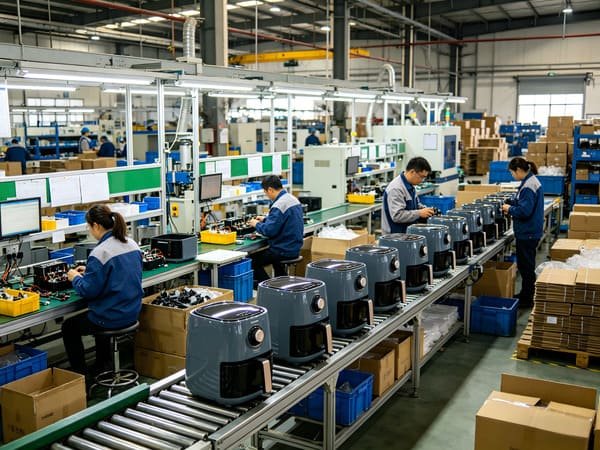
An air fryer factory needs more than assembly workers. It needs reliable component sourcing, heating system control, coating supply control, food-contact knowledge, electrical safety awareness, packaging design, and inspection discipline. If the buyer wants OEM or ODM work, the factory also needs engineering ability and project management.
| Factory Capability | What Buyers Should Ask | Why It Matters |
|---|---|---|
| Production lines | How many lines and workers? | Supports delivery stability |
| OEM experience | Which customization work can they handle? | Reduces development risk |
| Engineering team | Can they modify structure or functions? | Supports private label projects |
| QC process | Incoming, in-process, final inspection | Reduces defect rate |
| Testing equipment | Heating, life, drop, coating, function tests | Supports quality control |
| Capacity plan | Monthly output and peak season schedule | Prevents delivery delay |
| Material control | Approved suppliers and batch records | Prevents silent changes |
Some buyers only ask, “What is your monthly capacity?” That is not enough. A factory may quote a high capacity, but real output depends on worker skill, material supply, production schedule, and QC control. If the order uses a custom basket, special coating, smart control panel, or private label packaging, capacity may change.
I also suggest checking whether the factory has handled similar export markets. EU, US, Latin America, and Middle East orders may need different plugs, voltages, labels, manuals, certificates, and packaging standards. A factory with real export experience can help buyers avoid simple but costly mistakes.
Which Compliance Document Mistakes Create Risk When Importing Air Fryers from China?
Certificates can look professional but still be wrong for your shipment. I match every report to the exact air fryer model.
Compliance document mistakes include accepting old reports, reports for another model, generic certificates, missing food-contact evidence, wrong plug or voltage documents, and files that do not match the factory or production version.
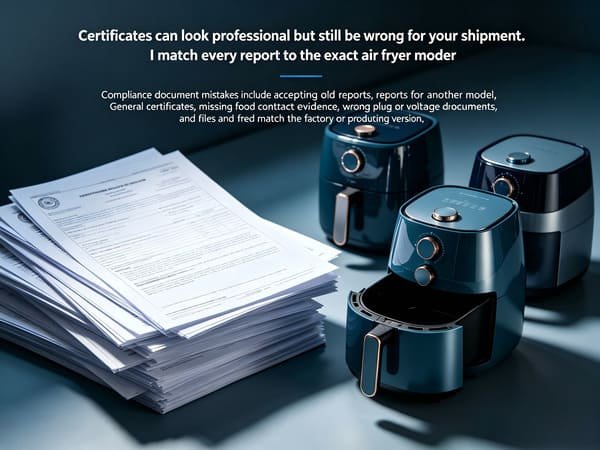
Many importers ask, “Do you have CE, RoHS, or UL?” This question is too broad. A better question is, “Please provide documents for this exact model, voltage, plug, PCB, basket, coating code, factory, label, and production version.” The difference is important. A report for a similar air fryer may not cover your SKU.
| Document Area | Common Mistake | Better Check |
|---|---|---|
| CE | Only checking logo or certificate image | Check DoC, LVD, EMC, model match |
| RoHS | Accepting general statement | Check report and component coverage |
| Food contact | Ignoring basket and tray reports | Check migration reports |
| Plug and cable | Using wrong-market documents | Check target-market plug and cable |
| REACH/SVHC | Accepting “REACH OK” | Request material declaration |
| WEEE | Assuming supplier certificate covers importer | Check country producer duty |
| US safety | Assuming one report fits all retailers | Check buyer and retailer needs |
For EU sales, importers may need CE, LVD, EMC, RoHS, food-contact documents, REACH/SVHC, SCIP where relevant, WEEE data, packaging EPR information, GPSR-related labeling and traceability, correct labels, and local-language manuals. For US sales, buyers may need electrical safety evidence, food-contact compliance support, FCC documentation where wireless or RF rules apply, and retailer-specific documents.
The key is document matching. A product can be well made but still blocked from sale if the documents do not match the product. Importers should review the file before production, not after goods arrive.
Why Is Ignoring Air Fryer Food-Contact Components a Common Importer Mistake?
An air fryer is not only an electrical appliance. I always check the parts that touch food, oil, steam, and heat.
Ignoring food-contact components is a major mistake because CE, UL, or RoHS documents do not prove that the basket, tray, coating, silicone parts, rack, or inner pot are safe for food contact.
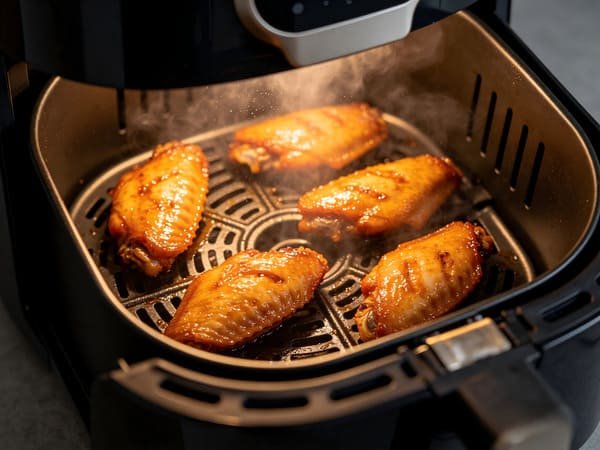
The food-contact parts are the parts consumers notice most. The basket, crisper tray, rack, inner pot, silicone parts, and coating touch food directly or indirectly. If the coating peels, smells, stains, rusts, or releases particles, customers may see it as a food safety problem. That can create returns and bad reviews.
| Food-Contact Part | What Importers Should Check | Common Mistake |
|---|---|---|
| Basket | Coating code, migration report, adhesion | Only checking appearance |
| Crisper tray | Coating and food-contact surface | Assuming basket report covers it |
| Inner pot | Material and heat exposure | No separate report |
| Silicone gasket | Food-contact and odor test | Ignoring small parts |
| Rack | Metal and coating evidence | No metal release check |
| Non-stick coating | PFAS/PTFE/PFOA disclosure | Accepting marketing names |
| Accessories | Finished-part test evidence | Using raw-material report only |
Vague coating claims are risky. Words such as “PFOA-free,” “ceramic,” “stone coating,” “marble coating,” or “food grade” are not enough. Importers should ask for coating type, coating code, coating supplier, migration reports, heavy metals tests, PFAS/PFOA/PFOS/PTFE declarations, adhesion tests, abrasion tests, and thermal cycling results.
In our development process, I prefer testing the finished basket, not only the raw coating. The consumer uses the finished part after spraying, curing, assembly, packing, and shipment. That is the part that should be verified.
How Does Choosing the Lowest Air Fryer Quote Lead to Hidden Cost and Quality Problems?
A low price may come from real efficiency, or it may come from weaker materials. I always check what changed behind the quote.
Choosing the lowest air fryer quote can create hidden costs when the supplier uses thinner basket metal, weaker coating, cheaper plastic, lower-grade cable, poor packaging, incomplete reports, or weak inspection.

A low unit price is not always bad. Some factories have better supply chains or better production efficiency. But buyers should not compare prices without comparing specifications. Two air fryers can look the same in photos but have different material quality, coating thickness, cable quality, thermostat precision, packaging strength, and inspection level.
| Price Difference Area | Low-Cost Risk | Possible Result |
|---|---|---|
| Basket metal | Thinner material | Warping or rust |
| Coating | Lower thickness or weaker supplier | Peeling or sticking |
| Plastic housing | Lower-grade resin | Odor, deformation, poor finish |
| Cable and plug | Lower-grade parts | Safety or compliance risk |
| PCB and thermostat | Less stable control | Uneven cooking |
| Packaging | Weak carton and protection | Shipping damage |
| Testing | Less inspection | More defects after shipment |
| Documents | Incomplete reports | Market access problem |
Importers should ask each supplier for the same specification sheet. This should include capacity, power, voltage, plug, basket material, coating code, coating thickness, plastic material, cable standard, packaging structure, test reports, MOQ, lead time, and warranty terms. Then the buyer can compare real value, not only price.
A cheaper air fryer can become expensive after returns, retailer chargebacks, repacking, reinspection, listing delays, warranty claims, and bad reviews. The best sourcing target is not the lowest price. It is the best controlled cost for the buyer’s market position.
What Inspection Mistakes Cause Air Fryer Defects to Reach Importers After Shipment?
Final inspection should not only count cartons. I use inspection to confirm product quality, compliance details, and production consistency.
Inspection mistakes include skipping pre-shipment inspection, checking only appearance, not testing cooking function, ignoring coating defects, missing label errors, and failing to compare bulk goods with approved samples and documents.
Many air fryer defects can be found before shipment if the inspection plan is clear. But if the buyer only checks carton quantity or surface appearance, problems may still pass. The inspection should cover function, safety details, coating condition, label, manual, packaging, accessories, and sample-to-bulk match.
| Inspection Area | What Should Be Checked | Common Missed Defect |
|---|---|---|
| Appearance | Housing, panel, basket, scratches | Cosmetic defects |
| Function | Heating, fan, timer, buttons, display | Unit does not work |
| Temperature | Cooking stability and control | Underheating or overheating |
| Basket coating | Peeling, bubbles, scratches, edge coverage | Coating failure |
| Odor | Heat-up smell check where practical | Strong plastic or coating odor |
| Label | Model, voltage, power, CE/WEEE/importer info | Wrong market label |
| Manual | Language, warnings, model match | Wrong or missing manual |
| Packaging | Drop protection and carton strength | Shipping damage |
| Accessories | Rack, tray, screws, recipe book | Missing items |
| Traceability | Batch code and carton record | Hard claim tracking |
For bulk orders, I suggest random sampling from finished packed goods. The inspector should record carton numbers, batch codes, label photos, basket photos, function results, and packaging details. If the order is high risk, random samples can be sent to a lab before shipment.
Inspection standards should be agreed before production. If buyers do not define acceptable and unacceptable defects, the supplier may treat coating bubbles, small scratches, or packaging weakness as acceptable. A clear inspection checklist prevents arguments after shipment.
How Do Weak Warranty, Spare Parts, and After-Sales Terms Increase Air Fryer Import Risk?
After-sales terms look unimportant until the first claim arrives. I define responsibility before the purchase order is signed.
Weak warranty, spare parts, and after-sales terms increase import risk because coating failure, heating problems, fan noise, damaged baskets, unclear manuals, packaging damage, and missing parts can create returns and bad reviews.
Air fryer after-sales problems can come from many places. Coating may peel. Food may stick. The basket may rust. The fan may become noisy. A handle may loosen. The manual may confuse users. The carton may fail during delivery. If the warranty terms are vague, the buyer and supplier may argue after the market problem appears.
| After-Sales Item | What Importers Should Define | Why It Matters |
|---|---|---|
| Warranty period | Product, parts, coating, accessories | Sets responsibility time |
| Covered defects | Heating failure, coating peeling, PCB failure | Avoids argument |
| Exclusions | Misuse, metal tools, wrong cleaning | Protects fair responsibility |
| Spare parts | Basket, tray, PCB, heater, fan, handle | Supports repair |
| Claim evidence | Photos, video, batch code, samples | Helps investigation |
| Replacement rule | Parts, credit, refund, or next-order support | Controls cost |
| Response time | Supplier reply and action deadline | Speeds claim handling |
| Root-cause analysis | Supplier must review batch data | Prevents repeat problems |
For smart air fryers, after-sales risk is even higher. Buyers must also define app support, Wi-Fi module issues, firmware bugs, cloud service, OTA updates, privacy complaints, and connectivity failures. A smart air fryer needs both hardware and software support.
The safest rule is simple. Do not buy air fryers from China based only on price and supplier claims. A good supplier should prove product quality, food-contact safety, electrical compliance, market readiness, production traceability, spare parts support, and after-sales responsibility before bulk order.
Conclusion
I avoid air fryer sourcing mistakes by verifying supplier capability, food-contact safety, compliance files, production materials, inspection plans, and after-sales support before bulk orders.
FAQ:
What is the biggest mistake importers make when buying air fryers from China?
The biggest mistake is choosing air fryers only by unit price. A low quote may hide weaker coating, thinner basket metal, cheaper plastic, poor packaging, incomplete compliance documents, and higher after-sales cost.
Why should importers verify air fryer suppliers before ordering?
Importers should verify air fryer suppliers because not every supplier has real factory control, OEM experience, compliance support, QC systems, food-contact knowledge, production capacity, and after-sales responsibility.
Do CE, UL, or RoHS reports prove air fryer food-contact safety?
No. CE, UL, and RoHS do not prove food-contact safety. Importers should request food-contact migration reports for baskets, trays, coatings, silicone parts, racks, inner pots, and accessories.
What coating documents should air fryer importers request?
Air fryer importers should request coating type, coating code, coating supplier, migration reports, heavy metals tests, PFAS/PFOA/PFOS/PTFE declarations, adhesion tests, abrasion tests, and thermal cycling results.
Why are generic air fryer certificates risky?
Generic certificates are risky because they may not match the exact air fryer model, factory, voltage, plug, PCB, basket, coating, label, manual, or production version used in the bulk order.
What EU documents may air fryer importers need?
EU air fryer importers may need CE, LVD, EMC, RoHS, food-contact reports, REACH/SVHC declarations, SCIP assessment, WEEE data, packaging EPR information, GPSR labeling, traceability, and local-language manuals.
What inspection checks are important before air fryer shipment?
Important air fryer inspection checks include appearance, heating function, temperature control, basket coating, odor, labels, manuals, packaging, accessories, batch traceability, carton condition, and sample-to-bulk consistency.
How can importers prevent air fryer sample-to-bulk mismatch?
Importers can prevent mismatch by locking the BOM, coating code, plug, cable, PCB, plastic resin, thermostat, label, manual, packaging, and key suppliers in the purchase contract before mass production.
What after-sales terms should air fryer importers define?
Importers should define warranty period, covered defects, exclusions, spare parts, claim evidence, replacement rules, response time, root-cause analysis, batch traceability, and supplier responsibility for quality problems.