
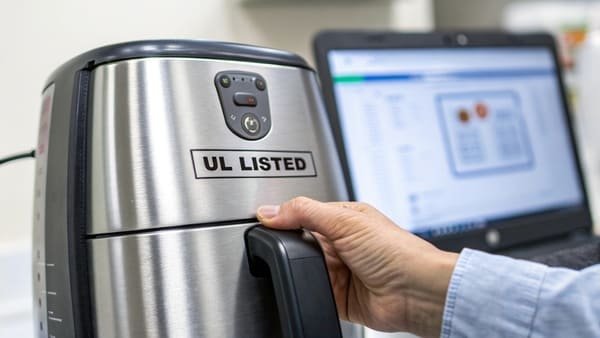
Are you worried that the air fryers you’re sourcing might have fake safety certifications? A fraudulent UL or ETL mark puts your business at risk of recalls, legal issues, and damaged reputations.
To verify UL or ETL certification for air fryers from China, you must use the official online databases. Search the UL Product iQ or Intertek ETL Directory using the file number, manufacturer, or model. Always cross-reference this data with the physical mark on the product itself.
Verifying these credentials is a critical step in our own quality assurance process before any shipment. Let’s walk through the exact steps you can take to protect your business and ensure your products are compliant and safe.
What steps should I take to confirm UL or ETL certification status?
You’ve received a PDF certificate from a supplier, but how can you be sure it’s legitimate? In our experience shipping to the US, simply trusting a document isn’t enough; you need an objective verification process.
First, obtain the UL file number or ETL control number from your supplier. Second, use this number to search the official UL Product iQ or Intertek online directories. Finally, physically inspect the product and its packaging for a genuine, correctly formatted certification mark.
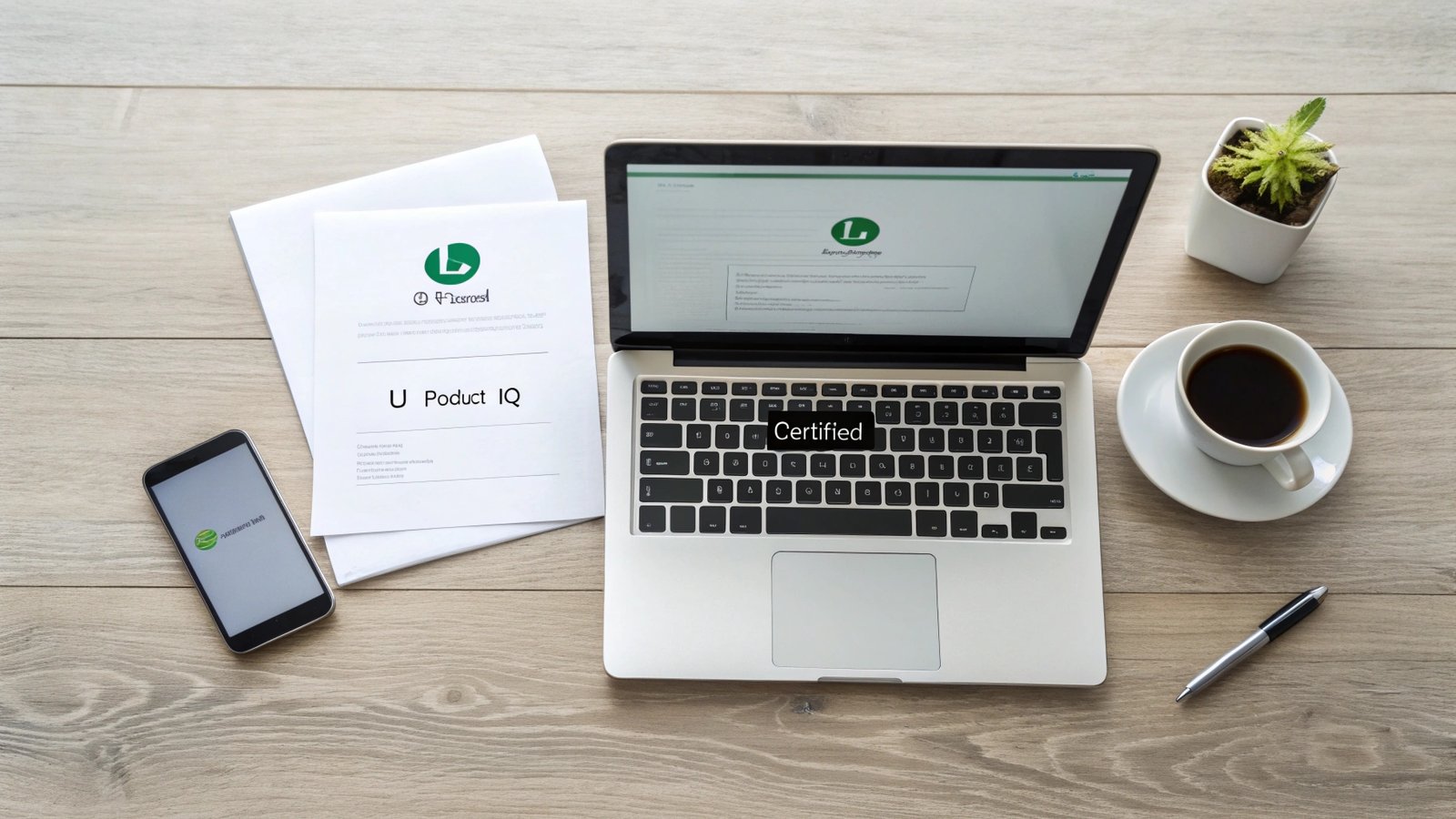
Confirming certification is a three-part process: document review, database verification, and physical inspection. Each step is crucial for rooting out non-compliance and ensuring the air fryers you import meet North American safety standards. Skipping any of these steps creates a loophole that can be exploited. When we prepare a new product line for a client, we follow this procedure meticulously.
The Initial Document Request
Your first move is to ask the supplier for the certification documents. Don’t just ask for "the certificate." Be specific. Request the UL Certificate of Compliance or the ETL Certificate of Authorization1. A legitimate supplier will have these readily available. The key piece of information you need from this document is the unique identifier:
- For UL, this is the File Number (e.g., E123456).
- For ETL, this is the Control Number.
Online Database Verification
This is the most critical step. Never take a PDF at face value. Go directly to the source.
- For UL Certification: Use the UL Product iQ database. It’s a free, public search tool. You can search by the File Number or the company name. A successful search will show the company, its address, and the specific product categories it is certified for.
- For ETL Certification: Use the Intertek ETL Listed Mark Directory. Similar to the UL database, you can search by the Control Number, company name, or product model to verify the listing.
Physical Product Inspection
A valid certificate in the database is great, but the mark must also be on the product itself. Counterfeit marks are a common issue. During a pre-shipment inspection, we check for the following:
| Mark Type | What to Look For on the Product | Common Red Flags |
|---|---|---|
| UL | The "UL" in a circle, the word "LISTED," a Control Number, and product identifier. | Missing any of the four elements; typos; the word "Approved" instead of "LISTED." |
| ETL | The "ETL" letters, the word "Listed" underneath, and a control number nearby. | Mark appears only on the box, not the product; poor quality label printing. |
If the online database record matches a correctly formatted mark on the physical product, you can be confident in its certification.
How can I check the authenticity of UL/ETL certificates with the issuing bodies?
Even with database access, you might have lingering doubts, especially if a supplier’s story seems inconsistent. When large orders are on the line, we sometimes take the extra step for our clients: direct contact with the certifiers.
You can directly contact the UL Customer Experience Center or Intertek’s regional customer service by phone or email. Provide the manufacturer’s name, product model, and the certificate’s file or control number, and they will definitively confirm its authenticity and status.
Going straight to the source eliminates all ambiguity. Certification bodies are the ultimate authority on the status of any certificate bearing their name. This step is particularly useful if you suspect a supplier is using a valid certificate for a different, uncertified product. It’s a power move that provides absolute certainty. We find that this direct approach is the quickest way to resolve any complex certification questions.
How to Contact UL Solutions
UL makes it easy to verify information. Their customer experience team is trained to handle these inquiries from importers, customs agents, and consumers.
Information to Prepare:
- Manufacturer’s Full Company Name
- Product Model Number
- UL File Number2 (e.g., E123456)
- A photo of the UL mark on the product, if possible.
You can reach them through the contact information available on their official website. An email inquiry usually receives a response within a few business days.
How to Contact Intertek
Intertek also provides resources for verifying ETL marks. Their global presence means you can often find a regional office to contact for faster service.
Information to Prepare:
- Manufacturer’s Full Company Name
- Product Model Number
- ETL Control Number3
- The specific standard listed (e.g., UL 1026 for air fryers).
The "Contact Us" section on Intertek’s website will guide you to the appropriate department.
| Issuing Body | Primary Contact Method | Recommended For |
|---|---|---|
| UL Solutions | Email to Customer Experience Center | Verifying UL File Number2s and specific product model listings. |
| Intertek | Online Contact Form / Regional Office | Confirming ETL Control Number3s and checking certificate scope. |
This direct verification is your final line of defense against fraudulent claims.
What information should be included on valid certification documents?
Receiving a certificate is just the start; knowing how to read it is what matters. In our factory, we handle these documents daily and know exactly what to look for to distinguish a real certificate from a fake one.
A valid UL or ETL certificate must clearly state the manufacturer’s full name and address, the specific product models covered, the safety standards it complies with (e.g., UL 1026), the unique file/control number, and the issue date.
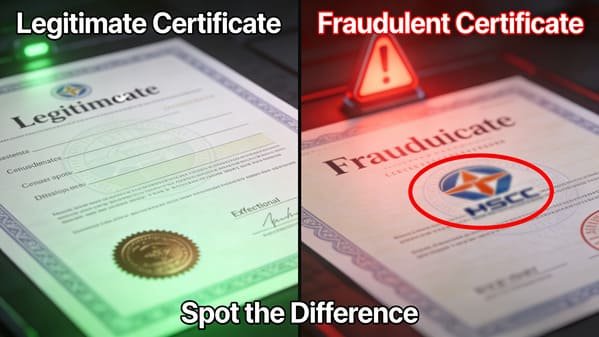
A genuine certificate is a detailed, specific legal document. It’s not a simple "seal of approval." It links a specific manufacturer to specific products under specific standards. Vague or incomplete information is a major red flag. Think of it as a passport for your product; if any information is missing or doesn’t match, it won’t be granted entry. Any discrepancy here should prompt you to halt your order and investigate further using the online databases or by contacting the certification body directly.
Key Components of a Certificate of Compliance
When you review a UL or ETL certificate, check for these non-negotiable elements:
- Applicant/Manufacturer Information: The full legal name and physical address of the factory. This must match the supplier you are dealing with.
- Product Identification: The exact model numbers that are certified. A certificate for model "AF-100" does not cover model "AF-200," even if they look similar.
- Applicable Standards: The document must list the specific safety standard the product was tested against. For an air fryer sold in the US, this should be UL 10264.
- Unique Identifier5: The UL File Number or ETL Control Number. This is the key you will use for database verification.
- Issuing Body’s Name and Mark: The official name (e.g., UL Solutions, Intertek) and logo should be present.
Common Document Red Flags
From our experience, here are some warning signs on documents provided by suppliers:
| Information Section | Legitimate Certificate | Potential Fake |
|---|---|---|
| Manufacturer | Full, exact legal name and address. | A trading company’s name, or a generic name like "Appliance Factory." |
| Model Numbers | Specific models listed (e.g., AF-501, AF-502). | Vague terms like "Air Fryer Series" or a missing model list. |
| Standards | Lists specific standard like "UL 10264". | Generic claims like "Meets UL standards" or lists irrelevant European (CE) standards. |
| Appearance | Clean, professional layout with no errors. | Spelling mistakes, blurry logos, or evidence of digital alteration. |
Always treat the certificate as a claim that requires verification, not as proof in itself.
How do I address suppliers who cannot provide proper certification?
You’ve asked for a UL certificate, and the supplier gets defensive or offers excuses. This is a situation we’ve seen many times. How you handle it defines the safety of your product and the integrity of your supply chain.
If a supplier cannot provide a valid UL or ETL certificate or if the one they provide fails verification, you should not proceed with the purchase. Politely state that certification is a non-negotiable requirement for your market and find another supplier.

There is no "partially" compliant. A product is either certified or it is not. Excuses about the certificate being "in process" or "pending" are common tactics to delay and secure an order for a non-compliant product. In our production planning, certification isn’t an afterthought; it’s a foundational requirement that must be in place before a single unit is built for an export order. Protecting your business means being willing to walk away from a deal that carries unacceptable risk.
Common Excuses and How to Respond
Suppliers of uncertified goods are often creative with their excuses. Here’s how to handle them:
- Excuse 1: "The certificate is processing, we will have it soon."
- Your Response: "Thank you for the update. We can only place an order once the product is officially listed in the UL/ETL database6. Please contact us when the certification is complete and verifiable." This puts the responsibility back on them.
- Excuse 2: "Our other model is certified, and this one is the same."
- Your Response: "Unfortunately, each model must be independently certified. Our import regulations require the exact model we are purchasing to have its own valid certification."
- Excuse 3: "We have a CE certificate7, which is just as good."
- Your Response: "While CE is necessary for Europe, our market is North America, which legally requires UL or ETL certification. We cannot accept CE as an alternative."
The Right Way Forward
Your policy should be firm and clear: no verifiable certificate, no order. This is not being difficult; it’s being a responsible importer. When a supplier sees that you understand the certification process and will not compromise on it, they will either meet your requirements or disqualify themselves. This approach quickly filters out unreliable partners and directs you toward professional manufacturers who, like us, prioritize compliance and safety from the start. Finding a new, compliant supplier is always better than dealing with the fallout from an unsafe product.
Conclusion
Verifying UL and ETL certifications is a non-negotiable step. Use online databases, inspect physical marks, and contact certifiers directly to ensure compliance and protect your business from risk.
-
Verifying the ETL Certificate of Authorization is essential for product reliability. This resource will guide you through the verification process. ↩
-
Understanding UL File Numbers is crucial for verifying product safety and compliance. Explore this link to learn more. ↩ ↩
-
Verifying ETL Control Numbers ensures product safety and compliance. Discover more about this process through the provided link. ↩ ↩
-
Understanding UL 1026 is crucial for ensuring safety and compliance in air fryer products. Explore this link for detailed insights. ↩ ↩
-
Learn about the importance of Unique Identifiers in verifying product compliance and ensuring safety standards are met. ↩
-
Understanding the UL/ETL database is crucial for ensuring product safety and compliance in North America. ↩
-
Exploring the differences between CE and UL/ETL certifications can help you make informed decisions about product compliance. ↩