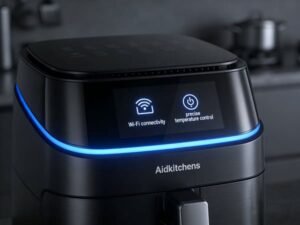

Worried your air fryer order is lost in a production black hole? You need clear updates, but distance makes it hard. We build transparent systems for this exact reason.
To effectively monitor air fryer production, establish a clear communication plan with your supplier. Utilize a mix of weekly reports, photo/video updates, and key production checkpoints. For independent verification, consider hiring a third-party inspection service for on-site visits and detailed reports.
Gaining visibility into your overseas production doesn’t have to be complicated. By setting clear expectations and using the right tools, you can stay in control from thousands of miles away. Let’s break down exactly how you can set this up for a smooth and predictable manufacturing process.
What tools or reports can suppliers provide for production tracking?
Feeling in the dark about your production status? Vague emails are not enough. Our clients receive specific, actionable reports that track every step of their air fryer order.
Reliable suppliers can provide Gantt charts for timelines, weekly photo/video logs of the assembly line, and Material & Component Status reports. For quality, they should offer internal QC reports and certificates of compliance for key components upon request, ensuring total transparency.
When you place an order, you’re not just buying a product; you’re investing in a process. A professional supplier understands this and will have a system of documentation to keep you informed. You should request these tools as part of your purchase agreement. Don’t be afraid to ask. In our factory, providing these documents is a standard part of our service for OEM/ODM clients. It builds trust and prevents misunderstandings.
Key Reporting Tools
A Gantt chart is one of the most powerful tools. It is a visual timeline that shows every stage of production, from sourcing raw materials to final assembly and packaging. It outlines start and end dates for each task, helping you see if the project is on schedule. We also provide weekly progress reports. These are often simple emails but should include photos and videos of your specific products on the assembly line. This visual proof confirms that work is being done.
Understanding QC and Material Documentation
Beyond timelines, you need to know about the quality of the components. A Material & Component Status report confirms that the correct parts, like the specified heating element or PCB, have been ordered and received. This prevents nasty surprises later. We also maintain internal Quality Control (QC) reports from every stage. While these are useful, many clients also hire their own third-party inspectors for an unbiased view. We welcome these inspectors into our facilities as it shows a shared commitment to quality.
Here are some common documents you can request:
| Report / Tool | What It Shows | Why It’s Important for You |
|---|---|---|
| Gantt Chart | Project timeline with key milestones. | Visualizes the entire production schedule and helps track deadlines. |
| Weekly Photo/Video Log | Images/videos of your order on the line. | Provides tangible proof of progress and current production status. |
| Material Status Report | Confirms procurement of key components. | Ensures the correct parts are being used and avoids early-stage delays. |
| Internal QC Reports | Results from the factory’s quality checks. | Offers insight into the supplier’s quality standards and defect rates. |
How can I set up regular updates and checkpoints during manufacturing?
Does "we will update you soon" sound familiar? Unstructured communication leads to missed deadlines. We structure our client projects with clear checkpoints to ensure you’re always informed and in control.
Establish a formal communication schedule in your purchase order, specifying weekly updates via email or a shared platform. Define critical checkpoints like Pre-Production, Initial Production, and Mid-Production, requiring sign-off before proceeding. This formalizes communication and creates clear accountability points.
A verbal agreement to "keep in touch" is not a strategy. A proactive approach requires defining the "what, when, and how" of communication before production even begins. When we kick off a new project, we work with the client to build a communication plan that fits their needs. This includes designating a single point of contact on both sides to streamline communication and avoid confusion. Using a platform like WhatsApp or WeChat for quick questions is great, but formal updates and approvals should always be documented in writing via email. This creates a clear record that both parties can refer to.
Defining Critical Checkpoints
Your production journey has several key moments where a check-in is crucial. These are not just updates; they are gates. Production should not move to the next stage until you have reviewed and approved the current one. This gives you control and allows you to catch issues early, when they are cheapest and easiest to fix. We recommend a minimum of three core checkpoints for any air fryer production run.
Creating a Communication Schedule
Consistency is key. A regular, scheduled update, even if it’s just to say "everything is on track," provides immense peace of mind. A simple weekly email with a standard format (e.g., progress this week, next week’s plan, any potential issues) works wonders. This discipline forces the supplier to actively review your project’s status and keeps you from having to constantly chase them for information.
This sample schedule can be adapted and included in your purchase order:
| Checkpoint | Typical Timing | Key Actions for You |
|---|---|---|
| Pre-Production Meeting (PPM) | Before production starts | Confirm all specs, materials, packaging, and timelines. Sign off on the "golden sample." |
| Initial Production Check (IPC) | First 5-10% of units produced | Review the first finished products. Check for quality and consistency against the golden sample. |
| Mid-Production Check (MPC) | When 30-50% of units are complete | Inspect products from the middle of the run to ensure quality is being maintained. |
| Pre-Shipment Inspection (PSI) | When 100% of units are packed | Final random inspection of products and packaging. Verify function, safety, and quantities. |
| Weekly Progress Report | Every Friday | Receive a summary email with photos/videos. Review and ask questions. |
What signs indicate potential delays or issues in production?
Are your supplier’s emails getting shorter? Are they suddenly hard to reach? These are not just annoyances; they are often the first signs that your production schedule is in trouble.
Warning signs include vague or inconsistent communication, a sudden lack of photo or video evidence, and repeated excuses for missing small milestones. Another major red flag is a supplier’s resistance to a third-party inspection, which often suggests they are trying to hide problems.
From our experience on the factory floor, we know that small problems can escalate quickly if they are not addressed. A good supplier will be transparent about issues and present you with a solution. A struggling supplier will try to hide them. The key is to learn how to read the early warning signs so you can intervene before a minor delay becomes a major disaster. For example, if your contact person suddenly changes without a formal introduction, it could mean there’s internal turmoil at the factory that might impact your order. Pay attention to the quality of communication. If detailed updates turn into one-line answers, it is time to dig deeper and ask more specific questions.
Communication-Based Red Flags
The most common signs are related to communication. When a supplier who was previously responsive starts taking days to reply, be alert. If they can’t provide a clear answer to a direct question about which production stage they are in, it’s a cause for concern. Excuses like "local holidays" or "power outages" can be legitimate, but if they become a weekly occurrence, they are likely being used to cover up deeper issues like poor planning or cash flow problems.
Production-Based Red Flags
Beyond communication, there are physical signs. If the weekly photos you receive look suspiciously similar to last week’s photos, they might be recycling old images. A refusal to allow a scheduled third-party inspection is one of the biggest red flags. A reliable factory with nothing to hide will welcome inspectors. If they push back with endless excuses, they are almost certainly hiding quality issues or significant delays.
Here are some common signs and what they might really mean:
| Warning Sign | What It Could Mean |
|---|---|
| Vague Communication | The supplier doesn’t know the real status or is hiding a problem. |
| Missed Minor Deadlines | Poor project management; larger delays are likely to follow. |
| Resistance to Inspections | Hiding major quality defects or schedule slippages. |
| Excuses about Raw Materials | Cash flow problems or a poor relationship with their own suppliers. |
| High Staff Turnover | Internal instability at the factory that could disrupt your order. |
How do I address problems detected during production monitoring?
Discovering a problem mid-production is stressful. But panicking or sending angry emails rarely helps. A calm, systematic approach is the fastest way to get your order back on track.
Immediately address any detected problems in writing, providing clear evidence like photos or inspection reports. Schedule a video call with the supplier to discuss the root cause and agree on a corrective action plan (CAP) with a clear timeline and responsibilities.
When an issue arises on one of our production lines, the first thing we do is notify the client with all the facts. We expect the same clarity in return. The goal is not to assign blame, but to solve the problem. Start by documenting everything. Forward the third-party inspection report or your own photos to your supplier contact. State the problem clearly and reference your contract or spec sheet. For example: "The inspection report shows 15% of units have cosmetic defects on the housing, which exceeds the AQL of 2.5% we agreed to in the PO." This fact-based approach moves the conversation away from opinions and toward solutions.
Escalating the Issue
If your regular contact is unresponsive or unhelpful, don’t hesitate to escalate. Ask to speak with their manager or the factory owner. A single email to a higher-up can often unlock a problem that has been stuck for weeks. On the call, remain professional but firm. The goal is to understand why the problem happened. Was it a bad batch of materials? An issue with a machine? A new worker who was not trained properly? Understanding the root cause is essential to finding a lasting solution.
The Corrective Action Plan (CAP)
Once the problem is understood, you must agree on a Corrective Action Plan. This should be a formal document. It needs to detail exactly what steps the factory will take to fix the current issue (e.g., "rework all affected units") and what they will do to prevent it from happening again (e.g., "add an extra QC check at the molding station"). The CAP must include a new timeline that shows how this will impact your delivery date. Following up on this plan is critical. Don’t just accept the plan; schedule follow-up checks to ensure it is being implemented correctly.
Conclusion
Monitoring your air fryer production in China is about creating a system of transparency and accountability. With clear communication, regular checkpoints, and a proactive mindset, you can manage the process effectively.