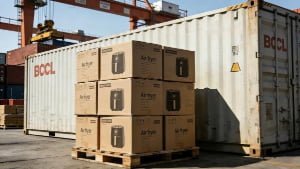
A reliable air fryer manufacturer for bulk OEM and private label orders is identified by consistent production capability, model-matched compliance documents, stable component sourcing, and clear customization limits. Evaluation should focus on certification alignment, sample consistency, MOQ structure, and export experience rather than unit price alone.
Poor manufacturer selection can result in mismatched certifications, unstable heating performance, packaging failures during shipping, and high return rates in retail channels. Hidden risks often appear after mass production begins and cannot be corrected without cost or delay.
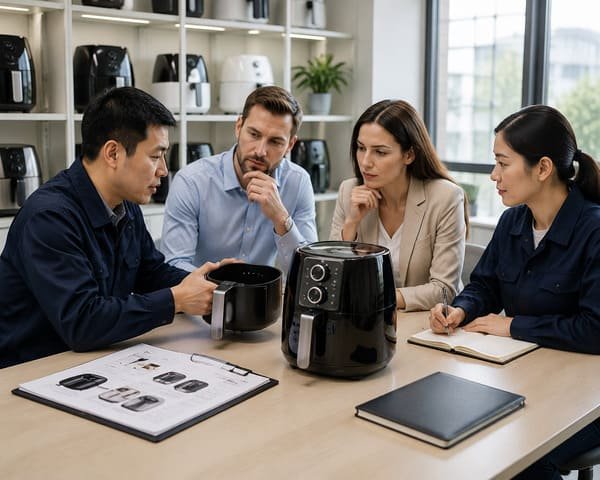
This guide explains how importers evaluate manufacturers, avoid common sourcing mistakes, and structure OEM cooperation to reduce risk in bulk air fryer procurement.
How to Choose the Right Air Fryer Manufacturer for Bulk Orders
A suitable air fryer manufacturer for bulk orders is selected based on production stability, OEM experience, documentation transparency, and ability to maintain consistent quality across large batches. Evaluation should prioritize sample-to-mass-production consistency, clear MOQ structure, and verified export track record across similar product categories.
Incorrect supplier selection often leads to unstable product performance, inconsistent coating quality, and delayed shipments caused by unclear production planning. Buyers may also face unexpected cost increases when packaging, tooling, or certification updates are not clarified early in the negotiation stage.
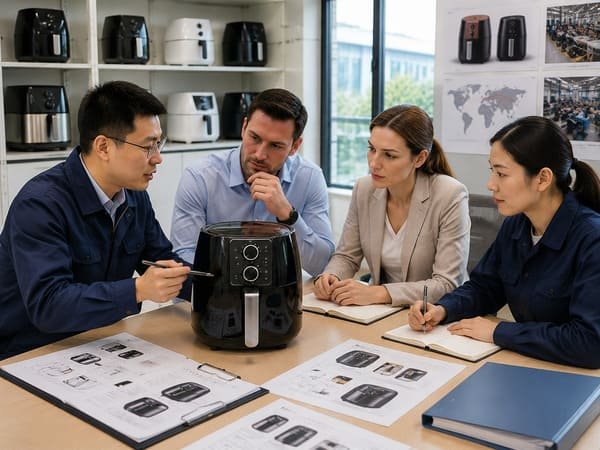
A proper evaluation process starts with understanding whether the manufacturer controls core components such as heating elements, thermostats, and control boards internally or relies heavily on external sourcing. Internal control usually improves stability in mass production.1 Export buyers should also verify whether previous OEM projects match their target market requirements, including voltage, plug type, and certification scope.
Communication clarity is another indicator of manufacturing reliability.2 Suppliers capable of clearly explaining lead time structure, material sourcing, and production scheduling tend to be more predictable during large order execution. Buyers should also request pre-production samples that match final packaging and labeling conditions rather than basic functional samples.
What Air Fryer Models Should Importers Avoid?
Air fryer models that importers should avoid are typically those with unstable component supply chains, unclear certification mapping, or overly complex designs without proven mass production history. These models often create quality variation between samples and bulk production, increasing return rates and warranty costs.
Risky models can cause unpredictable heating performance, control board failures, and packaging incompatibility during international shipping. These issues often remain hidden during sampling but appear during full container production.
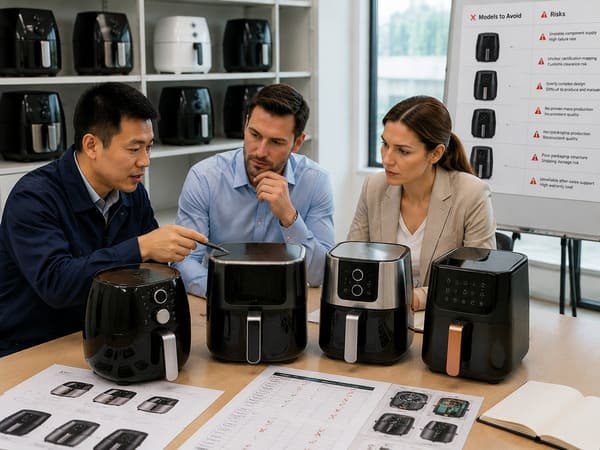
Importers should be cautious with newly designed models that lack production history or rely on multiple non-standard components. Models with excessive customization in airflow design, touchscreen systems, or non-standard accessories often require longer debugging cycles.3 Without stable component sourcing, even small changes in resistor or fan configuration can affect heating uniformity.4
A safer approach is selecting models with proven export records to similar markets. These models usually have stable BOM (bill of materials), established packaging dimensions, and verified certification reports. Importers should also request failure rate history or at least production consistency data from previous shipments when available.
What Materials Should a Reliable Air Fryer Manufacturer Use?
A reliable air fryer manufacturer should use heat-resistant, food-contact safe materials including BPA-free plastics, certified non-stick coatings, and stainless steel components in high-temperature zones. Material selection must comply with target market safety requirements and maintain stability under repeated heating cycles.
Poor material selection can lead to odor issues, coating peeling, overheating deformation, or compliance failure during customs inspection. These risks directly affect brand reputation and retail return rates.

Material evaluation should start with non-stick coating type, especially whether it is PTFE-based or ceramic-based, and whether the supplier can provide coating durability test data. For importers targeting Europe or North America, documentation alignment between materials and certification reports5 is essential. Mismatched materials and certificates are a common cause of customs clearance delays.
Plastic components such as outer housing and control panels must also withstand continuous heat exposure without deformation. Buyers should request thermal aging test results6 or at least structured internal quality control procedures. Reliable manufacturers typically separate material verification into incoming inspection and production line sampling stages.
How Food Contact Safety Is Controlled Before Production
Food contact safety is controlled before production through material verification, supplier qualification checks, and certification alignment with the exact product model. Manufacturers must confirm that all exposed cooking surfaces meet regulatory standards before mass production begins.
Weak control at this stage can result in non-compliant coatings, failed inspections, and shipment rejection at destination ports. These issues are often expensive to resolve after production is completed.
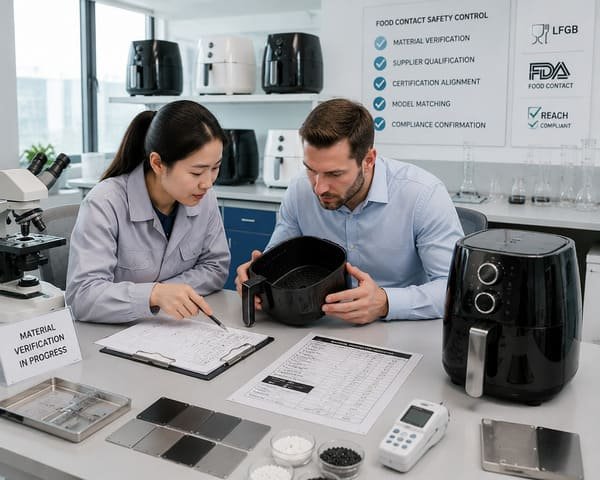
A structured safety control process usually starts with raw material validation from coating suppliers, plastic granulate providers, and metal component vendors7. Each material batch should be traceable and matched with internal specifications. Manufacturers with stronger systems will maintain material traceability records across production batches.
Before production, certification documents such as CE, RoHS, or other target-market requirements8 should be matched against the exact model configuration. Even small changes in heating power or control board design may require updated testing. Buyers should avoid assuming that existing certificates automatically apply to customized versions.
Pre-production approval should include sample testing under real heating conditions, not just visual inspection. This reduces the risk of coating degradation or electrical instability during long-term usage.
What User Manuals and Safety Instructions Should Suppliers Provide?
User manuals and safety instructions from air fryer manufacturers should include clear operating guidance, voltage and plug specifications, cleaning instructions, and warning labels aligned with export market regulations. Documentation must be localized for the target market language and compliance requirements.
Incomplete or unclear manuals can lead to product misuse, increased customer complaints, and liability issues for importers and retailers. Regulatory bodies may also require documentation during product audits.
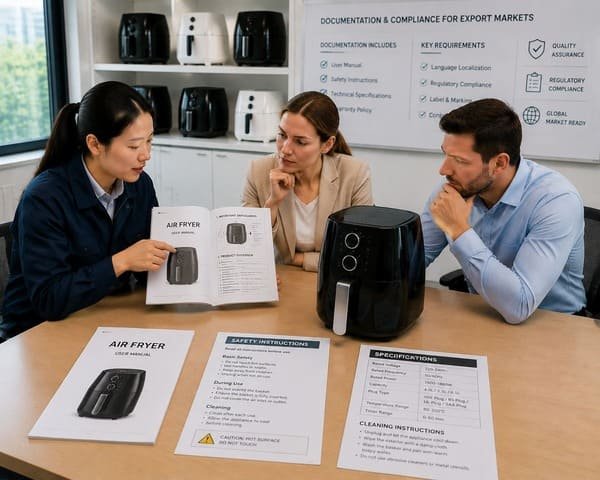
A professional manufacturer will provide structured manuals that include diagrams, step-by-step operation instructions, and safety warnings such as overheating prevention and basket handling precautions. For export markets, multilingual versions are often required, especially for EU and North American retail channels.
Safety instructions must also match certification requirements.9 For example, temperature limits, power ratings, and electrical safety warnings must align with tested specifications. If manuals contain generic descriptions that do not match actual product configuration, retailers may face compliance risks.
Importers should also confirm whether barcode labels, carton markings, and product labeling systems are included in documentation support.10 These elements are often overlooked but critical for warehouse and retail logistics.
How Manufacturers Help Reduce After-Sales Complaints
Air fryer manufacturers reduce after-sales complaints by improving component consistency, strengthening quality inspection processes, and ensuring packaging durability during international shipping. Stable production control directly reduces defect rates and retail return pressure.
High complaint rates often result from inconsistent heating performance, fragile packaging, or unclear user instructions. These issues typically originate from weak quality control or insufficient pre-shipment inspection.
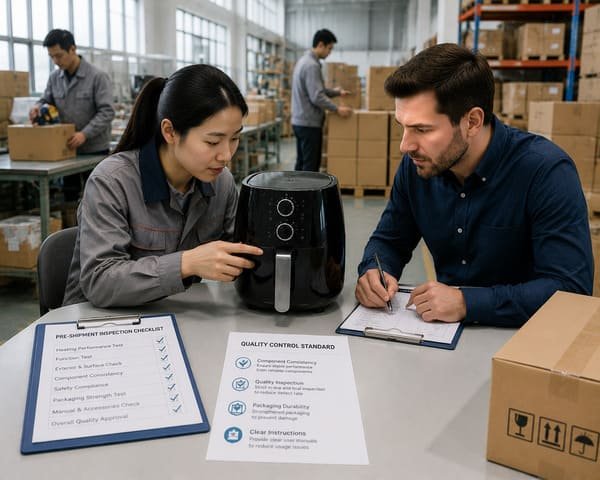
Manufacturers with strong after-sales control systems usually implement multi-stage inspection, including incoming material checks, in-process testing, and final product sampling11. Functional testing should include heating stability, timer accuracy, and safety cutoff performance.
Packaging also plays a major role in reducing complaints. Weak carton design or insufficient internal cushioning can lead to damage during sea freight. Experienced manufacturers simulate transport conditions through drop tests or vibration tests12 to ensure product integrity.
Another key factor is feedback loop management. Reliable suppliers analyze return data and adjust component sourcing or assembly processes accordingly. Importers benefit when manufacturers continuously improve production based on real market feedback instead of static production methods.
FAQ About Air Fryer Manufacturer
What is the most important factor when selecting an air fryer manufacturer for OEM orders?
A reliable selection factor is production consistency across samples and bulk orders, supported by verified export experience and stable component sourcing. These elements determine whether product quality remains stable during mass production and reduces long-term return risks.
Inconsistent manufacturing systems often lead to performance variation between batches. Buyers should prioritize factories with structured quality control systems and clear documentation alignment before committing to large orders.
How can importers verify if an air fryer manufacturer is real and reliable?
Verification depends on multiple signals including business registration, factory capability proof, export records, and model-specific certification alignment. No single document is sufficient to confirm reliability without supporting production evidence.
Manufacturers should provide matching sample reports, production photos, and traceable material sourcing. Buyers should avoid relying only on price or communication speed as reliability indicators.
What certifications are usually required for air fryer import into EU and US markets?
Certification requirements depend on product configuration and target market regulations, commonly including CE, RoHS, or other electrical safety and material compliance standards. Each certification must match the exact model specification.
Changes in voltage, power, or control systems may require updated testing. Buyers should confirm document validity before production begins to avoid customs delays.
Why do air fryer samples sometimes differ from mass production units?
Sample differences occur due to material changes, component substitution, or production line scaling adjustments during mass manufacturing. These variations often appear when supplier communication is not strictly controlled.
Buyers should request pre-production samples that reflect actual mass production materials and packaging to reduce deviation risks.
What affects the MOQ of OEM air fryer orders?
MOQ is influenced by customization level, packaging design, component sourcing complexity, and production setup cost. Simple branding changes require lower MOQ than structural or functional modifications.
Manufacturers adjust MOQ based on material procurement efficiency and production line preparation. Clear negotiation on specifications helps stabilize MOQ expectations.
How can buyers reduce quality risks before shipment?
Quality risks are reduced through structured inspection systems including pre-production approval, in-line testing, and pre-shipment inspection. Each stage helps detect issues before goods leave the factory.
Third-party inspection is commonly used to verify function, packaging strength, and compliance alignment before loading containers.
Conclusion
Reliable air fryer sourcing depends on verified manufacturing capability, stable materials, and strict compliance matching across samples and mass production. Risk control before shipment is more effective than post-import correction.
Send Your Inquiry
To receive accurate quotations and suitable OEM recommendations, provide detailed sourcing requirements including target market, estimated order quantity, product type, required certifications, plug and voltage standards, packaging expectations, logo or private label design, delivery timeline, and inspection requirements.
Clear input helps manufacturers evaluate feasibility faster and reduces misunderstanding during quotation and sampling stages. It also improves matching between product configuration and market compliance needs. Structured inquiries lead to more stable long-term supply cooperation and fewer production deviations.
For OEM discussions and export-ready air fryer solutions, structured communication can be initiated with suppliers
-
"A perspective on Quality-by-Control (QbC) in pharmaceutical … – PMC", https://pmc.ncbi.nlm.nih.gov/articles/PMC9948678/. This source explains how internal control over manufacturing components can enhance production stability by reducing variability and dependency on external suppliers. Evidence role: mechanism; source type: education. Supports: Internal control usually improves stability in mass production.. ↩
-
"Influence of communication determinants on safety commitment in a …", https://pmc.ncbi.nlm.nih.gov/articles/PMC10442955/. This source discusses how clear communication in manufacturing processes correlates with reliability and efficiency in production scheduling. Evidence role: expert_consensus; source type: research. Supports: Communication clarity is another indicator of manufacturing reliability.. ↩
-
"The relationship between mass customization and sustainable …", https://pmc.ncbi.nlm.nih.gov/articles/PMC10950661/. This source explains how excessive customization in industrial equipment can lead to extended debugging cycles due to the complexity of integrating non-standard components. Evidence role: mechanism; source type: research. Supports: Excessive customization in airflow design, touchscreen systems, or non-standard accessories often requires longer debugging cycles.. ↩
-
"Resistor value increased while getting heated : r/AskElectronics", https://www.reddit.com/r/AskElectronics/comments/1o9p7ei/resistor_value_increased_while_getting_heated/. This source discusses how variations in component sourcing, such as resistors or fans, can impact heating uniformity in industrial systems. Evidence role: mechanism; source type: research. Supports: Small changes in resistor or fan configuration can affect heating uniformity without stable component sourcing.. ↩
-
"Examples of Unacceptable vs Acceptable Cargo Descriptions", https://www.cbp.gov/trade/basic-import-export/e-commerce/examples-unacceptable-vs-acceptable-cargo-descriptions. This source explains the importance of aligning material documentation with certification reports to prevent customs clearance delays. Evidence role: mechanism; source type: government. Supports: Mismatched materials and certificates are a common cause of customs clearance delays.. ↩
-
"Heat – Standards | Occupational Safety and Health Administration", http://www.osha.gov/heat-exposure/standards. This source provides an overview of thermal aging tests and their role in assessing material durability under heat exposure. Evidence role: mechanism; source type: research. Supports: Plastic components such as outer housing and control panels must also withstand continuous heat exposure without deformation.. ↩
-
"[PDF] Process Validation: General Principles and Practices | FDA", https://www.fda.gov/files/drugs/published/Process-Validation–General-Principles-and-Practices.pdf. This source explains the importance of raw material validation in ensuring product safety and compliance with industry standards. Evidence role: mechanism; source type: education. Supports: A structured safety control process usually starts with raw material validation from coating suppliers, plastic granulate providers, and metal component vendors.. ↩
-
"RoHS Directive – Department of Toxic Substances Control", https://dtsc.ca.gov/universalwaste/rohs-directive/. This source provides an overview of CE and RoHS certifications and their relevance to product compliance. Evidence role: definition; source type: encyclopedia. Supports: Before production, certification documents such as CE, RoHS, or other target-market requirements should be matched against the exact model configuration.. Scope note: The source may not cover all target-market certifications comprehensively. ↩
-
"[PDF] Training Requirements in OSHA Standards", https://www.osha.gov/sites/default/files/publications/OSHA2254.pdf. This source explains the importance of aligning safety instructions with certification requirements, particularly for temperature limits and electrical safety standards. Evidence role: expert_consensus; source type: education. Supports: Safety instructions must align with certification requirements to ensure compliance and safety.. ↩
-
"EU – Labeling/Marking Requirements", https://www.trade.gov/country-commercial-guides/eu-labelingmarking-requirements. This source highlights the logistical importance of barcode labels, carton markings, and product labeling systems for importers and retailers. Evidence role: general_support; source type: institution. Supports: Barcode labels, carton markings, and product labeling systems are critical for warehouse and retail logistics.. Scope note: The source may focus on specific industries or regions, limiting its general applicability. ↩
-
"Annex 4 WHO guidelines for sampling of pharmaceutical …", https://www.who.int/docs/default-source/medicines/norms-and-standards/guidelines/quality-control/trs929-annex4-guidelinessamplingpharmproducts.pdf?sfvrsn=f6273f30_2. This source outlines the typical stages of inspection implemented by manufacturers to ensure product quality. Evidence role: mechanism; source type: education. Supports: Manufacturers with strong after-sales control systems usually implement multi-stage inspection, including incoming material checks, in-process testing, and final product sampling.. ↩
-
"Package Vibration Testing", https://unitload.vt.edu/facilities/distribution-packaging-lab/package-vibration-testing.html. This source explains the use of drop tests and vibration tests by manufacturers to simulate transport conditions and ensure packaging integrity. Evidence role: mechanism; source type: research. Supports: Experienced manufacturers simulate transport conditions through drop tests or vibration tests to ensure product integrity.. ↩