A low MOQ air fryer offer can look safe at first. In our daily export work, the real risk often shows up later in quality drift, weak compliance, and costly reorders.
To compare low MOQ air fryer suppliers well, I first separate private label suppliers from true OEM suppliers. Then I score each one on compliance, sample quality, QC control, export readiness, pricing transparency, and reorder stability, not on MOQ alone.
When I speak with buyers who want to launch or expand an air fryer line, I often hear the same first question: “Who can give me the lowest MOQ?” I understand why they ask. A lower MOQ reduces pressure on cash flow, inventory, and market testing. But I have seen many cases where the supplier with the lowest MOQ on paper becomes the most expensive choice later. The reason is simple. MOQ is only one number. A real sourcing decision includes product route, compliance fit, packaging limits, tooling needs, inspection support, and how well the supplier can repeat the same result in bulk. So when I compare low MOQ air fryer suppliers, I do not start with price or order quantity alone. I start by asking what kind of project the buyer is really building, and whether the supplier can support that project without creating hidden risk.
What Does Low MOQ Mean for Stock Air Fryers vs Customized Air Fryer Orders?
Low MOQ means very different things for stock air fryers and customized air fryer orders. Stock or private label models usually allow smaller orders because the structure, tooling, and production setup already exist. Customized OEM air fryers usually need more volume because engineering, materials, and tooling add cost and complexity.
In our projects, a private label air fryer can often move faster with logo, packaging, and manual changes only. A customized air fryer order usually needs more review on mold status, component sourcing, compliance, and pilot production before MOQ becomes realistic.
This is the first line I draw when comparing suppliers. If a buyer wants a fast launch, a stock air fryer with private label service may be the right route. In that case, low MOQ often means the supplier already has mature molds, approved components, stable packaging size, and a routine assembly process. The buyer may only change the brand logo, color box, barcode, user manual, or a few visual details. That makes smaller orders more workable.
But if the buyer wants deeper product changes, the meaning of low MOQ changes at once. A customized air fryer may involve a new housing look, a special basket design, different control logic, a new wattage range, a modified inner structure, or unique accessories. Once these changes enter the project, the supplier must review tooling, BOM, engineering time, test risk, and material purchasing minimums. In real factory work, that means the MOQ is tied not only to finished units, but also to plastic resin purchase, printed box quantity, heating components, and new parts that may not fit other models.
I always suggest that buyers ask one simple question first: “Am I buying an existing air fryer with brand changes, or am I developing a differentiated air fryer product?” That answer shapes everything else. A low MOQ private label supplier can be a strong choice for market testing. A low MOQ claim from a supplier offering deep OEM changes should be checked much more carefully.
How to Compare Air Fryer Supplier Types: Factory, Trading Company, and OEM/ODM Partner?
An air fryer factory, a trading company, and an OEM/ODM partner can all supply products, but they serve different needs. A factory may control production directly. A trading company may offer broader sourcing options. An OEM/ODM partner usually adds more engineering and project control.
I compare supplier types based on what the buyer needs most: direct production visibility, product development support, speed, flexibility, or one-stop coordination. The best choice is not always the one with the lowest offer, but the one that fits the project route and risk profile.
I do not think supplier type should be judged in a simple way. Many buyers say they only want a factory. I understand that instinct. A factory can offer better visibility into production, line control, and technical discussions. In our own work, this matters a lot when a buyer wants stable quality, engineering communication, and fast issue tracking.
Still, not every factory is the same. Some factories are strong in standard production but weak in export documentation or low-MOQ service. A trading company may not own the line, but it can sometimes help a buyer combine products, manage communication, and reduce sourcing time across several categories. That can be useful for a buyer building a mixed small appliance range.
Then there is the OEM/ODM partner model. This is the route I value most for buyers who need more than a logo on the housing. An OEM/ODM partner should help with product definition, BOM control, compliance review, packaging coordination, production tracking, and inspection support. In practice, this type of partner should behave like a project owner, not just a seller.
| Supplier Type | Main Strength | Main Risk | Best Fit |
|---|---|---|---|
| Factory | Direct production control | May be less flexible on small mixed needs | Buyers focused on stable bulk production |
| Trading Company | Broader sourcing access | Less direct production visibility | Buyers needing multi-product coordination |
| OEM/ODM Partner | Better development and project control | Requires stronger screening | Buyers needing customization and repeatability |
The right choice depends on how much complexity the project has.
Which Minimum Order Terms Matter Most When Screening Low MOQ Air Fryer Suppliers?
The most important minimum order terms are not just unit MOQ. I also check MOQ by color, packaging, logo method, plug type, spare parts, and custom components. These details decide whether the quoted low MOQ is truly usable.
In our export work, I have seen suppliers advertise a low MOQ, but later add separate minimums for cartons, printed manuals, color boxes, heating parts, or market-specific plugs. That is why I always ask for MOQ terms by cost driver, not by headline only.
This is where many buyers lose control of the comparison. A supplier may say the MOQ is 300 units. That sounds attractive. But then the buyer learns that one color box needs 1,000 pieces, one plug version needs 500 pieces, and one custom color requires a higher minimum because the housing material cannot be shared with another order. Suddenly the “low MOQ” is not low in practice.
So I break MOQ terms into layers:
| MOQ Term | Why It Matters |
|---|---|
| Product MOQ | Basic entry volume for production |
| Color MOQ | Affects brand identity and SKU planning |
| Packaging MOQ | Impacts box printing and inventory |
| Plug or voltage MOQ | Critical for export market fit |
| Logo MOQ | Matters for printing method and setup cost |
| Accessory MOQ | Affects bundles and final offer |
| Custom component MOQ | Often drives the real project threshold |
I also look at whether the supplier allows order mixing. Can two colors share one carton run? Can several SKUs use one manual version? Can one spare basket be packed as an accessory without creating a new minimum? These questions tell me whether the supplier understands low-MOQ business in a practical way.
A supplier that truly supports low MOQ should explain these terms clearly before sample approval or PI confirmation. If the supplier avoids the detail, I treat that as a warning sign.
How to Verify Air Fryer Certifications, Factory Audits, and Export Readiness Before Ordering?
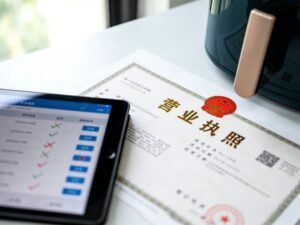
To verify an air fryer supplier, I check whether the certifications match the real product configuration, whether factory audits are current and relevant, and whether the supplier can support export documents, labeling, packaging marks, and inspection access before shipment.
In our projects, I do not accept compliance claims at face value. I want to see whether the documents apply to the exact air fryer model, actual factory, target market, and final branded configuration that the buyer plans to order.
This step is especially important in low MOQ projects because buyers are often moving fast. Speed is useful, but it should not replace document control. An air fryer may need electrical safety alignment, food-contact material review, labeling accuracy, carton marks, and market-specific plug or language compliance. If the supplier only shows a general certificate without product traceability, that is not enough for me.
I review three areas together:
| Area | What I Check | Why It Matters |
|---|---|---|
| Certifications | Model number, product scope, issuing body, validity | Confirms compliance fit for the ordered product |
| Factory audits | Factory name, audit date, audit type, scope | Confirms the production site is real and reviewed |
| Export readiness | HS support, labels, manuals, carton marks, documents | Reduces customs and shipment risk |
I also ask whether the supplier is open to production inspections and pre-shipment inspections. A strong supplier should not resist this. The willingness to support third-party inspection tells me a lot about their process confidence. I also want proof that the certificate or compliance file applies to the actual version being ordered, not just a similar model with different controls or materials.
A low MOQ order still enters the buyer’s market under the buyer’s brand. That means even a small shipment needs serious export readiness.
How to Compare Low MOQ Air Fryer Suppliers on Sample Quality, Bulk Consistency, and QC Control?
I compare suppliers by checking whether the sample looks good, whether the supplier can repeat it in bulk, and whether QC control is built into the process. A nice sample without bulk consistency is not a strong sourcing result.
In our own production practice, sample quality is only the beginning. I care more about whether the supplier has a golden sample system, clear inspection standards, in-line controls, and traceability that can protect repeat orders.
A low MOQ buyer is often more exposed to inconsistency because the order size may not get the same attention as a large-volume account. That is why I always study how the supplier handles control, not just how the sample performs on my desk.
I look at three linked questions. First, does the sample show careful build quality? I check fit, surface finish, basket movement, control feel, labeling, packaging detail, and heating performance. Second, can the supplier explain how this sample becomes a bulk reference? I want to hear about the golden sample, BOM lock, incoming inspection, line checks, function testing, and final inspection. Third, does the supplier support evidence? That includes test records, inspection forms, defect criteria, and pre-shipment review.
Here is a simple scorecard I use:
| Check Area | Good Signal | Weak Signal |
|---|---|---|
| Sample quality | Stable finish and function | Good look but vague specs |
| Bulk consistency | Pilot run and process control | “Same as sample” with no system |
| QC control | IQC, in-line QC, final inspection | Final check only |
| Traceability | Lot and batch records | No clear records |
| Inspection support | Open to third-party checks | Pushes back on inspection |
In sourcing, I trust systems more than promises.
Which Hidden Cost and Lead Time Risks Make a Low MOQ Air Fryer Supplier Less Competitive?
The biggest hidden risks are mold adjustment cost, packaging minimums, component minimums, compliance gaps, rework risk, and unstable replenishment lead time. These can make a low MOQ supplier much less competitive over time.
In my experience, the most dangerous low MOQ offer is the one that looks cheap at launch but becomes slow, inconsistent, or expensive on the second and third order. A reliable reorder path matters more than a low entry number alone.
I always remind buyers that first-order affordability is not the same as supplier competitiveness. A supplier can win a small trial order and still fail the real business test later. I look closely at cost items that often stay outside the first quotation. These include mold correction, package redesign, carton upgrades, manual translation, spare part setup, barcode changes, label updates, and compliance file adjustments. I also ask whether the supplier can maintain stable lead time when the buyer places a reorder with only moderate volume.
Many low MOQ suppliers are willing to take the first order, but not all of them can give the same priority on replenishment. That matters because a private label business grows through repeat cycles, not one shipment.
| Risk Item | How It Hurts the Buyer |
|---|---|
| Tooling correction | Adds unplanned cost and delay |
| Packaging minimums | Raises inventory burden |
| Weak component planning | Creates shortages on reorders |
| Compliance gaps | Risks customs, platform, or market issues |
| Poor QC | Leads to returns and bad reviews |
| Unstable lead time | Causes stockout and lost sales |
So when I compare low MOQ air fryer suppliers, I always ask one last question: can this supplier support a small start without creating a messy future? That answer often tells me more than the MOQ itself.
Conclusion
The best low MOQ air fryer supplier is not the one with the smallest number on paper. It is the one that can support small orders with stable quality, clear compliance, and safe reorders.
FAQ
What is a low MOQ air fryer supplier for private label orders?
A low MOQ air fryer supplier for private label orders usually offers existing models with simple branding changes like logo, carton, and manual updates. This route is often faster and easier than full OEM air fryer development.
Is low MOQ air fryer sourcing better with a factory or trading company?
It depends on the project. A factory may give better production control for low MOQ air fryer orders. A trading company may help if the buyer needs mixed sourcing. The key is process control, not the label alone.
Why does low MOQ not always mean low total cost for an air fryer order?
A low MOQ air fryer order can still carry hidden cost in packaging, custom parts, tooling updates, compliance work, and small-batch purchasing. Total sourcing cost matters more than MOQ alone when comparing suppliers.
How can I verify air fryer certifications before placing a low MOQ order?
Ask the supplier to provide air fryer certification documents tied to the real model, actual factory, and target market. Also check labeling, plug type, manuals, and whether the final product configuration matches the compliance file.
What QC controls should a low MOQ air fryer supplier support?
A serious low MOQ air fryer supplier should support incoming inspection, in-line QC, function testing, final inspection, and pre-shipment inspection. These controls help reduce defect risk and protect bulk consistency after sample approval.
How do I compare low MOQ air fryer suppliers on sample quality?
Compare the air fryer sample on finish, fit, heating performance, controls, packaging detail, and whether the supplier can explain how the approved sample will be repeated in bulk production with a real QC process.
What is the biggest warning sign when choosing a low MOQ air fryer supplier?
The biggest warning sign is a supplier that offers a very low MOQ air fryer quote but cannot clearly explain packaging minimums, compliance status, inspection support, or reorder lead time. That often leads to surprise costs later.