
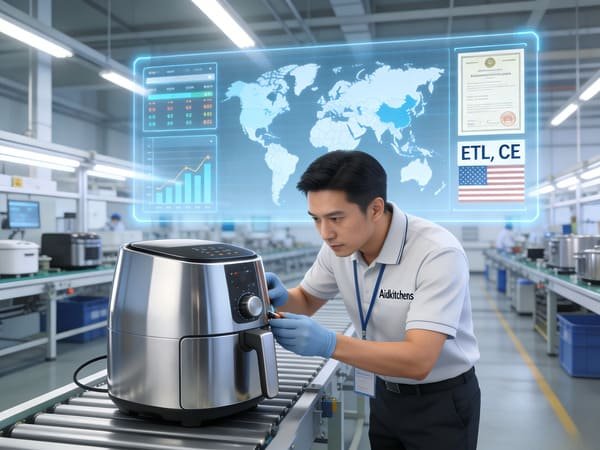
Unsure if a potential air fryer supplier’s impressive claims are real? Choosing a partner based on unverified information can lead to costly delays and quality issues. This is a common concern we hear.
You can learn about a Chinese air fryer supplier’s past cooperation cases by checking what they publicly show and independently verifying their export history and references. Combining online research, third-party data, and direct questioning is the most effective strategy for a complete picture.
Let’s break down the specific steps you can take to get a clear and honest view of a supplier’s track record. This will help you make a confident and informed decision.
What questions should I ask to obtain supplier case studies or references?
Getting vague answers about a supplier’s experience can be frustrating. This uncertainty makes it hard to build trust for a long-term partnership. Asking specific, targeted questions is the best way to get the proof you need.
Start by requesting a portfolio of their air fryer projects, including client types, markets served, and annual shipment volumes. Crucially, ask for 2-3 verifiable customer references, preferably from non-competing businesses, to directly confirm their experience and service quality.
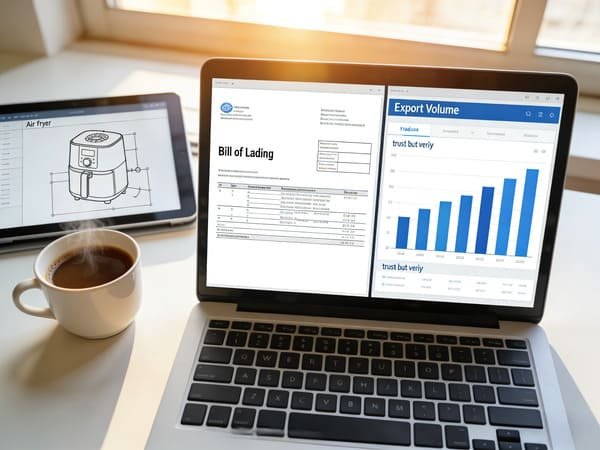
To get a clear picture, you need to ask questions that go beyond a simple "Who have you worked with?" When we talk to potential partners, we expect them to be prepared for detailed inquiries. A professional supplier will have this information ready. Your goal is to gather concrete evidence of their experience, especially with products similar to yours and markets like yours.
Initial Screening Questions
Start with broad questions to get a general sense of their business. These initial queries help you quickly filter out suppliers who clearly don’t fit your needs. Think of this as the first layer of vetting.
- "Could you share your company profile and air fryer product catalog1?" This is a basic first step. It shows you what they officially present to the market.
- "Which are your main export markets for air fryers2?" If you sell in the EU, a supplier whose main experience is in South America might not be familiar with CE and RoHS standards.
- "What types of clients do you typically work with (e.g., brand owners, wholesalers, retailers)?" This helps you understand if their business model aligns with yours.
Questions for Deeper Vetting
Once a supplier passes the initial screening, it’s time to dig deeper. These questions are designed to get specific, verifiable information. Evasive answers here are a major red flag.
The table below outlines key questions, why they are important, and what a good answer looks like.
| Question Category | Specific Question | Why It’s Important |
|---|---|---|
| Project Experience | "Can you provide case studies for air fryer projects3 similar to our requirements?" | This confirms they have relevant technical and manufacturing experience, not just general appliance production. |
| Client References | "Could you provide contact information for 2-3 past clients in a non-competing market?" | This is the ultimate test. Speaking directly with a past client provides unbiased feedback on quality, communication, and reliability. |
| Production Volume | "What is your average monthly production volume for air fryers?" | This helps you assess if they can handle your order quantity and whether you will be a small or large client for them. |
| Quality & Compliance | "Can you show us test reports (e.g., LFGB, ETL) for past air fryer models?" | This demonstrates their commitment to quality and their ability to meet the regulatory standards required in your target market. |
Asking these structured questions shows you are a serious and professional buyer. A reliable supplier will appreciate your diligence and provide clear, detailed answers.
How can I verify the authenticity of previous cooperation examples?
A supplier might send you a beautifully designed portfolio. But how can you be sure it’s an accurate reflection of their work and not just clever marketing? The key is to trust but verify.
Verify authenticity by cross-referencing a supplier’s claims with independent sources. Use third-party import/export data services to check their actual shipping history. Also, request anonymized documents like a Bill of Lading or packing list to prove they have shipped air fryers.
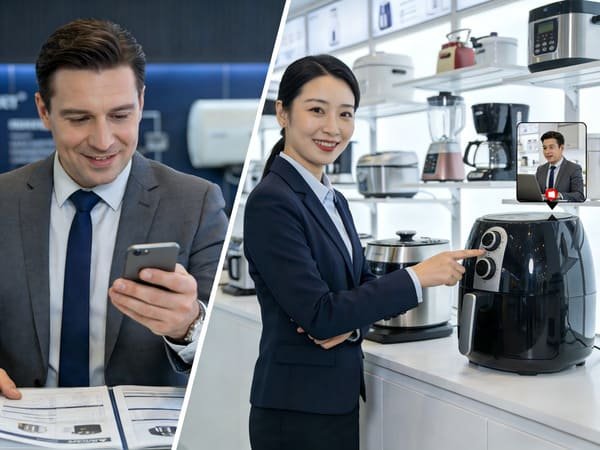
From our experience on the manufacturing side, we know that documents don’t lie. While we protect our clients’ confidentiality, we can always provide anonymized proof of our shipments and production history. Any legitimate factory should be able to do the same. Verification is about piecing together different bits of evidence until you have a consistent and believable story.
Using Public and Paid Data Services
The most powerful tool for verification is trade data4. Services like Panjiva, ImportGenius, or others track shipping manifests. You can search for a supplier’s factory name and see objective data about their exports.
- What to Look For: Search for the supplier’s name to see a list of their shipments. Check the product descriptions to confirm they are shipping "air fryers" (or related HS codes like 8516.60 or 8516.79).
- Analyze the Data: Are they shipping to reputable companies in your target market? Is the shipping frequency consistent, or are there just one or two small shipments over several years? Consistent volume to established brands is a strong positive signal. Sparse or non-existent records are a major warning sign.
Reviewing Documents and Certifications
Beyond third-party data, ask the supplier for documents directly.
- Anonymized Bill of Lading (B/L)5: This is a shipping document that proves a specific product was shipped from a specific port to a destination. Ask for a copy with the buyer’s name redacted to protect confidentiality. It should still show the product description, quantity, and destination country.
- Factory Audit Reports6: Reports from audits like BSCI or ISO 9001 often list major products and sometimes even major clients. Check the date of the audit to ensure it’s recent.
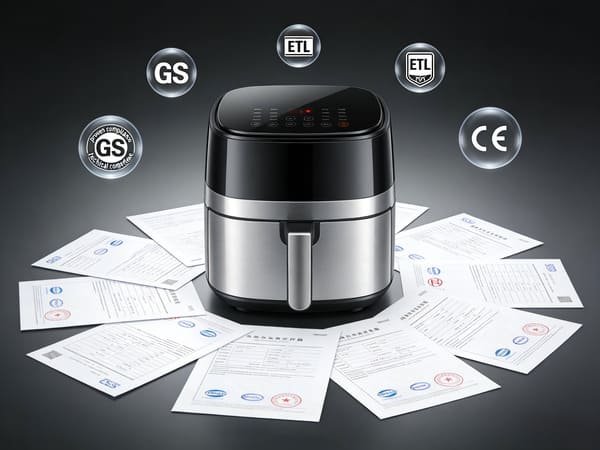
- Product Certifications7: Certificates like CE, ETL, or CB are tied to specific models and issued to a specific factory. If they claim to have experience with the US market, they should be able to produce ETL certificates for past models.
| Verification Method | What to Check | Red Flags |
|---|---|---|
| Trade Data Services | Real shipment records, client names (if not private), shipment frequency and volume. | No records of air fryer shipments; shipments only to unfamiliar, small-scale buyers. |
| Anonymized B/L | Product description matches "air fryer," destination country is correct, date is recent. | Refusal to provide any documents; documents look heavily altered or fake. |
| Audit/Certificates | The factory name matches, the certificate is valid (not expired), the product scope includes air fryers. | Expired certificates; certificates issued to a different company name (e.g., a trading company). |
Combining these methods gives you a multi-layered verification process. It allows you to move forward based on facts, not just claims.
What information can I request about past clients or projects?
You need specifics to gauge a supplier’s capabilities, but you also have to respect confidentiality. It’s a balance. Knowing what you can reasonably ask for is key to getting useful information without being shut down.
Request anonymized project details like product specifications, materials used, order volume, and the destination market (e.g., "a 5.5L digital air fryer for a German supermarket chain"). For references, ask for the contact of a manager at a non-competing past client.
When we work on ODM projects, confidentiality is paramount. We would never share a client’s proprietary designs or brand name without permission. However, we can and do share non-sensitive project details that demonstrate our capabilities. A good supplier will understand this distinction and be willing to provide information that helps you without breaking other clients’ trust.
Information About Projects
Focus on the "what" and "how" of past projects, not the "who." This gives you insight into their technical and logistical expertise.
- Product Type and Specifications8: Ask for details on a past project, such as "a 3.5L mechanical air fryer." What were the key functions? What materials were used for the basket and housing?
- Market and Compliance9: Which country was it for? What specific certifications did you secure for that project (e.g., GS, REACH)? This proves their experience with your market’s regulations.
- Order Volume and Timeline10: What was the total order quantity and how long did production take? This helps you understand their capacity and project management skills.
Information About Clients (References)
This is the most sensitive request, so it should be handled professionally.
- Timing: Don’t ask for references in your first email. Wait until you have established a serious dialogue and are moving toward sampling or quoting.
- Framing the Request: Explain why you need it. For example: "As we move into the final stages of supplier selection, our process requires speaking with one or two references to confirm service quality and reliability."
- Be Specific: Ask for a contact at a company that has purchased air fryers from them for at least a year. Ideally, this client should be in a similar region but not a direct competitor.
The table below gives examples of reasonable vs. unreasonable requests.
| Request Type | Reasonable Request (Likely to Get an Answer) | Unreasonable Request (Likely to be Refused) |
|---|---|---|
| Project Details | "Can you describe a challenging air fryer project you completed for the EU market and how you handled it?" | "Show me the full design schematics for the air fryer you made for Brand X." |
| Client Identity11 | "Can you share the type of client you worked with (e.g., e-commerce brand, national retailer)?" | "Give me a list of all your clients and how much they order." |
| Client Contact | "After we’ve confirmed the sample, could you introduce us to a long-term client in the US for a brief reference call?" | "I need the CEO’s phone number for your biggest client right now." |
By approaching this topic with an understanding of business etiquette, you are far more likely to get the valuable insights you need to make your decision.
How do I use past cases to assess supplier reliability?
Reviewing past cases is not just about confirming a supplier has made air fryers before. It’s about using that history to predict future performance. A supplier’s past is the best indicator of their reliability.
Use past cases to assess reliability by analyzing patterns. Consistent shipments to reputable brands in regulated markets suggest high quality standards. Positive feedback from references on communication and problem-solving indicates a dependable partner, while a history of one-off projects may signal inexperience.

We believe that a supplier’s reliability is shown in three key areas: their technical competence, their process management, and their problem-solving ability. Looking at their past work through this lens provides a clear assessment of how they will perform as your partner. A single successful project is good, but a history of them is what proves reliability.
Assessing Technical Competence
This is about their ability to build a quality product that meets specifications.
- Product Complexity12: Have they only produced simple, mechanical air fryers, or do their case studies include complex digital models with custom functions? If your project is complex, you need a supplier with proven experience in that area.
- Compliance Record13: A history of successfully shipping to highly regulated markets like Germany (GS mark) or the US (ETL/UL) is a strong indicator of robust engineering and quality control processes. It shows they build products designed for safety and durability.
Assessing Process and Project Management
This covers their ability to deliver on time and communicate effectively.
- Client Longevity14: Does the supplier have long-term relationships (3+ years) with some clients? This is a powerful sign of reliability. Unreliable suppliers rarely keep clients for long. When you speak to references, ask them how long they have worked with the supplier.
- Shipment Consistency15: Does trade data show steady, regular shipments, or are there large, unexplained gaps? Consistent production points to stable processes and good planning. Sporadic activity could mean they are a trading company or have an unstable production environment.
Assessing Problem-Solving Ability
No production process is perfect. The reliability of a supplier is truly tested when something goes wrong.
- Ask References: When speaking to a reference, don’t just ask if they were happy. Ask: "Can you describe a time when there was a problem with an order (e.g., a quality issue or a delay)? How did the supplier handle it?"
- Analyze Their Answers: A reliable partner takes ownership of problems, communicates proactively, and works with the client to find a fair solution. A supplier who blames others or disappears when issues arise is a major liability. A history of transparently resolving issues is a hallmark of a trustworthy manufacturer.
By systematically evaluating past cases against these criteria, you can build a comprehensive picture of a supplier’s reliability and make a decision that protects your brand and investment.
Conclusion
Verifying a supplier’s past cases is a crucial step. By asking the right questions, cross-referencing claims with data, and assessing their history for patterns of reliability, you can confidently choose a trustworthy partner.
-
Understanding an air fryer product catalog can help you assess supplier offerings and find the best fit for your needs. ↩
-
Exploring export markets can reveal important compliance standards and help you choose suppliers familiar with your target market. ↩
-
Case studies provide insights into a supplier’s experience and capabilities, ensuring they meet your specific requirements. ↩
-
Explore this link to discover reliable trade data services that can enhance your supplier verification process. ↩
-
Learn about the Anonymized Bill of Lading to understand its importance in verifying shipments and protecting confidentiality. ↩
-
Understanding Factory Audit Reports can help you assess supplier reliability and product quality effectively. ↩
-
Explore essential Product Certifications to ensure your suppliers meet industry standards and regulations. ↩
-
Explore this link to gain insights into the essential features and materials that define high-quality air fryers. ↩
-
Understanding market compliance is crucial; this resource will help you navigate necessary certifications for your products. ↩
-
This link provides valuable information on how production timelines can impact order capacity and project management. ↩
-
Discover the various client profiles in the air fryer market to better understand potential partnerships and market dynamics. ↩
-
Understanding product complexity helps ensure you choose a supplier capable of handling your project’s specific needs. ↩
-
A strong compliance record indicates a supplier’s commitment to safety and quality, essential for reliable products. ↩
-
Long-term client relationships often reflect a supplier’s reliability and ability to meet expectations consistently. ↩
-
Consistent shipments suggest stable processes, which are crucial for maintaining production schedules and quality. ↩