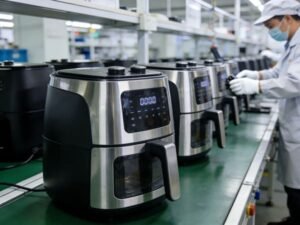
Tired of paying extra for air fryers? Hidden middlemen inflate costs and cause delays. We see this happen often, but you can connect directly with the source.
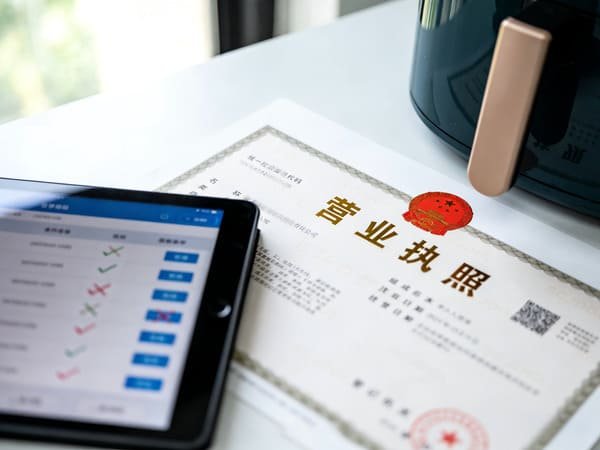
To avoid intermediaries, verify the supplier’s Chinese business license to confirm they are registered as a manufacturer. Request a live factory video tour and analyze their product range to ensure they specialize in appliances, not just trading various goods.
Partnering with a true manufacturer is the most effective way to control quality, cost, and timelines. Let’s break down the exact steps to ensure you’re dealing directly with a factory.
What steps can I take to verify if a supplier is a real factory?
Unsure if your supplier is a real factory? This uncertainty can lead to quality issues and communication problems. There are concrete verification steps you can take to protect your investment.
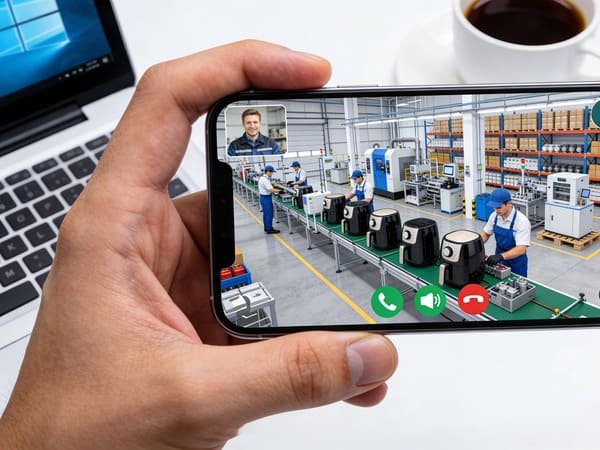
Verify a supplier by requesting their Chinese business license. Cross-check the business scope for ‘manufacturing’ and the address. Also, demand a live video tour of the production lines, warehouse, and testing labs to see their operations firsthand.
The safest way to avoid intermediaries is to confirm the seller legally owns and operates an actual factory. This involves cross-checking official documents against what they tell you on their website or in chats. From our experience, serious buyers always start with this due diligence.
Check Company Registration Documents
Your first step is to ask every potential air fryer supplier for a clear photo or scan of their Chinese business license. This document contains vital information. You need to confirm two key details. First, check the "Business Scope1" . A real factory’s license will include terms like "manufacturing" , "processing" , or "assembly" of home appliances. If it only says "trading" , "wholesale" , or "distribution" , they are a trading company. Second, check the registered address. It should match the factory location they claim to have. A mismatch is a major red flag.
Request a Factory Tour2 (Virtual or Physical)
A trading company cannot easily fake a manufacturing environment. Ask for a live video tour via WhatsApp or WeChat. During the tour, ask them to show you specific things. We are always prepared to show our clients the entire process. You should request to see:
- Assembly Lines: Active production lines with workers assembling air fryers.
- Equipment: Injection molding machines for plastic parts or metal stamping presses.
- Warehouses: Storage for raw materials and finished goods.
- Testing Labs3: Areas for quality control, safety tests, and performance checks.
A trader will typically only have a small office or a showroom with a wide range of unrelated products.
| Verification Step | What to Look For | Potential Red Flag |
|---|---|---|
| Business License | Business scope includes "manufacturing" | Scope only lists "trading," "wholesale," or "export." |
| Factory Address | Registered address matches claimed location | Address is in a downtown office building. |
| Live Video Tour | Shows active production lines, labs, warehouse | Supplier can only show a sample room or office. |
| Third-Party Audit | Supplier agrees to an independent audit | Supplier refuses or makes excuses to prevent an audit. |
How can I identify red flags that indicate intermediaries?
Worried you’re talking to a trader? Their slick sales pitch might hide a lack of real production control. Knowing the red flags saves you from costly mistakes down the line.
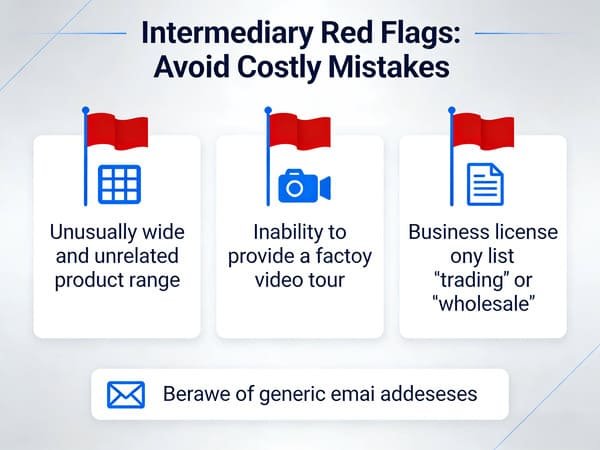
Red flags for intermediaries include an unusually wide and unrelated product range, an inability to provide a factory video tour, and a business license that only lists ‘trading’ or ‘wholesale.’ Also, be wary of generic email addresses.
In our years of exporting, we have seen many buyers fall for the trap of a "one-stop shop" that is actually just a middleman. These traders create problems with quality control and accountability because they don’t own the production process. Identifying them early is crucial.
Analyze the Product Catalog and Website
A key indicator of a trading company is an overly diverse product range. A genuine factory specializes. For example, our focus is on kitchen appliances4. We have the specific machinery, R&D teams, and supply chains for these products. Be very cautious if a supplier’s website or Alibaba page lists air fryers alongside furniture, clothing, and phone accessories. This is a classic trading company pattern. A real manufacturer has a deep, but narrow, product line. They can show a history of producing specific items like air fryers.
Scrutinize Communication and Professionalism
Pay attention to how the supplier communicates. Do they use a professional company email domain5 (e.g., name@aidkitchens.com) or a generic one like Gmail or Hotmail? While not a definitive sign, professional companies invest in their own domains. Also, evaluate the sales representative’s knowledge. Can they answer technical questions6 about materials, motor specifications, or certifications? Or do they need to "check with the engineer" for every detail? A trader’s salesperson often lacks deep product knowledge.
| Red Flag Indicator | Sign of a Trading Company | Sign of a Real Factory |
|---|---|---|
| Product Range | Very broad and unrelated (e.g., electronics & toys) | Specialized in one category (e.g., small kitchen appliances4) |
| Factory Tour Request | Delays, excuses, or only offers a sample room view | Eager to provide a live tour of production lines |
| Technical Knowledge | Salesperson cannot answer technical questions6 | Sales team has in-depth product knowledge |
| Website & Email | Generic Alibaba page; uses Gmail/Hotmail accounts | Professional website; uses a company email domain |
| Company Name | Often includes "Trading," "International," or "Export" | Often includes "Industrial," "Technology," or "Electric" |
What questions should I ask to confirm direct manufacturing capabilities?
Don’t get vague answers about production. Asking the wrong questions gets you nowhere. We find that specific, pointed questions quickly separate us from those who just resell products.
Ask about their production capacity, minimum order quantity (MOQ) for custom designs, and quality control processes. Inquire about their R&D team and if they can share material certificates or past audit reports from other clients.
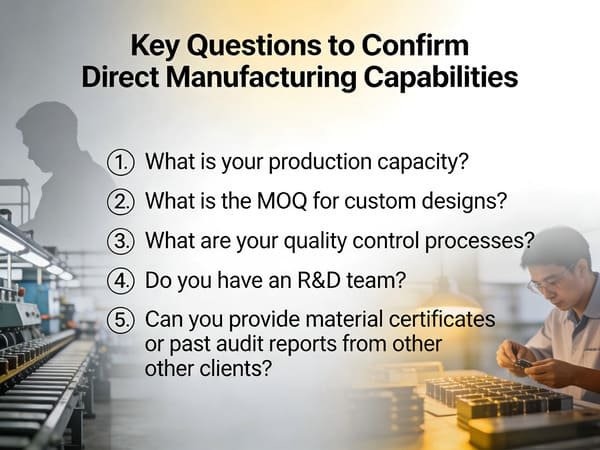
The goal is to move beyond sales talk and into operational details. A real manufacturer will have ready answers for these questions because they deal with them every day. An intermediary will likely stumble or give generic responses.
Inquire About Customization and R&D
One of the biggest advantages of working with a factory is the ability to customize. Ask specific questions about their Original Design Manufacturer (ODM)7 and Original Equipment Manufacturer (OEM) processes.
- "What is your process for developing a new design with a client?"
- "How many engineers are on your R&D team?"
- "Can you change the control panel, color, and materials for an order of 1,000 units?"
- "What is your typical lead time for a new mold?"
A trading company has very limited influence over the factory’s R&D and production schedule. They usually can only offer minor changes like adding a logo.
Dig into Quality Control and Compliance
Quality control is managed on the factory floor, not in a trader’s office. When we develop a new air fryer, we run dozens of tests. Your supplier should be able to describe their QC process in detail.
- "What specific quality checks do you perform on the assembly line?" (e.g., function test, high-voltage test, visual inspection)
- "Do you have an in-house lab for life-cycle testing?"
- "Can you provide copies of your ISO 9001 certificate8?"
- "What compliance certificates (like CE, ETL, RoHS) do you already have for this model?"
A manufacturer will have these documents on hand. A trader will have to request them from their supplier, causing delays.
How do I ensure transparency in supplier relationships?
You’ve found a potential factory, but how do you maintain honesty? Building a transparent relationship from the start prevents future problems. We believe clear contracts and open communication are key.
Ensure transparency by stating in your contract that you have the right to audit the production site. Also, verify that the bank account name for payment matches the company name on the business license exactly.
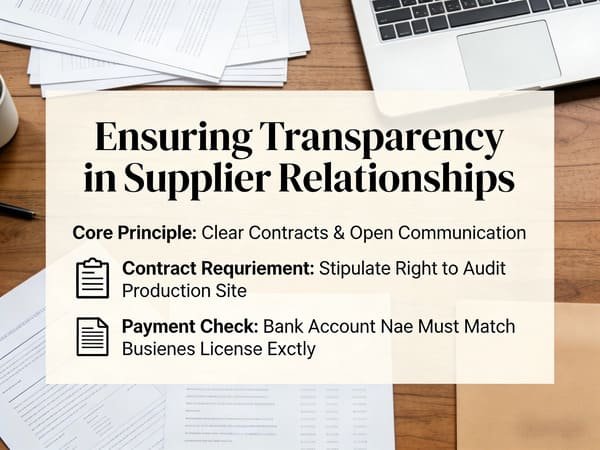
True transparency is built on contractual obligations and financial verification. These steps protect you from last-minute supplier swaps or payment fraud, which are risks when dealing with intermediaries who may use multiple undeclared factories.
Use Contracts and Audits as Leverage
Your purchase contract is a powerful tool. Include a clause that explicitly states you reserve the right to conduct a third-party factory audit9 at any time during production. Also, add that the production location specified in the contract cannot be changed without your written approval. This legally prevents your supplier from subcontracting your order to a different, potentially lower-quality factory without your knowledge. If a supplier objects to this clause, it’s a significant red flag. We welcome audits because they build trust with our clients.
Verify Payment and Shipping Details
Financial details provide a final, crucial check. Before making any payment, confirm that the beneficiary bank account name is the exact same company name listed on the business license you verified. A discrepancy, such as being asked to pay an individual or a different company, is a major warning sign of either a scam or an intermediary. Additionally, when you receive your first samples or small order, check the details on the shipping cartons, user manuals, and product rating labels. The manufacturer’s name and address should be consistent with the company you have been dealing with.
| Transparency Check | Action to Take | Why It’s Important |
|---|---|---|
| Contractual Rights | Add a clause allowing for unannounced third-party audits. | Prevents unauthorized subcontracting and ensures consistent quality. |
| Payment Verification | Ensure the bank account name matches the business license company name. | Protects against payment fraud and confirms you are paying the actual supplier. |
| Shipping Documents | Check that the manufacturer name on cartons and manuals matches your supplier. | Confirms the goods were produced by the factory you vetted, not another source. |
| Open Communication | Schedule regular video calls to discuss production progress. | Builds rapport and allows you to spot issues or inconsistencies early. |
Conclusion
To avoid intermediaries, you must be diligent. Verify business licenses, demand factory tours, ask detailed operational questions, and use contracts to enforce transparency. This ensures you partner with a genuine manufacturer.
-
Understanding the Business Scope helps verify if a supplier is a legitimate manufacturer or just a trading company. ↩
-
A virtual factory tour can reveal the authenticity of a supplier’s manufacturing capabilities and processes. ↩
-
Knowing what to expect in testing labs can help ensure that the products meet safety and performance standards. ↩
-
Explore this link to discover reputable manufacturers specializing in kitchen appliances, ensuring quality and reliability. ↩ ↩
-
Learn why a professional email domain can indicate a supplier’s credibility and commitment to their business. ↩
-
This resource will guide you on evaluating a supplier’s technical expertise, crucial for making informed purchasing decisions. ↩ ↩
-
Understanding ODM processes can help you leverage customization options effectively. ↩
-
Exploring ISO 9001 certification can enhance your knowledge of quality management standards in manufacturing. ↩
-
Understanding third-party factory audits can help you ensure quality and compliance in your supply chain. ↩