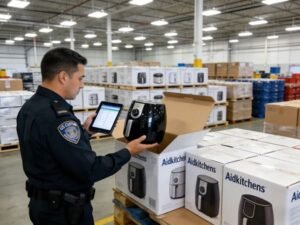
Choosing an air fryer supplier for a bulk order requires more than comparing prices. Buyers need to verify supplier identity, product suitability, manufacturing capability, sample consistency, documents, and payment conditions before committing.
Problem:
Finding air fryer suppliers online is easier than ever, but many buyers still struggle with one important decision: how much evidence is enough before placing a large order.
Agitation:
A supplier may have professional product pages, fast communication, attractive prices, and convincing factory information. However, many procurement problems appear later — during production, inspection, shipment, or after delivery.
Solution:
A safer sourcing decision comes from verifying suppliers step by step and reducing uncertainty before moving from inquiry to payment.
Snippet: Before placing a bulk air fryer order, buyers should verify supplier identity, product fit, manufacturing capability, sample consistency, documents, and payment conditions instead of relying only on price or supplier claims.
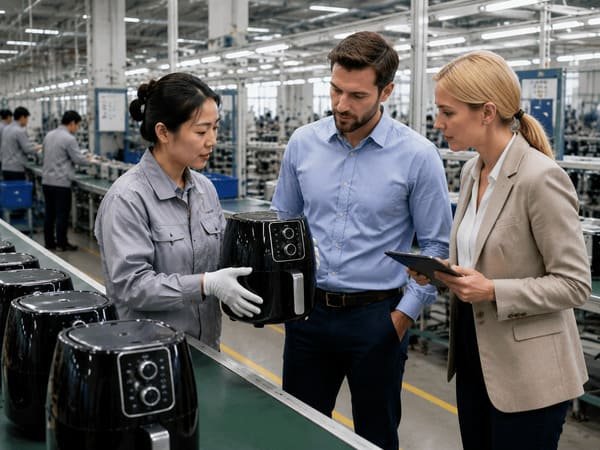
When buyers first search for air fryer suppliers, the process often feels simple. There are many factories, trading companies, and sourcing partners available online. Product catalogs look complete, sales teams respond quickly, and quotations arrive within a short time.
The difficult part usually begins after the first contact.
The real question is not only:
“Can this supplier sell me an air fryer?”
The more important question is:
“Do I have enough evidence to trust this supplier with a bulk order?”
In practical sourcing work, supplier selection is not about finding a supplier with zero risk. It is about understanding where risks exist, what evidence can reduce uncertainty, and whether the remaining risks are acceptable before making a commitment.
I Found an Air Fryer Supplier Online. What Should I Check Before I Trust Them?
After finding an air fryer supplier, buyers should first verify who they are dealing with, whether the supplier understands the product requirement, and whether the information provided can support a purchasing decision.
The supplier looked professional, but I still needed to know who I was actually buying from
Many buyers begin supplier evaluation in a similar way.
They compare:
- product photos
- company introductions
- platform profiles
- response speed
- price quotations
These are useful starting points, but they only show the information the supplier chooses to present.
During actual purchasing decisions, experienced buyers usually ask additional questions:
- Who will sign the contract?
- Who will receive payment?
- Who is responsible for production?
- Who will handle quality issues if problems appear?
This matters because the party communicating with the buyer, the party receiving payment, and the party responsible for manufacturing may not always be evaluated separately.
The purpose is not to assume that every supplier relationship has a problem. The purpose is to make sure responsibility is clear before money and production commitments are involved.
Why I should not start supplier evaluation with price
One of the most common purchasing patterns is starting with:
“Please send me your best price.”
Price is important, but early price comparison can create a false sense of confidence.
A lower quotation may come from differences in:
- product specifications
- materials
- packaging
- included accessories
- quality standards
- service scope
A supplier with a lower price may still create higher total procurement costs if the buyer later faces:
- quality problems
- production changes
- delays
- additional inspection
- customer complaints
Experienced buyers usually try to understand the product and supplier capability first, then compare pricing based on the same requirements.
How Do I Know If an Air Fryer Supplier Is a Real Manufacturer or Just a Seller?
A supplier’s role matters because buyers need to understand who is creating value and who is responsible for different parts of the supply chain.
The factory photos looked convincing, but they did not answer my real question
Many supplier pages include:
- factory images
- production videos
- equipment photos
- showroom displays
These materials can help buyers understand a supplier, but they do not automatically answer the most important question:
“Can this supplier consistently produce my specific air fryer order?”
A factory image may show that a production environment exists. It does not automatically prove:
- the supplier produces this exact product
- the displayed facility handles the buyer’s order
- the production quality will remain consistent
The next step is usually asking more specific questions about the relationship between the supplier, product, and production process.
What evidence helps me understand a supplier’s real role?
Instead of focusing only on whether a company calls itself a factory, buyers can look at the actual role it plays.
Useful areas to understand include:
- product development involvement
- production coordination
- quality control responsibility
- export communication capability
- supplier management ability
A direct factory can create value through production capability, efficiency, and manufacturing control.
A trading company or sourcing partner can create value through supplier comparison, communication, coordination, inspection follow-up, logistics support, and risk management.
The better question is not:
“Is a factory always better?”
The better question is:
“Which partner can reduce my procurement risk and create enough value for this order?”
How Can I Tell If an Air Fryer Supplier Can Handle My Bulk Order?
A supplier’s ability to produce air fryers at scale should be evaluated through evidence of process control, product experience, and order management capability rather than only factory size or sales claims.
A large factory does not always mean it is the right supplier for my project
When buyers first start sourcing, a common assumption is:
“A bigger factory must be safer.”
In reality, factory size is only one part of the decision.
A large manufacturing facility may have strong production resources, but the more important question is whether those resources match the buyer’s specific order requirements.
For example, buyers may need to understand:
- Does the supplier regularly produce similar air fryer models?
- Can the supplier support the required customization level?
- Does the supplier understand the target market requirements?
- Can the supplier maintain consistent quality during repeated orders?
A supplier can be capable in general but still not be the best fit for a specific procurement project.
The goal is not to find the biggest supplier.
The goal is to find a supplier whose capability matches the order risk and business requirements.
What production details reveal whether a supplier can deliver consistently?
During supplier discussions, many buyers focus on production capacity numbers.
However, experienced buyers usually pay more attention to how production is controlled.
Important questions include:
- How are product specifications managed?
- How are production changes controlled?
- How is quality checked during manufacturing?
- How are incoming materials managed?
- How are defects handled?
A supplier’s ability to produce one good sample is different from its ability to repeat the same quality across a large order.
Consistency usually comes from systems, not promises.
I Received an Air Fryer Sample. Can I Trust the Supplier Enough to Place a Bulk Order?
A successful sample review reduces uncertainty, but it does not automatically prove that bulk production will have the same result.
The sample looked perfect, but bulk production was the real test
One of the easiest mistakes for first-time buyers is assuming:
“The sample is good, so the order should be safe.”
The sample is important, but it represents only one production result.
A bulk order tests whether the supplier can maintain the same standard when:
- production volume increases
- different workers handle assembly
- materials are sourced repeatedly
- deadlines become tighter
- multiple units are inspected together
Experienced buyers usually treat the sample as a reference point, not the final proof.
The question changes from:
“Is this sample good?”
to:
“Can this supplier consistently reproduce this quality?”
What should I lock before moving from sample approval to production?
A common source of disagreement is that buyers and suppliers have different expectations about what was approved.
Before production starts, buyers usually need to make important details clear, such as:
- product specifications
- appearance requirements
- functional expectations
- packaging requirements
- acceptable quality standards
The approved sample should represent a shared understanding of what the final product should look like.
Without this clarity, both sides may believe they are following the agreement while interpreting the requirements differently.
What Should I Verify Before Paying an Air Fryer Supplier?
Before payment, buyers need enough evidence to understand the product, supplier responsibility, and order conditions. Documents are useful only when they match the actual purchasing situation.
The supplier sent certificates, but I needed to know what they actually proved
Many buyers feel more confident when a supplier sends certificates or test documents.
However, experienced buyers usually ask a further question:
“What exactly does this document prove?”
A document may need to be checked against:
- the specific product model
- product configuration
- target market
- current requirements
- actual supplier relationship
A certificate existing does not automatically mean every product or market situation is covered.
The important part is whether the evidence matches the order being considered.
How do I separate supplier claims from real verification evidence?
Supplier communication often includes statements such as:
- “We have strict quality control.”
- “Our factory has many years of experience.”
- “Our products are exported worldwide.”
These statements may provide useful background information, but they are not the same as verification evidence.
Buyers can look for supporting information, such as:
- documented processes
- inspection records
- product testing information
- sample consistency checks
- production follow-up
The purpose is not to distrust suppliers.
The purpose is to move important decisions from assumptions toward evidence.
What Risks Could I Miss When Importing Air Fryers for the First Time?
Many procurement problems happen not because buyers ignored information, but because they did not know which questions to ask before committing.
The product price looked attractive, but the total cost was different
A quotation is only one part of the purchasing cost.
During real procurement decisions, buyers also need to consider costs created by problems, such as:
- product adjustments
- additional inspections
- delays
- packaging changes
- quality issues
- after-sales handling
A supplier with a lower unit price may not create the lowest overall procurement cost if additional risks increase later.
Experienced buyers often evaluate total cost, not only the first quotation.
Small specification differences can create expensive problems later
Some issues appear small during communication but become difficult after production.
Examples include:
- voltage requirements
- plug types
- labeling expectations
- packaging details
- included accessories
These details may depend on the target market and sales channel.
The important lesson is that product specifications should not remain only in informal conversations.
Important requirements need to be clearly confirmed before production.
Unclear responsibility creates problems when something goes wrong
Many supplier disputes are not caused only by product defects.
They often happen because responsibility was never clearly defined.
Questions buyers should consider include:
- Who handles quality issues?
- What happens if specifications are not met?
- How are production changes communicated?
- What inspection process is used before shipment?
Clear responsibility does not eliminate every problem, but it reduces uncertainty when problems occur.
What Steps Should I Follow Before Paying an Air Fryer Supplier?
Before paying an air fryer supplier, buyers should follow a verification sequence that reduces the biggest uncertainties first instead of collecting information randomly.
I should remove the biggest uncertainties first, not collect random information
When buyers start supplier research, it is easy to collect a large amount of information:
- company introductions
- product catalogs
- certificates
- factory pictures
- quotations
However, more information does not always mean better decisions.
Experienced buyers usually organize verification around key uncertainties.
A practical sequence is:
1. Supplier identity
First understand who you are dealing with.
Questions:
- Who is the contracting party?
- Who receives payment?
- Who is responsible for production?
2. Product suitability
Confirm:
- Is this the correct product for your market?
- Are specifications clearly defined?
- Does the supplier understand your requirements?
3. Manufacturing capability
Confirm:
- Can the supplier produce consistently?
- Are quality processes clear?
- Can they support your order requirements?
4. Sample consistency
Confirm:
- Is the approved sample clearly defined?
- Can production match the approved standard?
5. Documentation
Confirm:
- Do the documents match the actual product and order?
6. Payment conditions
Confirm:
- Are responsibilities and expectations clear before funds are transferred?
The purpose of this sequence is not to make the process complicated.
It is to make sure that each step removes an important unknown before the next commitment.
How do I know when I have enough evidence to move forward?
No supplier evaluation process can remove every possible uncertainty.
Experienced buyers usually do not wait for a situation where there is zero risk.
Instead, they ask:
“Have the important risks been identified, and have we created reasonable controls?”
Before moving forward, buyers usually want clearer answers to questions like:
- Do I know who I am buying from?
- Do I understand what product will be delivered?
- Do I have evidence that the supplier can produce consistently?
- Are quality expectations clearly defined?
- Are responsibilities clear if problems happen?
The decision is not based on one perfect signal.
It is based on whether enough evidence exists to support a reasonable purchasing decision.
What should I confirm in the final stage before payment?
The final stage before payment is where many assumptions need to become clear agreements.
Important areas include:
- final product specifications
- approved sample reference
- packaging details
- quality expectations
- delivery conditions
- payment details
- responsibility boundaries
A supplier relationship becomes safer when important expectations exist in clear communication and documentation rather than only in conversations.
Should I Buy Air Fryers Directly From a Factory or Work With a Sourcing Partner?
Choosing between a factory and a sourcing partner depends on the complexity of the purchase, the buyer’s experience, and the level of coordination required.
Direct factory sourcing can reduce some costs but requires more management responsibility
Many buyers assume direct factory purchasing automatically creates the best result.
Direct factory cooperation can provide advantages:
- direct communication
- closer connection to production
- fewer supplier layers
However, it also means the buyer may need to manage more areas directly:
- supplier evaluation
- production follow-up
- quality coordination
- documentation review
- logistics communication
For buyers with sourcing experience and suitable order structures, direct factory cooperation can be an effective approach.
A sourcing partner can create value when supplier coordination becomes difficult
The value of a sourcing partner is not simply connecting buyers and sellers.
A capable sourcing partner may help with:
- supplier comparison
- communication coordination
- quality follow-up
- inspection arrangements
- logistics coordination
- multi-supplier management
The right question is not:
“Should I remove all intermediaries?”
The better question is:
“Does this partner reduce complexity, improve visibility, and create enough value for my procurement situation?”
Factories, trading companies, and sourcing partners can all play useful roles when their responsibilities and value creation are clear.:contentReference[oaicite:0]{index=0}
What Checklist Should I Complete Before Placing an Air Fryer Bulk Order?
Before placing a bulk air fryer order, buyers should confirm the major decision points that affect supplier trust, product quality, and order risk.
Supplier verification checklist before payment
| Verification Area | Question to Confirm |
|---|---|
| Supplier identity | Do I know who I am buying from and who is responsible? |
| Product requirements | Is this the correct product for my market and customers? |
| Manufacturing capability | Can this supplier consistently produce this product? |
| Sample approval | Is the approved sample clearly defined? |
| Product documents | Do the documents match the product and order requirements? |
| Quality expectations | Are inspection standards and acceptance criteria clear? |
| Payment details | Are payment information and responsibilities confirmed? |
| Production communication | Is there a process for handling changes or issues? |
This checklist is not designed to create unnecessary barriers.
It helps buyers focus attention on the decisions that can create the biggest problems if ignored.
FAQ
Can I trust Alibaba air fryer suppliers?
Alibaba and other sourcing platforms can be useful places to discover suppliers, but platform information should be treated as a starting point rather than final proof.
Buyers still need to verify supplier identity, product information, manufacturing capability, and order conditions before making a bulk commitment.
What questions should I ask an air fryer supplier before ordering?
Instead of asking only about price, buyers can ask questions that reveal product fit and execution ability:
- Which models do you produce regularly?
- What customization options are available?
- How is product quality controlled?
- What information can you provide to verify the product and production process?
The purpose is to understand whether the supplier can support the actual order requirement.
Is buying directly from a factory always better?
Not necessarily.
Direct factory sourcing may work well for buyers who can manage supplier communication, quality control, and logistics coordination.
A sourcing partner may provide value when the purchase requires more supplier comparison, coordination, or risk management.
The better choice depends on the buyer’s situation.
How do I verify an air fryer supplier’s certificates?
Certificates should be reviewed based on their relevance to the actual order.
Buyers should consider whether the document matches:
- the product model
- the product configuration
- the target market
- the current purchasing requirement
A document should support a specific decision, not simply create confidence because it exists.
Should I inspect air fryers before shipment?
For bulk orders, many buyers consider inspection or quality confirmation processes because production conditions can affect final consistency.
The appropriate inspection approach depends on:
- order size
- product complexity
- buyer risk tolerance
- supplier history
- quality requirements
Conclusion
A Reliable Air Fryer Supplier Is Built Through Evidence, Not Assumptions
Finding an air fryer supplier is only the first stage of procurement.
A safer purchasing decision comes from gradually building evidence:
- understanding who you are buying from
- confirming product suitability
- evaluating manufacturing capability
- checking sample consistency
- reviewing relevant documents
- clarifying responsibilities before payment
The goal is not to find a supplier with zero risk.
The goal is to understand the risks, verify the important points, and make a purchasing decision with better information.
CTA
If you are reviewing an air fryer supplier or preparing your first bulk order, you can share your product requirements, target market, or supplier questions with us.
We can help you review potential risks, identify missing information, and understand what should be verified before moving forward.
Contact us through the inquiry form, WhatsApp, or WeChat, and we will discuss your sourcing situation and help you find the right next step.