
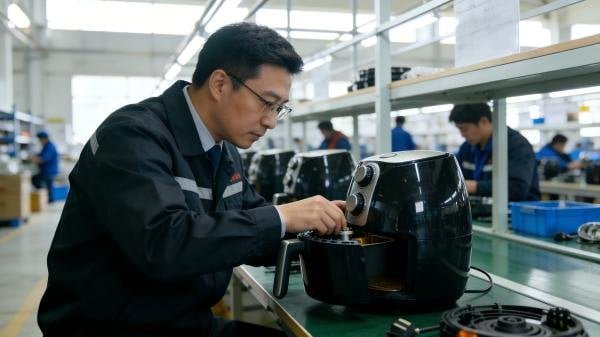
Are you worried your air fryer lineup will become obsolete as new technology emerges? We often see brand owners invest heavily in a product, only to see competitors launch models with newer, better features, leaving them behind. Partnering with the right supplier is the key.
To get technical upgrades for air fryers from China, you must partner with a supplier offering robust OEM/ODM services. Clearly communicate your needs for hardware improvements or firmware updates during the initial contract and maintain a direct line of communication with their engineering team for future enhancements.
Working with a manufacturer on upgrades doesn’t have to be complicated. Let’s break down the process so you can keep your products competitive and profitable.
What technical upgrade options do suppliers offer for air fryers?
You know you need to innovate, but what upgrade possibilities are actually on the table? From our experience in product development, many clients are unaware of the full range of enhancements available. This uncertainty can stall your product roadmap and leave you asking the wrong questions.
Suppliers typically offer hardware upgrades like improved heating elements or non-stick coatings, software updates for new cooking presets, and cosmetic changes. Many also provide part replacements and comprehensive OEM/ODM customization for entirely new features, creating a differentiated product for your brand.
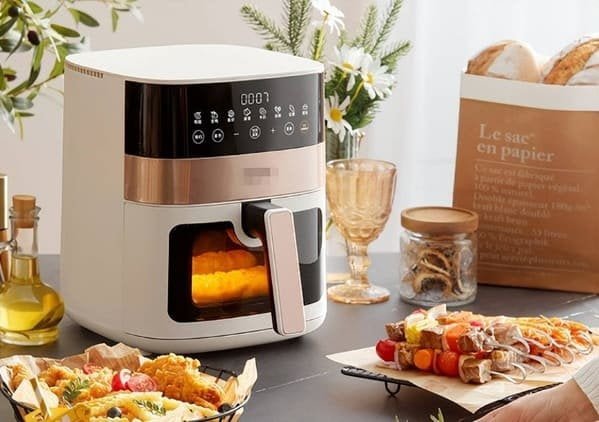
When we collaborate with brand owners, we break down potential upgrades into distinct categories. Understanding these options helps you create a clear, actionable plan for product evolution. Each type of upgrade serves a different purpose, from improving performance to refreshing the look and feel of your air fryer.
Hardware and Component Enhancements
Hardware is the physical foundation of your product. Upgrades in this area directly impact performance, durability, and user safety. These are often the most tangible improvements your customers will notice. For example, a client might request a more powerful fan motor for faster, more even cooking. Or, they may want to switch to a higher-grade, PFOA-free non-stick coating1 for the basket to address consumer health concerns. We also work on improving internal wiring and thermal insulation to exceed safety standards like ETL or GS. These are not just minor tweaks; they are core improvements that build brand reputation.
Software and Firmware Updates
In today’s market, the "brain" of an appliance is just as important as its body. Software updates can breathe new life into an existing model without changing the hardware. We often assist partners by developing firmware that adds new pre-programmed cooking functions—like a specific setting for "dehydrating" or "roasting." We can also refine the temperature control algorithms for greater precision or improve the responsiveness of the touchscreen interface. For smart appliances, firmware updates can add new voice command capabilities or improve connectivity with a mobile app.
Structural and Cosmetic Redesigns
Aesthetic appeal and user experience are critical differentiators. While this can involve creating entirely new molds, it often starts with smaller changes. We can modify the handle design for better ergonomics, introduce new colorways (CMF design), or update the control panel layout for a more intuitive user interface. Structural changes might include redesigning the air intake vents for better airflow or reinforcing the basket assembly for increased longevity. These upgrades help keep your product looking fresh and modern.
Here is a quick overview of common upgrade types:
| Upgrade Category | Examples | Primary Benefit |
|---|---|---|
| Hardware | Upgraded heating element, better motor, durable coating | Improved performance, safety, and longevity |
| Software/Firmware | New cooking presets, enhanced UI, smart-home integration | Expanded functionality and better user experience |
| Cosmetic/Structural | New color schemes, ergonomic handle, redesigned vents | Modernized appearance and improved usability |
How can I request ongoing software or hardware updates?
You’ve successfully launched your air fryer, but six months later, a new feature is trending. How do you approach your supplier for an update? Many buyers fear that post-launch requests will be ignored or treated as a new, expensive project, causing critical delays.
Request ongoing updates by first establishing a long-term partnership agreement that outlines a process for future enhancements. Communicate directly with the supplier’s R&D or engineering team, providing clear specifications. Use established channels like email for formal requests to ensure clear documentation.

The key to seamless updates is laying the groundwork early. A reactive approach will always be slower and more expensive. In our own factory, we prioritize partners who work with us to build a forward-looking product roadmap. Here’s how you can formalize this process.
Establish a Formal Partnership Framework
Your initial agreement should go beyond the first order. A good OEM/ODM partner is a long-term collaborator. Discuss and include clauses in your contract that outline a process for "Engineering Change Requests" (ECRs) or "Product Improvement Proposals." This sets the expectation that your product will evolve. Specify who the key contacts are for these requests—ideally, a project manager or an engineer, not just a sales representative. This ensures your technical requirements are understood from the start.
Provide Clear and Detailed Specifications
When you request an update, ambiguity is your enemy. Vague requests like "make it cook faster" are not actionable. Instead, provide a detailed specification document. For a hardware change, this might include the desired component model number, performance metrics (e.g., "reduce preheat time by 15%"), and material requirements. For a software update, provide a clear description of the new function, the logic for any new presets (time and temperature), and any required changes to the user interface display. We find that a simple, clear document saves weeks of back-and-forth communication.
Use a Documented Communication Process
While quick chats on WhatsApp are great for daily follow-ups, formal upgrade requests should be documented. Use email or a shared project management tool. This creates a written record of the request, the date it was submitted, and the specifications provided. A typical workflow we use is:
- Buyer submits a formal ECR via email.
- Our project manager confirms receipt and forwards it to the R&D team for evaluation.
- R&D provides feedback on feasibility, cost, and timeline.
- Both parties agree on the plan in writing before implementation begins.
Here is a sample template for an upgrade request:
| Field | Description |
|---|---|
| Request ID | Unique identifier for tracking (e.g., AF-UPG-001) |
| Date | Date of submission |
| Product Model | The specific model number to be upgraded |
| Upgrade Type | Hardware / Software / Cosmetic |
| Detailed Description | A clear explanation of the desired change and the reason for it. |
| Performance Target | Quantifiable goals (e.g., "Increase basket capacity to 5.5L"). |
| Attached Files | Schematics, reference images, or firmware logic files. |
What questions should I ask about upgrade timelines and costs?
You’re ready to request an upgrade, but you’re worried about hidden costs and endless delays. We’ve seen buyers get frustrated when a seemingly simple change turns into a major expense. Asking the right questions upfront is crucial for managing your budget and launch schedule effectively.
Always ask for a detailed cost breakdown, distinguishing between one-time (NRE) fees and per-unit cost increases. Clarify the full timeline, including development, testing, and production lead time. Also, confirm if the upgrade requires new safety certifications, as this adds time and expense.

Transparency is the foundation of a good supplier relationship. A trustworthy partner will be able to answer these questions clearly. Let’s explore what you need to ask to get a complete picture.
Unpacking the Costs
Never accept a single, lump-sum quote for an upgrade. Ask for a detailed breakdown to understand exactly what you are paying for.
- Non-Recurring Engineering (NRE) Costs: Are there one-time fees for R&D, new tooling, or mold modifications? This is common for significant hardware changes.
- Per-Unit Cost Impact: How will this upgrade affect the price of each air fryer? A new component might increase the Bill of Materials (BOM) cost.
- Certification Fees: Does the change require recertification (e.g., UL, CE, RoHS)? This is a separate cost that is often overlooked. Ask if the supplier’s quote includes it.
- Sampling Costs: Will you be charged for pre-production samples of the upgraded model?
Clarifying the Timeline
Time is money, especially when you are trying to hit a market window. A timeline should be more than just a final delivery date.
- Development & Prototyping: How long will it take the R&D team to develop and create the first samples?
- Testing & Validation: What is the timeline for internal testing (e.g., life testing, function testing) and any third-party lab certifications?
- Production Lead Time: Once the upgrade is approved, what is the lead time for mass production? Will it be longer than your standard orders?
- Potential Delays: Ask about potential bottlenecks. For example, is there a long lead time for a specific new component? What happens if a prototype fails testing?
By asking these specific questions, you move from uncertainty to a clear, manageable project plan.
How do I ensure compatibility with future enhancements?
You’re not just buying a product for today; you’re building a brand for tomorrow. How can you ensure the air fryer you source now won’t be a dead end in two years? We often advise our partners to think about future-proofing from the very first design discussion.
Ensure future compatibility by choosing a supplier with a strong, in-house R&D team and by selecting a product built on a scalable platform. Discuss your long-term product roadmap with your supplier and opt for modular designs where key components can be swapped out easily.
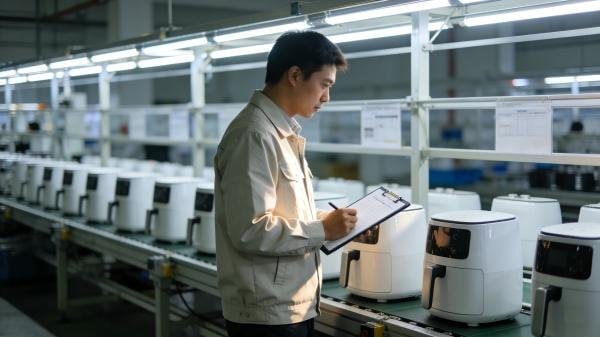
Future-proofing is a strategic decision made at the beginning of a partnership. It involves choosing both the right product architecture and the right manufacturing partner. A supplier focused only on producing the cheapest unit today is unlikely to be a good partner for long-term innovation.
Select a Scalable Product Platform
When evaluating a supplier’s products, don’t just look at the current model. Ask about the underlying platform. A good platform is designed with future upgrades in mind. For example:
- Sufficient Memory and Processing Power: Does the main circuit board (PCBA) have enough processing power and memory to handle future firmware updates or more complex functions? Opting for a slightly more capable microcontroller from the start can save you from a complete redesign later.
- Modular Component Design: Are key components like the heating element, fan, or control panel designed as modules? A modular design allows you to upgrade one part without re-engineering the entire appliance. We design many of our appliances this way for this exact reason.
Partner with a Proactive R&D Team
A supplier’s true value lies in their engineering expertise. A factory that only assembles parts cannot help you innovate. Look for a partner with a dedicated R&D department that is actively tracking new technologies and market trends. Ask them: "What new features are you working on for next year?" Their answer will reveal their commitment to innovation. Share your own product roadmap with them. A proactive partner will offer suggestions and help you align your vision with what is technically feasible.
Here’s a checklist for assessing future-readiness:
| Aspect | What to Look For |
|---|---|
| Supplier Capability | An in-house R&D team with a track record of innovation. |
| Product Architecture | Modular design; PCBA with extra processing power and memory. |
| Communication | Supplier is willing to discuss a 2-3 year product roadmap. |
| Firmware Updates | A clear process for over-the-air (OTA) or factory-installed firmware flashes. |
Conclusion
Securing technical upgrades is not an afterthought. It’s a core part of a successful sourcing strategy that keeps your brand relevant and profitable. Build a strong, transparent partnership from day one.
-
Explore the advantages of PFOA-free coatings for healthier cooking and improved safety. ↩