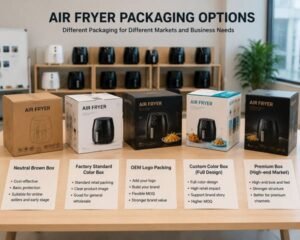
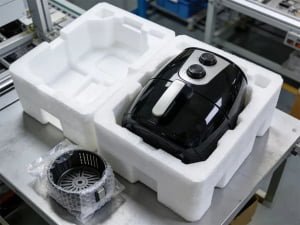
Sourcing air fryers overseas often brings stress. Unstable heating, weak packaging, and poor communication can ruin your business. You need a safe way to find a partner.
To find a reliable Chinese air fryer supplier, you must look beyond the manufacturer label. You need a phased verification process: discover candidates, verify their authenticity, test physical samples, establish clear quality control agreements, and continuously evaluate their delivery and production stability.
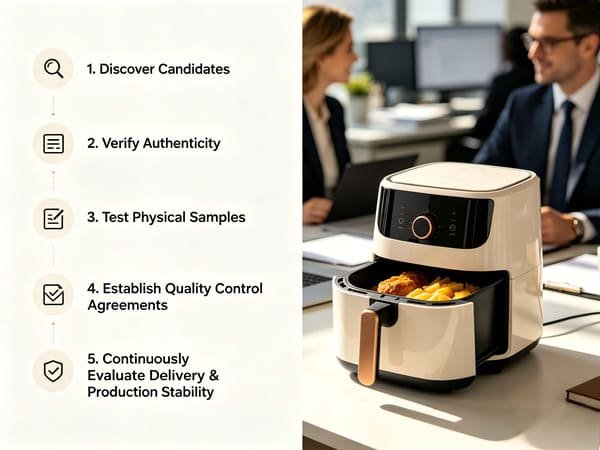
Finding the right partner takes time, but following a structured approach makes it much easier. Let us break down the exact steps to help you secure a stable supply chain and avoid costly sourcing mistakes.
How to find a reliable air fryer supplier from China?
Endless factory lists on supplier directories can feel overwhelming. Choosing a partner based only on low prices often leads to hidden costs and delayed shipments later.
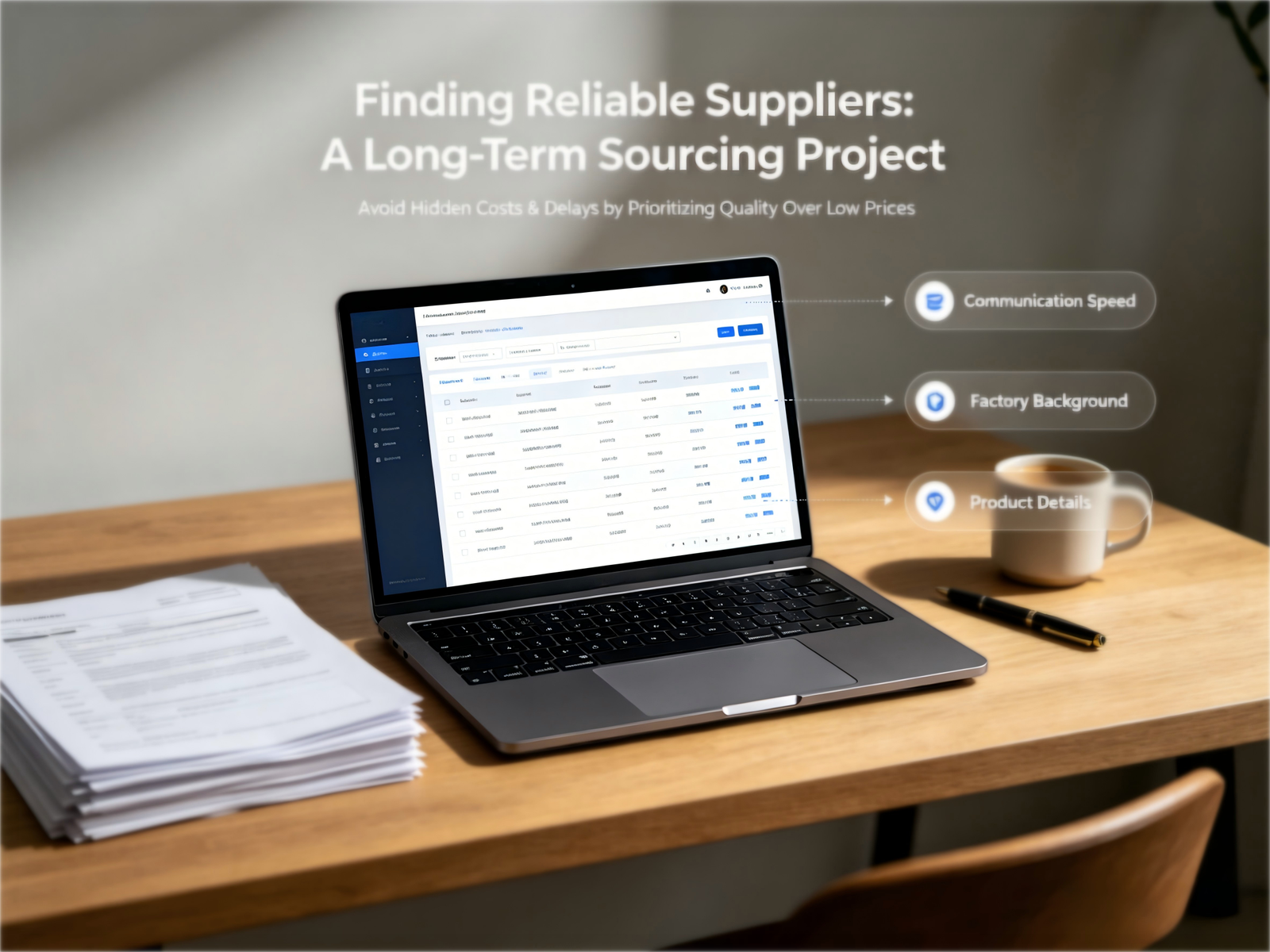
You can find a reliable supplier by treating sourcing as a long-term project. First, screen B2B platforms to build a candidate list. Then, focus on checking their communication speed, factory background, and willingness to share clear product details before placing any orders.
Sourcing from China is not a simple one-time action. It requires a clear strategy. When clients ask us about finding a good partner, we always suggest a five-step verification process. This includes discovery, verification, testing, cooperation, and re-evaluation.
During the discovery phase, you will look at many company profiles online or at trade shows. You should build a structured shortlist of candidates. Do not just look at the lowest price tag. Look at their product focus. Do they specialize in kitchen appliances, or do they sell everything?
Often, buyers assume they must work directly with a massive factory to get good margins1. But this is not always true. Sometimes, integrated trading companies or specialized suppliers can offer much better value. For example, our team combines production resources with selected partner factories. This setup often provides higher quality control, faster communication, and more flexible order options for buyers. A good partner should guide you through custom packaging choices, compliance needs, and matching the right model to your market2. Your goal is to find a team that understands your retail channels and takes product stability seriously.
Who makes the most reliable air fryer?
Every supplier claims to make the best products. But when the goods arrive, you might find loose baskets, bad plastic smells, or heating elements that fail quickly.
The most reliable air fryers come from suppliers who enforce strict quality control at every step. A good manufacturer tests heating performance, plastic safety, and packaging strength. Reliability depends on stable assembly lines and clear agreements on spare parts and warranties.
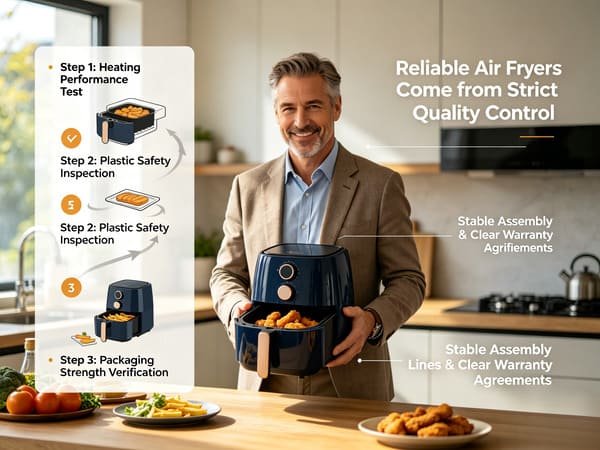
There is no single "best" factory that fits every buyer. The most reliable air fryer for your business is the one that matches your target market, retail price point, and certification needs.
Reliability comes from consistent quality control. When we handle air fryer projects, we pay close attention to heating performance and temperature accuracy. We also check the plastic housing quality, basket fitting, and cable standards. A reliable supplier will gladly discuss these details with you.
Before you place a bulk order, you must order samples and conduct detailed testing3. Check the actual cooking results yourself. Test the user interface and buttons. Ask the supplier about their daily QC process. You should also establish a clear quality assurance agreement before production starts. This agreement must cover the provision of spare parts for your after-sales support. If a supplier refuses to provide clear QC records or avoids discussing spare parts, they might not provide reliable products. Stable quality is the result of careful planning and strict daily management4, not just a good sales pitch.
How to check if a china air fryer supplier is legit?
Fake profiles and misleading factory photos are common traps. Sending a deposit to an unverified company is a huge financial risk for your import business.
To check if a Chinese supplier is legit, request their business license and recent export certifications. Ask for real-time factory inspection photos or video calls. A legitimate business will transparently share these documents and openly discuss their production setup.
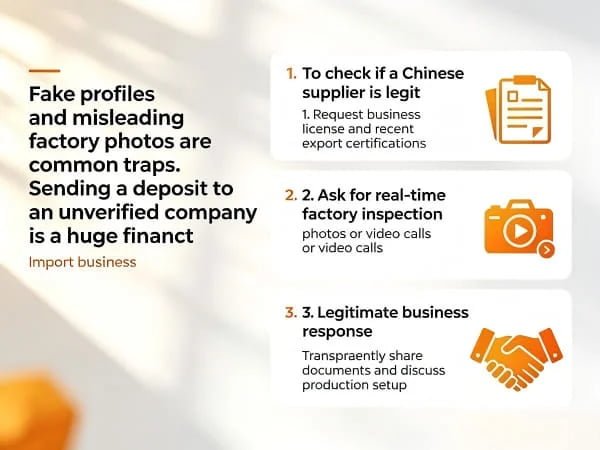
Verifying a supplier’s authenticity is a critical step in your procurement journey. Never skip this part. You need solid proof before moving forward.
Start by asking for their business license. You can also request relevant product certifications based on your target market5, such as CE or ETL. Keep in mind that available certifications depend on the specific product model. A real supplier will know exactly what certificates they have.
Next, ask for a video call. Ask them to walk around their office or assembly line. Request recent photos of their production facility and testing labs. Legitimate suppliers welcome this. They want to build trust.
Furthermore, you need to sign clear procurement contracts. These contracts must define the payment terms clearly. A legit supplier uses formal business bank accounts, not personal accounts. After the first order, you should continually evaluate their delivery time and repair records. By reviewing their documents, checking their facility visually, formalizing the payment terms, and dynamically optimizing your supply chain, you can greatly reduce your sourcing risks.
Where can I buy directly from china air fryer manufacturers?
Finding direct sources seems easy online, but dealing with massive factories can lead to high minimum orders and poor communication if your volume is small.
You can find Chinese manufacturers on major B2B platforms, at trade shows, or through industry-specific websites. However, you should also consider integrated suppliers who partner with multiple factories to provide flexible minimum order quantities, better communication, and customized private label solutions.
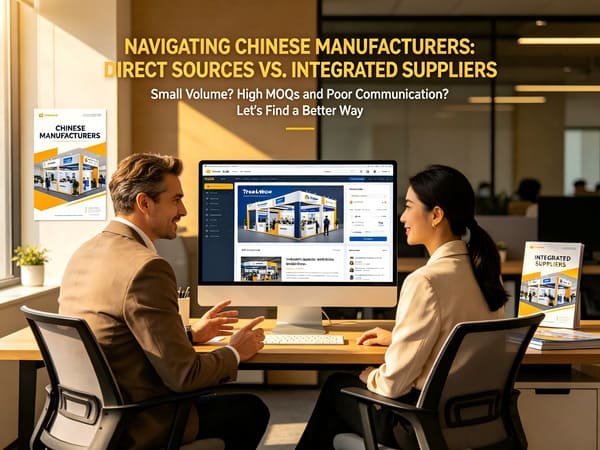
Many B2B buyers start their search on global wholesale platforms or by attending trade fairs like the Canton Fair6. These are great places to build your initial candidate list.
However, buying directly from a massive factory is not always the perfect solution for every brand. Large factories often demand very high minimum order quantities7. They might also lack the patience to handle detailed OEM and ODM customization for growing brands. This is where specialized integrated suppliers add value.
At AidKitchens, our model combines our own production resources with selected partner factories. This approach gives buyers more flexible product options and stronger project coordination. We help you review product specifications, manage packaging requirements, and follow up on production progress. Sometimes, working with a supplier who integrates manufacturing and sourcing provides better commercial results than struggling with a giant factory that does not prioritize your order. Keep your options open and choose the partner that best supports your business stage and long-term profit goals.
FAQ About China Air Fryer Suppliers
Why should I request a sample from an OEM air fryer supplier?
Requesting a sample is vital for testing physical quality. When we send samples, we encourage buyers to test heating performance, plastic smells, and basket fitting. You need to ensure the product matches your expectations before mass production. It helps you avoid ordering unstable products that cause after-sales complaints.
How do you help private label air fryer ensure quality?
We help private label buyers by focusing on key quality points during production. Our team supports packaging confirmation, functional testing, and appearance inspection. We establish clear quality control agreements, including spare parts provisions. This reduces the risk of weak packaging or inconsistent heating performance.
Are trading companies better than direct air fryer manufacturers?
Not necessarily better, but often more flexible. We operate as an integrated manufacturer and trading supplier. This allows us to combine our own production with partner factories. This model gives you better cost comparison, flexible customization, and smoother communication than dealing with a rigid, massive factory alone.
What certifications can your air fryer factory support?
Available certifications depend on the specific product model and your target market. We can support compliance requirements such as CE, CB, RoHS, ETL, or FDA when needed. We will help you review these compliance details early in the project to ensure your products can be legally sold.
How do we handle spare parts with our Chinese air fryer supplier?
You should always agree on spare parts before placing an order. We work with clients to define a clear quality assurance agreement. Supplying parts like extra baskets, trays, or control panels is essential for your local after-sales service. A reliable supplier plans for this to help you maintain a good brand reputation.
Conclusion
Finding a reliable China air fryer supplier requires careful verification, clear communication, and ongoing evaluation. Take your time, test products thoroughly, and choose a partner that supports your growth.
-
"Negotiating with a factory is simple…you either have leverage or …", https://www.linkedin.com/posts/andresizquieta_negotiating-with-a-factory-is-simpleyou-activity-7346557087813877760-See8. This source explains the common misconception among buyers regarding factory-direct sourcing and highlights alternative supplier models that can offer competitive advantages. Evidence role: expert_consensus; source type: education. Supports: Buyers often believe working directly with large factories is necessary for better margins, but alternative supplier models can be advantageous.. ↩
-
"Packaging Compliance for Suppliers – SupplierWiki – SPS Commerce", https://www.spscommerce.com/community/articles/packaging-compliance-for-suppliers. This source outlines the role of suppliers in assisting buyers with packaging, compliance, and market-specific product selection. Evidence role: mechanism; source type: education. Supports: Suppliers play a critical role in guiding buyers through packaging, compliance, and market-specific product selection.. ↩
-
"General Use Products: Certification and Testing | CPSC.gov", https://www.cpsc.gov/Business–Manufacturing/Testing-Certification/General-Use-Products-Certification-and-Testing. This source outlines the importance of sample testing in ensuring product quality before bulk orders. Evidence role: mechanism; source type: institution. Supports: Ordering samples and conducting detailed testing is essential to ensure product quality before bulk purchases.. ↩
-
"[PDF] Lean Daily Management Systems – CIRAS", https://www.ciras.iastate.edu/iowalean/files/2020/01/Daily_Management_System.pdf. This source explains how consistent quality control practices contribute to product reliability in manufacturing. Evidence role: mechanism; source type: education. Supports: Stable quality in manufacturing is achieved through careful planning and strict daily management.. ↩
-
"Testing & Certification | CPSC.gov", https://www.cpsc.gov/Business–Manufacturing/Testing-Certification. This source explains the role of product certifications like CE and ETL in ensuring compliance with market-specific regulations. Evidence role: mechanism; source type: institution. Supports: Relevant product certifications, such as CE or ETL, are essential for compliance with target market regulations.. Scope note: The support may vary depending on the product type and regional requirements. ↩
-
"Canton Fair", https://www.facebook.com/CantonFairOnline/posts/canton-fair-global-sharecantonfaironlineplatform-has-built-a-comprehensive-onlin/704669941697709/. This source provides an overview of how B2B buyers commonly use global wholesale platforms and trade fairs like the Canton Fair to initiate supplier searches. Evidence role: general_support; source type: encyclopedia. Supports: Many B2B buyers start their search on global wholesale platforms or by attending trade fairs like the Canton Fair.. ↩
-
"Size standards | U.S. Small Business Administration – SBA", https://www.sba.gov/federal-contracting/contracting-guide/size-standards. This source explains the typical minimum order quantity requirements imposed by large factories and their impact on smaller brands. Evidence role: mechanism; source type: research. Supports: Large factories often demand very high minimum order quantities.. Scope note: The source may focus on specific industries, which could limit its applicability to all manufacturing sectors. ↩