
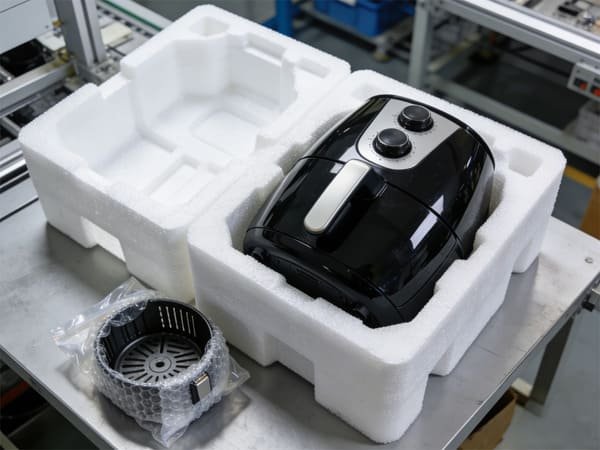
Receiving a container of damaged air fryers is a nightmare, causing stockouts and eroding profits. From our production lines, we’ve seen how easily this happens without proper precautions.
To prevent damage when shipping air fryers from China, you must enforce strict packaging protocols. This includes using molded foam inserts, double-wall cartons, secure palletizing, clear fragile labeling, and working with a supplier who understands and implements these essential shipping preparations.
Protecting your investment starts long before the products leave the factory floor. Let’s break down the exact steps you need to take to ensure your air fryers arrive in perfect condition, every time.
What packaging and shipping methods best protect air fryers in transit?
Your air fryers face a rough journey. Without robust packaging, they can easily get crushed, scratched, or broken. The right materials and methods are your first line of defense.
The best methods involve a multi-layer approach: custom-molded internal foam to immobilize the unit, a strong double-wall corrugated outer carton, and palletizing the shipment. This combination prevents both internal movement and external crushing during transit, offering maximum protection.
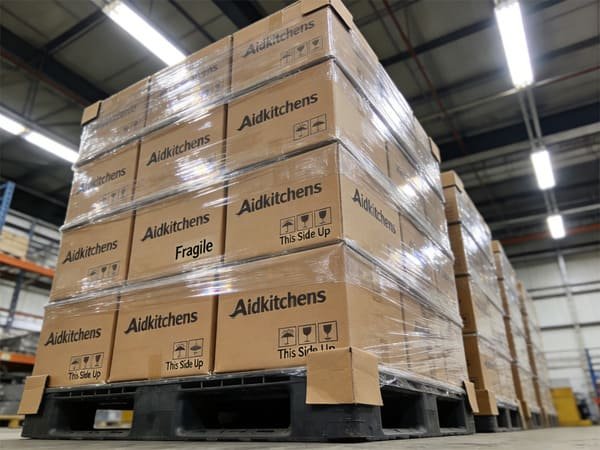
Protecting your air fryers requires a systematic approach to packaging. It’s not just about putting it in a box; it’s about creating a protective shell that can withstand the rigors of international shipping. On our assembly lines, we follow a strict protocol that we advise all our clients to adopt in their purchase orders.
Internal Packaging: The Core Defense
The goal here is to stop any part from moving. The main body of the air fryer should be held in place by custom-molded foam1, typically expanded polystyrene (EPS). This material is lightweight yet excellent at absorbing shock. Any removable parts, like the basket or trays, must be individually wrapped and secured. We often use a thin layer of foam wrap or cardboard dividers to prevent them from rattling or scratching other components. Glass lids are particularly vulnerable and require their own dedicated foam casing. If these parts can move, they will inevitably cause damage.
External Packaging: The Outer Shell
The retail box alone is not enough for shipping. The product must be placed inside a master shipping carton. We insist on using double-wall or even triple-wall corrugated cardboard. The strength of this outer box is critical, as it will bear the weight of other cartons stacked on top of it in a container. All empty space, or void, between the retail box and the shipping carton must be filled. Air pillows, bubble wrap, or crumpled kraft paper are effective void-fill materials2 that prevent the inner box from shifting.
| Packaging Component | Purpose | Recommended Material |
|---|---|---|
| Internal Support | Immobilizes the main unit and parts. | Custom-molded EPS foam, cardboard inserts. |
| Accessory Wrapping | Prevents rattling and scratches. | PE foam bags, bubble wrap, dividers. |
| Outer Carton | Protects against stacking pressure and impacts. | Double-wall (or stronger) corrugated cardboard. |
| Void Fill | Fills empty space in the outer carton. | Air pillows, kraft paper, foam peanuts. |
Palletizing: The Key to Bulk Shipments
For any sizable order, never ship loose cartons. Palletizing is non-negotiable. Cartons should be neatly stacked on a sturdy wooden or plastic pallet. We then use industrial-grade stretch film to wrap the entire pallet tightly, creating a single, stable unit. Plastic or cardboard corner protectors are added before wrapping to prevent the straps and film from crushing the edges of the boxes. Finally, nylon or polyester straps are used to secure the load to the pallet. This entire process ensures forklifts can move your shipment safely without dropping individual boxes and prevents the load from shifting or collapsing inside the container.
How can I verify supplier handling and loading procedures?
You’ve specified the perfect packaging, but how do you know the factory is following your instructions? Trust is good, but verification is better. Bad handling can undo all your careful planning.
To verify supplier procedures, demand visual evidence before shipment. Request photos and videos of your products being packaged, palletized, and loaded into the container. Also, include detailed packaging specifications as a binding requirement in your purchase order contract.
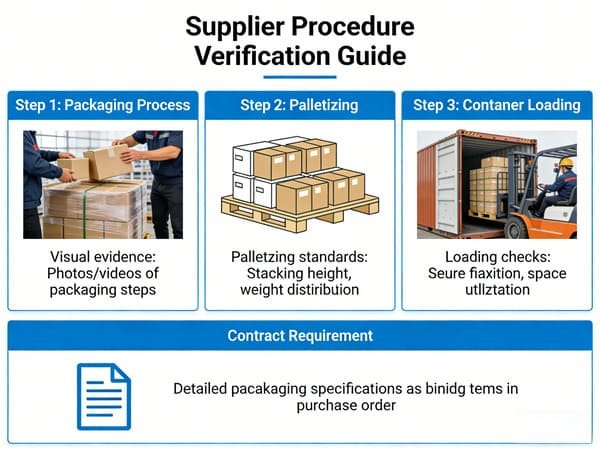
Ensuring compliance requires clear communication and setting expectations from the start. We work with our B2B clients to provide transparency throughout this process, as it builds trust and guarantees the safety of the goods. There are several effective methods to verify your supplier is handling your products correctly.
Set Clear Specifications in the Purchase Order (PO)
Your PO is a legally binding contract. It should contain a detailed "Packaging & Shipping3" section. Don’t just write "standard export carton." Be specific.
| Specification Item | Example Detail | Purpose |
|---|---|---|
| Carton Type | "5-ply BC flute double-wall corrugated" | Ensures box strength. |
| Foam Density | "EPS foam, 25 kg/m³ density" | Guarantees shock absorption quality. |
| Palletizing Method | "Stack 20 units/pallet, wrap with 23-micron film" | Standardizes load stability. |
| Labeling | "Apply ‘Fragile’ & ‘This Side Up’ labels" | Informs handlers of special care needed. |
By including these details, you have a contractual basis to reject the shipment or claim compensation if the supplier fails to comply.
Demand Pre-Shipment Visuals
Before the final payment is made, make it a mandatory step for your supplier to send you visual proof. This should include:
- Photos of the inner packaging: Show the air fryer and accessories secured in the foam.
- Photos of the sealed retail box and outer carton: Confirm the correct boxes are used.
- Photos or a short video of the palletizing process: Show the stacking pattern, corner protection, and stretch wrapping.
- Photos of the loaded container: Show the pallets secured inside the container, proving they weren’t de-palletized to fit more cargo.
Consider a Drop Test4
For a new supplier or product, a drop test is an invaluable tool. Ask the supplier to package one unit according to your specifications and ship it to you via air express. It’s a small investment that simulates the real-world abuse a package might endure. If the unit arrives safely, you can be much more confident about your bulk shipment. In our R&D phase for new appliance models, we perform drop tests from various heights and angles to ensure our packaging design is effective. This gives us and our clients peace of mind.
What insurance options are available for shipping air fryers?
Even with perfect packaging and handling, accidents can happen. A container might be dropped, exposed to water, or experience extreme turbulence. Cargo insurance is your financial safety net.
The main insurance options are All-Risks (Clause A), Named Perils (Clause B/C), and Free of Particular Average (FPA). For valuable electronics like air fryers, All-Risks coverage is highly recommended as it provides the most comprehensive protection against damage and loss.
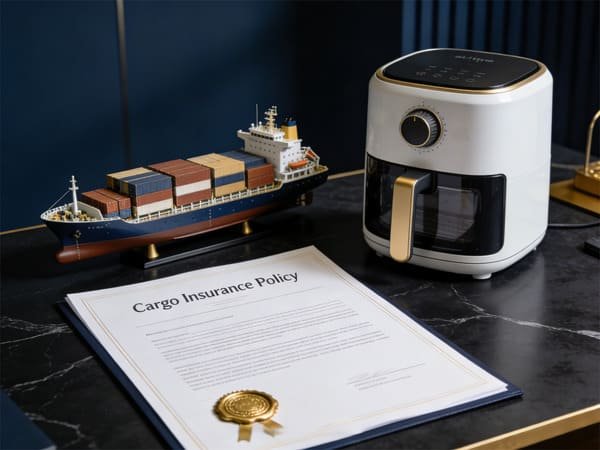
Navigating shipping insurance can seem complex, but it boils down to understanding the different levels of coverage. You can typically arrange insurance through your freight forwarder or a third-party insurance provider. When we coordinate logistics for our clients, we always clarify these options to match their risk tolerance and budget.
Understanding the Main Types of Cargo Insurance
The most common standards for marine cargo insurance are the Institute Cargo Clauses (A, B, and C).
-
Institute Cargo Clauses (A) or "All-Risks"5: This is the broadest form of coverage. It covers all risks of physical loss or damage from any external cause, unless a risk is specifically excluded in the policy (e.g., damage due to willful misconduct of the insured, ordinary leakage, or improper packaging). For high-value, fragile items like air fryers, this is the best choice.
-
Institute Cargo Clauses (B) or "Named Perils"6: This policy is more restrictive. It covers loss or damage from specific, listed events like fire, explosion, vessel collision, overturning of the land conveyance, and earthquake. It also covers water damage if it results from the vessel or craft taking on water. However, it does not cover theft or damage from rough handling if it’s not part of a listed event.
-
Institute Cargo Clauses (C) or "Free of Particular Average (FPA)"7: This is the most basic coverage. It covers loss or damage only in the event of a major catastrophe, such as fire, explosion, or the ship sinking or stranding. It offers very limited protection and is generally not suitable for electronics.
| Coverage Type | Protection Level | Best For |
|---|---|---|
| Clauses (A) / All-Risks | Highest | High-value, fragile goods like electronics. |
| Clauses (B) / Named Perils | Medium | General cargo that is less susceptible to damage. |
| Clauses (C) / FPA | Lowest | Low-value, durable bulk commodities. |
How Insurance is Calculated
The cost of insurance (the premium) is calculated as a percentage of the total value you want to insure. This value, known as the "insured value8," is typically calculated as the Commercial Invoice Value + Freight Cost + an additional 10% (to cover unforeseen expenses). For example, if your goods are worth $50,000 and freight is $5,000, you would insure them for $55,000 + 10% = $60,500. This ensures you can recover all your costs and some lost profit if a total loss occurs.
How do I handle claims for damaged goods?
Discovering damage upon arrival is stressful, but having a clear process allows you to recover your losses efficiently. Acting quickly and documenting everything is crucial for a successful claim.
Immediately document the damage with photos and detailed notes before accepting the shipment. Notify your supplier, freight forwarder, and insurance company within the timeframe specified in your policy. File a formal claim with all supporting evidence, including the invoice and bill of lading.
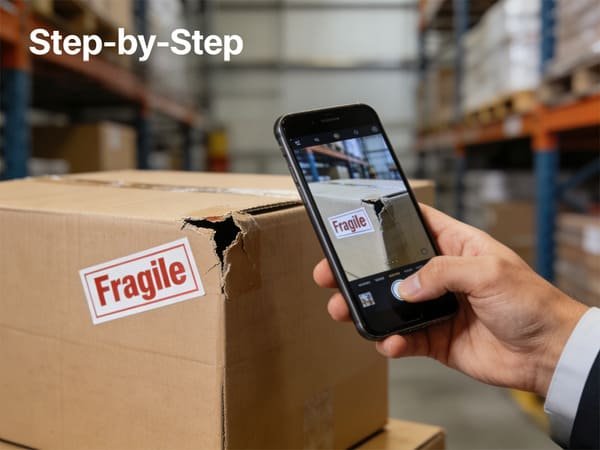
A well-documented claim is a successful claim. The burden of proof is on you, the consignee, so meticulous record-keeping is not optional. Having helped clients through this process, we know that a systematic response makes all the difference.
Step 1: Immediate Inspection and Documentation
The moment the container arrives at your warehouse, inspect it. Before breaking the seal, take photos of the container’s exterior, especially if there are any visible signs of damage. Once opened, document the condition of the load.
- If pallets are collapsed or boxes are crushed, take photos immediately.
- Note any damage on the delivery receipt or Proof of Delivery (POD)9 before signing it. Write "Goods received damaged, subject to inspection." Never sign a clean POD if you suspect damage.
- Take wide shots of the damaged cartons and then close-up shots of the damaged products themselves. The more photos, the better. Create a detailed list of every damaged unit, including serial numbers if possible.
Step 2: Notify All Parties
You must act fast. Most insurance policies have a very short window for reporting damage, sometimes as little as 3 to 7 days.
- Freight Forwarder10: Inform them immediately. They were responsible for the transport and will need to start their own investigation.
- Insurance Company: Contact your insurance provider to give them a preliminary notice of the claim. They will assign an adjuster and tell you the next steps.
- Supplier: Notify your supplier in China. If the damage was due to poor packaging that violated your PO, they share responsibility. This is key for negotiating replacements or future improvements.
Step 3: File the Formal Claim
Your insurance company will require a formal claim submission. This packet of documents typically includes:
- Commercial Invoice11: Proves the value of the goods.
- Packing List: Details the contents of the shipment.
- Bill of Lading (B/L) or Air Waybill (AWB): The contract of carriage.
- Survey Report / Damage Report: A formal report, sometimes prepared by a surveyor appointed by the insurer.
- Photographic Evidence12: All the photos you took.
- Written correspondence with the forwarder and supplier.
By following this structured process, you provide the insurer with everything they need to process your claim without delays, helping you recover your funds and focus on getting your business back on track.
Conclusion
Protecting your air fryers from shipping damage involves a partnership between you and your supplier, reinforced by clear specifications, verification, and insurance. This proactive approach saves you money and protects your brand.
-
Explore this link to understand how custom-molded foam enhances product protection during shipping. ↩
-
Discover various void-fill materials that can effectively protect your products from damage during shipping. ↩
-
Understanding best practices in Packaging & Shipping can help ensure your products arrive safely and meet specifications. ↩
-
Exploring the importance of Drop Tests can provide insights into ensuring product safety during shipping. ↩
-
Explore this link to understand why ‘All-Risks’ coverage is essential for protecting high-value items. ↩
-
Learn about the specific protections offered by ‘Named Perils’ insurance and how it can benefit your cargo. ↩
-
Discover the limitations of ‘Free of Particular Average’ coverage and when it might be appropriate for your needs. ↩
-
Find out how to accurately calculate the insured value to ensure full protection for your cargo. ↩
-
Understanding POD is crucial for ensuring you document any damages correctly and protect your interests. ↩
-
Learn how Freight Forwarders manage logistics and can assist in damage claims, ensuring smoother operations. ↩
-
A Commercial Invoice is vital for claims; knowing its details can help you secure your funds faster. ↩
-
Discover best practices for using photos in claims to strengthen your case and expedite the process. ↩