
Tired of production delays because your supplier ran out of parts? It hurts your brand’s reputation and your sales. We see this happen all the time with unprepared factories.
To verify a supplier’s raw material stability, you must review their upstream supplier relationships, inventory management practices, and quality certifications. Look for dual-sourcing for key components, safety stock policies, and traceability records as concrete evidence of a robust and reliable supply chain.
This guide will walk you through the exact steps to verify a supplier’s supply chain. Let’s get started.
What questions should I ask about the supplier’s sourcing and inventory practices?
Asking the right questions saves you from future headaches. Vague answers about sourcing often hide bigger problems down the line, which our quality team has learned to spot very early.
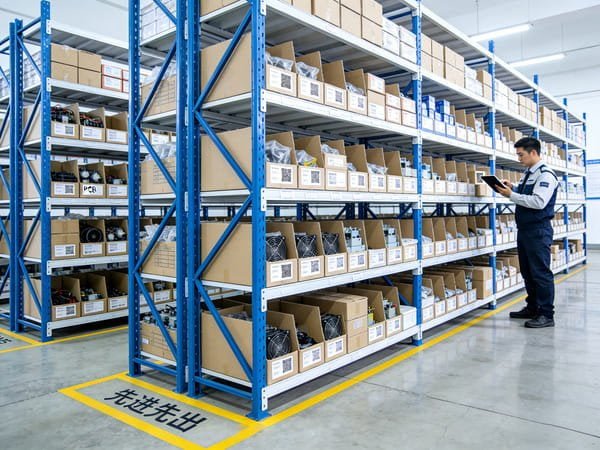
Ask for a list of critical component suppliers and their partnership duration. Inquire about their safety stock levels for key parts like heating elements and PCBs. Request a virtual tour of their raw material warehouse to see their inventory management system firsthand.
When we develop a new air fryer model, our sourcing strategy is just as important as the design itself. A weak link in the material supply can derail an entire production run. You need to probe your potential supplier’s methods to understand if they are prepared. Don’t just accept "yes" for an answer; ask for proof.
Key Questions for Sourcing Practices
A supplier’s relationship with its own vendors is critical. A factory that constantly switches its parts suppliers based on the lowest price is a high-risk partner. They are vulnerable to quality shifts and sudden shortages. In our experience, long-term partnerships with material vendors lead to better quality and priority during industry-wide shortages.
You should ask:
- Who are your primary suppliers for critical components like heating elements, motors, and PCB controllers?
- How long have you worked with these suppliers? (Look for 3+ years).
- Do you have at least one backup supplier for each critical component?
- Can you show us your supplier qualification procedure1 or audit reports?
A professional supplier will have this information ready and will not hesitate to share details about their sourcing process.
Key Questions for Inventory Management
A well-managed warehouse is a sign of a well-managed factory. Disorganization and a lack of clear systems often point to poor planning. When we onboard a new client, we often show them how we manage safety stock for their specific product to ensure we can handle unexpected demand spikes.
Here is a checklist of questions you can use:
| Category | Question to Ask Your Supplier | What a Good Answer Looks Like |
|---|---|---|
| Inventory Policy | What is your safety stock policy2 for key components? | We maintain 2-4 weeks of safety stock for critical items like PCBs and heating elements. |
| Warehouse System | Can you show me your raw material warehouse3? | A clean, organized space with clear labels, FIFO (First-In, First-Out) markings, and a digital tracking system. |
| Material Planning | How do you forecast material needs? | We use our ERP system and rolling production plans to generate purchase orders 60-90 days in advance. |
Asking for a video call to walk through their warehouse is a simple yet powerful way to verify their claims. Look for dust-free, well-organized racks, not just piles of boxes.
How can I assess the risk of supply chain disruptions?
A sudden factory shutdown can halt your business. Assessing risk isn’t about predicting the future; it’s about checking a supplier’s preparedness for the unexpected events we all face in manufacturing.
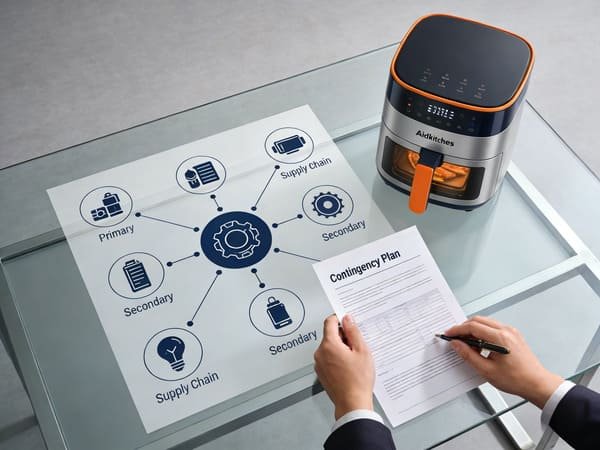
Assess risk by examining the supplier’s contingency plans. Ask how they handled past disruptions, verify if they have multiple qualified suppliers for critical parts, and check their reliance on single-source or geographically concentrated component providers. A lack of a plan is a major red flag.

Risk assessment is a standard part of our own internal audits. Every year, we map out potential points of failure, from a specific plastic resin becoming unavailable to a major port shutting down. A serious supplier does the same. Your job is to find out if they have thought about these "what if" scenarios.
Identifying Single Points of Failure
A single point of failure4 is any component, material, or service that comes from only one source. If that source fails, production stops. For air fryers, common single points of failure include custom-molded plastic housings, specialized microchips, or specific types of heating elements.
Ask your supplier directly: "Which of your components are single-sourced?" If they claim none are, be skeptical. Most products have at least one highly specialized part. The important follow-up question is: "What is your contingency plan5 for that specific component?" A strong supplier might hold extra safety stock or have a pre-qualified alternative supplier ready to go, even if it takes a few weeks to ramp up.
Reviewing Contingency Plans
A good plan is more than just an idea. It should be documented. When a key motor supplier of ours faced a sudden lockdown two years ago, our documented contingency plan5 was activated. We immediately shifted 70% of our orders to our pre-vetted secondary supplier. This allowed us to keep our production lines running at partial capacity instead of shutting down completely.
You can request to see a sanitized version of their risk management6 or business continuity plan7. Key things to look for include:
- Problem Identification: Do they acknowledge risks like material shortages, logistics delays, and power outages?
- Solutions: Do they have concrete action steps, like shifting to a backup supplier or using safety stock?
- Responsibility: Is it clear who is responsible for executing the plan?
This table outlines common disruptions and what a prepared supplier’s response should look like.
| Disruption Event | Poor Supplier Response | Prepared Supplier Response |
|---|---|---|
| Raw Material Price Spike | Immediately passes full cost to you or stops production. | Absorbs some costs, uses hedged materials, offers alternative materials. |
| Component Supplier Delay | Informs you of a production delay only after it happens. | Proactively informs you, uses safety stock, and activates a secondary supplier. |
| Port Congestion | Waits and hopes for the best, causing a shipment delay. | Has relationships with multiple freight forwarders and explores alternative shipping routes or ports. |
What information indicates strong supply chain management?
Strong supply chain management isn’t just about promises; it’s proven with documents and systems. When we provide OEM services, our partners audit these very systems to gain confidence before placing large orders.
Strong supply chain management is indicated by formal documentation. Look for ISO 9001 certification, comprehensive traceability records from raw material to finished product, and regular audit reports of their own upstream suppliers. These documents prove they have robust, repeatable processes.
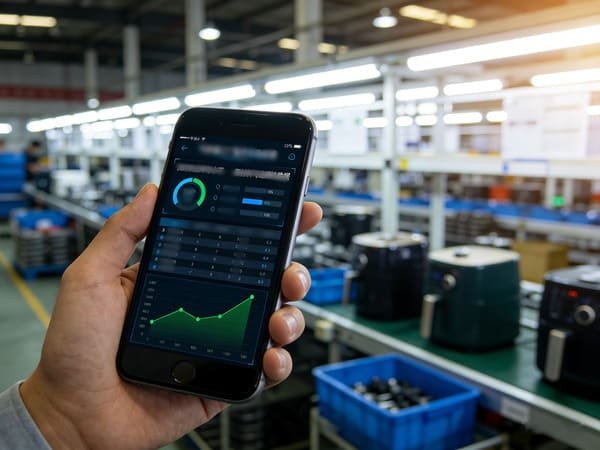
Look for objective evidence that a supplier has control over its processes. Glossy catalogs and impressive showrooms mean nothing if the underlying systems are weak. A factory that invests in certifications and systems is investing in reliability. These are the partners you want for long-term business.
The Power of Certifications
Certifications are not just pieces of paper. They are proof that a third party has audited a factory’s processes and confirmed they meet a recognized standard. For supply chain management, the most important one is ISO 90018.
- ISO 90018 (Quality Management System): This is the gold standard. An ISO 90018 certified factory must have documented procedures for qualifying, monitoring, and evaluating its suppliers. It also requires them to maintain records for traceability. Ask for their ISO 90018 certificate and, more importantly, ask for a sample of their supplier audit checklist.
- Product-Specific Compliance9: Documents like RoHS/REACH (for hazardous substances) and food-contact material reports (for plastics) show they control the specific materials going into your air fryers. This is a direct reflection of their supply chain control.
Traceability10 is Non-Negotiable
Traceability10 is the ability to track a product’s history from start to finish. If a defect is found, a factory with good traceability can pinpoint exactly which batch of raw material was used and which other products are affected. A factory without it is a huge risk.
Ask them: "If we found a problem with a heating element six months from now, could you tell us which batch of raw material it came from and which other production lots used the same batch?"
A strong supplier can and will show you examples of their batch records. Here’s what that system typically looks like:
| System Component | Description | Why It’s Important |
|---|---|---|
| Incoming QC Records | Each batch of raw materials is inspected and assigned a unique internal lot number upon arrival. | Catches material defects before they enter the production line. |
| Production Work Order | The work order for each production run specifies the exact lot numbers of components to be used. | Creates a link between the finished product and its raw materials. |
| Finished Goods Labeling | Each final product or carton is marked with a production date or lot number. | Allows you to identify a specific production run in case of a recall or quality issue. |
If a supplier says they "don’t really do that" or their system is "in their heads," it is a major warning sign of an immature and risky operation.
How do I ensure consistent product quality and delivery?
Ultimately, a stable supply chain should result in two things: consistent quality and on-time delivery. All the documents and systems are meaningless if the factory can’t deliver.
Ensure consistency by starting with a small trial order and a factory audit focused on their supplier management and quality control processes. Combine document review with physical verification. Also, prefer suppliers who work with major brands, as this usually indicates a reliable and vetted supply chain.

We always recommend new partners start with a trial order. It allows our teams to align and gives the client a real-world experience of our process, from material procurement to final inspection and shipment. This practical step is the best way to build trust and verify a supplier’s capabilities.
The Trial Order and Factory Audit
A trial order11 is your best tool for verification. It’s a real-world test of everything the supplier has promised. During this process, you can check communication, adherence to timelines, and product quality on a smaller, lower-risk scale.
Combine the trial order11 with a third-party factory audit. While a general audit is good, ask the audit company to focus specifically on:
- Supplier Management: Do they have records of auditing their key component suppliers?
- Incoming Quality Control (IQC): Are they physically inspecting raw materials when they arrive, or just moving boxes to the production line? Ask for IQC reports for your trial order11‘s materials.
- Warehouse Management: Does the auditor’s report on the warehouse match the clean and organized video tour you were given?
Look for Social Proof
One of the strongest indicators of reliability is a supplier’s customer list. Factories that produce for well-known international brands have already been subjected to intense supply chain audits. These brands would not risk their reputation on a supplier with an unstable material flow.
You can ask: "Can you share what major markets or brands you currently supply to?" While they may not be able to name clients due to NDAs, they can often speak in general terms (e.g., "We supply to three major retailers in Germany and a leading kitchenware brand in the US"). This "social proof12" suggests their systems are robust enough to meet high standards. Consistent, long-term relationships are a powerful sign that materials and deliveries are managed properly.
Conclusion
Verifying a supplier’s supply chain requires more than trust. It demands evidence. By asking specific questions, reviewing documents, and running a trial order, you can confidently choose a stable partner.
-
Understanding the supplier qualification procedure is crucial for ensuring quality and reliability in sourcing. ↩
-
Exploring safety stock policies helps you grasp how suppliers manage unexpected demand and maintain product availability. ↩
-
Learning about raw material warehouse standards can help you assess supplier organization and efficiency. ↩
-
Understanding single points of failure can help you mitigate risks in your supply chain. ↩
-
A solid contingency plan is crucial for maintaining operations during disruptions; learn how to develop one. ↩ ↩
-
Explore best practices in risk management to ensure your supply chain is resilient and prepared. ↩
-
A comprehensive business continuity plan is essential for minimizing downtime; find out what to include. ↩
-
Understanding ISO 9001 can enhance your knowledge of quality management systems and their impact on supply chains. ↩ ↩ ↩ ↩
-
Exploring RoHS and REACH compliance will help you grasp the significance of material safety in manufacturing. ↩
-
Learning about traceability can help you understand how it mitigates risks and ensures product quality. ↩ ↩
-
Understanding trial orders can enhance your supplier verification process, ensuring quality and reliability. ↩ ↩ ↩
-
Exploring social proof can reveal how established brands ensure supplier quality, boosting your confidence in sourcing. ↩