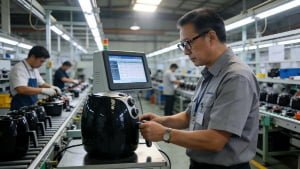
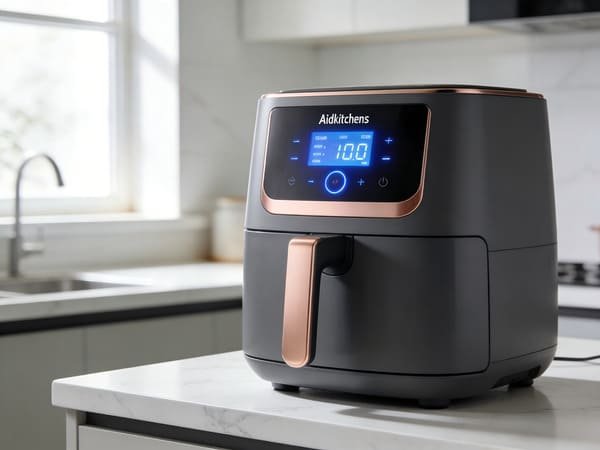
Worried that the "innovative" air fryer you’re sourcing is just a gimmick? Choosing poorly can lead to unhappy customers and unsold stock, a challenge we design our products to overcome.
To evaluate innovation, look beyond marketing claims. Assess smart features, heating efficiency, multi-functionality, and material quality. Verify technical performance metrics and international safety certifications to ensure the product is genuinely advanced, reliable, and safe for your target market.
Let’s break down exactly what this means for you.
What criteria should I use to assess air fryer innovation?
Struggling to separate game-changing features from simple bells and whistles? On our production floor, we see firsthand how a focus on core performance separates the best models from the rest.
Key criteria include smart connectivity, precise temperature control, multi-functionality beyond just frying, energy efficiency, and high-quality, food-safe materials. These factors determine performance, user experience, and long-term durability, defining a truly innovative appliance.
To properly assess innovation, you need a systematic approach. True advancement isn’t about a single feature; it’s about a combination of improvements that create a better, more reliable product for your customers. In our experience, buyers who focus on a few core areas make the best purchasing decisions.
Core Technology and Performance
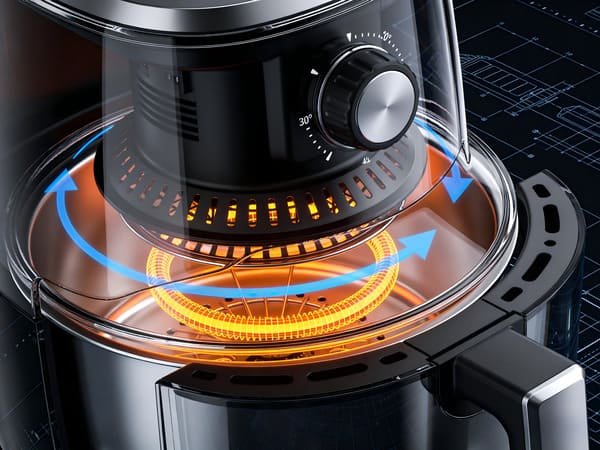
The engine of any air fryer is its heating and air circulation system. Look for concrete specifications. A model with rapid, even heating will always outperform one with dozens of presets but poor temperature management.
- Heating System: Does it use a single heating element or multiple? Optimized airflow patterns are crucial for eliminating cold spots.
- Temperature Control1: Digital controls with 5°C increments are a must for precision cooking. Simple manual knobs are a sign of an older, less innovative design.
- Smart Features2: IoT capabilities like WiFi/Bluetooth connectivity for app control are becoming standard. Check for useful integrations, like recipe databases that automatically set cooking parameters.
Material and Build Quality
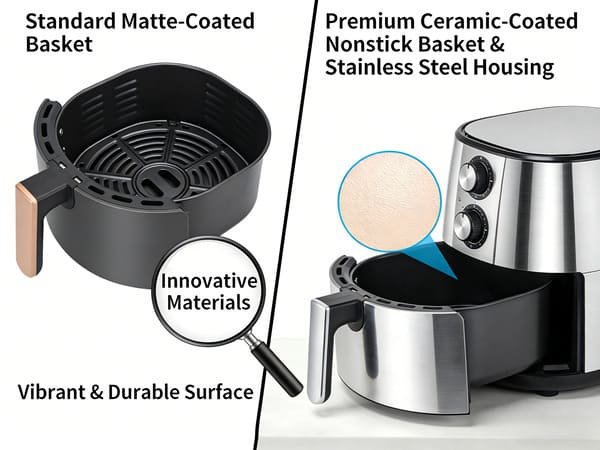
Innovation extends to the materials used. A durable, safe, and easy-to-clean unit provides more long-term value. When we develop new models, we rigorously test materials for heat resistance and durability.
Here is a quick comparison of common materials:
| Component | Basic Material | Innovative Material | Benefit |
|---|---|---|---|
| Basket Coating | PTFE-based non-stick | Ceramic-coated non-stick | Higher durability, easier to clean |
| Body/Internal | Plastic or Aluminum | Stainless Steel | Better heat distribution, corrosion resistance |
| Plastic Parts | Standard plastic | BPA-free, high heat-resistant (>120°C) | Enhanced safety and longevity |
User Experience and Design
An innovative product should be intuitive and safe to use. Features like viewing windows, cool-touch exteriors, and dishwasher-safe parts significantly improve the user experience. A cluttered interface with confusing modes is a sign of poor design, regardless of how many functions it claims to have.
How can I compare innovative features across different suppliers?
Comparing spec sheets from multiple suppliers can feel overwhelming, with each claiming to have the "latest technology." We often advise clients to create a standardized scorecard to cut through the marketing noise.
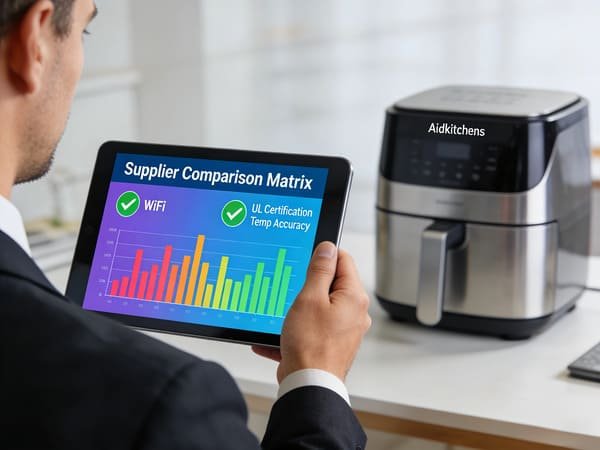
To compare suppliers, create a feature matrix that scores each model on key innovations like connectivity, heating precision (±°C), multi-functionality (e.g., 8-in-1), and material quality (e.g., ceramic vs. PTFE). Request performance data and certifications to validate their claims objectively.
A direct, data-driven comparison is the only way to make an informed choice. Marketing language can be misleading, but numbers and certifications don’t lie. Start by creating a simple comparison table to organize the information you receive from potential suppliers.
Building a Supplier Comparison Matrix
Use a spreadsheet to track key innovation metrics across your shortlisted suppliers. This forces an apples-to-apples comparison and quickly reveals which supplier offers genuinely superior technology versus which one simply has better marketing.
| Feature | Supplier A | Supplier B | Supplier C |
|---|---|---|---|
| Connectivity | WiFi + App | Bluetooth Only | None |
| Temp. Accuracy | ±10°F | ±15°F | Not Specified |
| Heating Speed (to 375°F) | < 3 mins | < 5 mins | ~5 mins |
| Functions | 8-in-1 | 6-in-1 | Air Fry Only |
| Basket Coating | Ceramic | PTFE | PTFE |
| Key Certification3 | UL, CE, RoHS | CE Only | None provided |
Look for Proof, Not Promises
Any factory can claim their product is innovative. The best partners provide proof. Ask for:
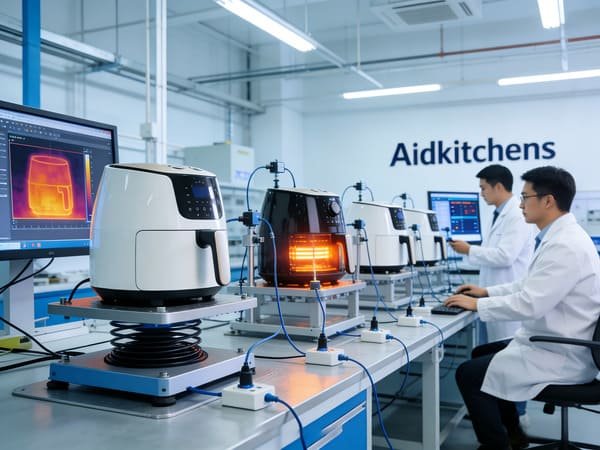
- Third-party lab test reports4: These reports verify performance claims like temperature accuracy and heating speed.
- Component supplier details: Knowing they use reputable suppliers for key components like motors and heating elements is a good sign.
- Video demonstrations: Ask for videos showing the product in action, especially for specific functions you care about.
When we onboard a new client, we proactively provide this documentation because we know it builds trust and demonstrates the quality engineered into our products. A supplier who hesitates to provide this information may have something to hide.
What questions should I ask about R&D and product development?
Understanding a supplier’s R&D process reveals their commitment to genuine innovation versus just copying existing designs. When we discuss ODM projects, the depth of our R&D process is a key selling point.
Ask about their R&D team size, annual investment in new technology, and their product development roadmap for the next 12-24 months. Inquire about their user testing and quality assurance protocols during the design phase to gauge their commitment to innovation.
A supplier’s answers to these questions will tell you if they are a strategic partner or just a transactional vendor. A forward-thinking manufacturer will be excited to share their vision and processes, as it reflects their strength and long-term stability. Vague answers are a major red flag.
Key Questions to Uncover R&D Strength
Organize your questions to cover their team, process, and future plans. This structured approach ensures you get a complete picture of their capabilities.
-
About the Team:
- "How many engineers are on your R&D team?"
- "What are their areas of expertise (e.g., mechanical, electrical, software)?"
- "Do you have in-house industrial designers?"
-
About the Process:
- "Can you walk me through your new product development process5, from idea to mass production?"
- "What kind of durability and stress testing6 do you perform on new designs?" (e.g., 500+ heat-cool cycles, 1-meter drop tests).
- "How do you incorporate user feedback into new product iterations?"
-
About the Future:
- "What new technologies or features are you currently researching?"
- "Can you share a high-level product roadmap for the next year?"
- "How do you stay updated on market trends and consumer demands?"
A supplier with a robust R&D program will have confident, detailed answers. They will speak about challenges they’ve overcome and specific tests they’ve implemented, demonstrating true experience.
How do I balance innovation with cost and reliability?
It’s tempting to chase the most feature-packed air fryer, but innovation often comes at a price. As we develop products, we constantly manage the trade-off between adding new features and maintaining affordability and reliability for our B2B clients.
Balance innovation with cost by focusing on features that provide tangible user benefits, not gimmicks. Prioritize reliability by choosing proven technologies and suppliers with strong QC processes. Use a tiered approach: "must-have" innovations versus "nice-to-have" features to control costs.
The goal is to find the sweet spot: an innovative product that delights customers without destroying your profit margins or leading to high return rates. This requires a strategic evaluation of what "innovation" truly means for your specific market. A feature that is revolutionary in one market might be unnecessary in another.
A Framework for Balancing Priorities
Use a simple framework to categorize features based on their importance to your brand and customers. This helps you decide where to invest your budget and where to save.
| Priority Level | Feature Type | Examples | Sourcing Strategy |
|---|---|---|---|
| Must-Have | Core Performance & Safety | Precise temp control, UL/CE certification, durable non-stick coating | Non-negotiable. Only work with suppliers who meet these standards. |
| High-Value | Differentiating Innovations | Smart connectivity, multi-functionality (8-in-1), unique design | Worth paying a premium for. Key to standing out from competitors. |
| Nice-to-Have | Minor Conveniences | Dozens of presets, voice control, custom colors | Only add if the budget allows and it doesn’t compromise core reliability. |
The Reliability Factor
Never sacrifice reliability for a trendy feature. An air fryer with WiFi that doesn’t cook evenly is a failure. Reliability comes from a manufacturer’s commitment to quality control7. Ask suppliers about their QC processes:
- Do they perform incoming quality control7 (IQC) on raw materials?
- What in-process quality control7 (IPQC) checks are done on the assembly line?
- What final quality assurance (FQA) tests are performed before shipment?
A reliable partner will have a multi-stage QC system and be able to provide documentation for each step. This commitment to quality is the foundation upon which true, lasting innovation is built.
Conclusion
Evaluating air fryer innovation requires looking past marketing and focusing on performance, materials, and verifiable data. By using a structured approach, you can find a truly innovative product and a reliable supplier.
concise checklist with "Passed" status for each item.
-
Explore how digital temperature control enhances cooking precision and improves your air frying experience. ↩
-
Discover the advantages of IoT capabilities in air fryers and how they can simplify your cooking process. ↩
-
Exploring key certifications can reveal the standards a supplier meets, ensuring safety and reliability in products. ↩
-
Understanding third-party lab test reports can help you verify supplier claims and ensure product quality. ↩
-
Understanding the new product development process is crucial for evaluating a supplier’s innovation capabilities. ↩
-
Exploring best practices in durability and stress testing can reveal how products are validated for quality and reliability. ↩
-
Understanding quality control practices can help you choose reliable suppliers and ensure product excellence. ↩ ↩ ↩