
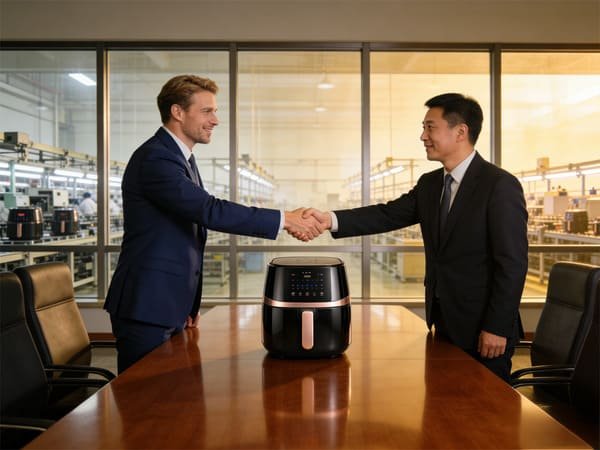
Tying up too much cash in deposits? Worried about paying the final balance before you’ve even seen your air fryers? We see many buyers struggle with this exact problem, risking capital and creating project delays.
To get competitive payment terms, you must reduce the supplier’s perceived risk while increasing your reliability as a buyer. This involves building trust through clear communication, proposing structured payments tied to production milestones, and showing your potential for long-term partnership.
Getting better terms is entirely possible. Let’s break down the common structures and how you can negotiate a more favorable deal for your next air fryer order.
What Payment Terms Are Commonly Offered by Chinese Suppliers?
Are you seeing requests for 100% upfront payment? It can feel incredibly risky, especially with a new supplier. In our experience, we typically guide new clients through the standard payment structures to find a comfortable and secure starting point.
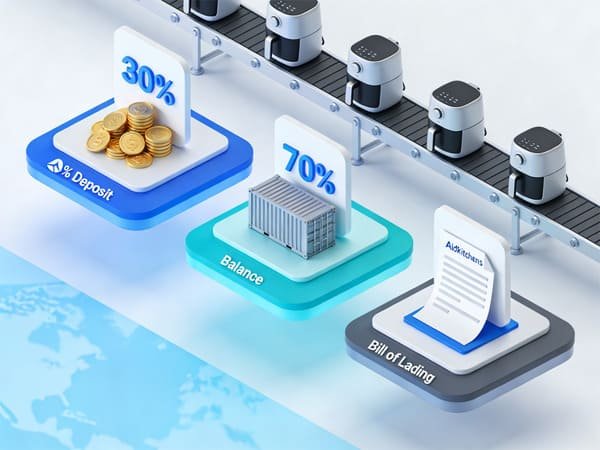
Most Chinese suppliers offer new or small-volume buyers terms of 30% deposit upon order confirmation and the remaining 70% balance due before shipment. For larger or repeat customers, this may shift to 70% payment against the Bill of Lading copy.
Why the 30/70 Split Is So Common
The 30% deposit and 70% pre-shipment balance1 is the default for a reason: it balances risk. For the manufacturer, the initial 30% covers the cost of raw materials and components needed to start production on your air fryers. This initial investment from you shows commitment and ensures we don’t purchase materials for an order that might be canceled.
The final 70% payment before the goods leave our factory protects us from non-payment after we have completed the entire production run. Once the goods are on a ship, a supplier has very little leverage if a buyer refuses to pay the balance. This structure is especially common for small and medium-sized enterprises (SMEs)2 who cannot afford to float the full cost of production and take on shipping risks.
Standard Payment Tiers
Payment terms are not one-size-fits-all. They often depend on the buyer’s history, order volume, and the level of product customization. A buyer ordering our standard, off-the-shelf air fryer models presents less risk than one requiring a completely new mold and custom electronics.
Here’s a breakdown of what to expect:
| Buyer Profile | Typical Payment Terms | Rationale |
|---|---|---|
| New Buyer, Small Order | 50% deposit, 50% before shipment. OR 100% upfront via Trade Assurance. | Highest risk for the supplier. The factory has no relationship or payment history with you. |
| Standard Buyer, Repeat Orders | 30% deposit, 70% before shipment. OR 30% deposit, 70% upon QC inspection pass. | A relationship is established. The supplier has more confidence in your reliability. |
| Large Volume/Long-Term Partner | 30% deposit, 70% against B/L copy. OR 30-60 days after shipment (OA). | Lowest risk for the supplier. The long-term value of the partnership outweighs the risk of a single order. |
For a product like an air fryer, which is a standard appliance, we know there’s a market for it. If a buyer were to default, we could likely resell the stock. This gives you a bit of leverage to argue against a deposit higher than 30%, especially if you aren’t asking for heavy customization.
How Can I Negotiate More Favorable Payment Conditions?
Do your negotiation attempts seem to hit a wall? It’s frustrating when suppliers won’t budge on payment terms. From our side of the production line, we know exactly what makes us feel secure enough to offer more flexibility to our partners.
You can successfully negotiate better terms by building a strong case for your reliability. Present a clear business profile, a realistic sales forecast, and a future order roadmap. This demonstrates long-term value, making suppliers more willing to be flexible.
Building a Case for Trust
Suppliers are business owners, just like you. We are more willing to invest in a relationship if we believe it will lead to consistent future business. Simply asking for "better terms" without context is often denied. Instead, you need to sell your company as a reliable partner.
Start by preparing a simple, one-page company profile3. Include your brand, your target market, your sales channels (e.g., Amazon, retail stores), and your expected annual volume for the air fryer category. When we receive a professional introduction like this, it immediately sets you apart from low-effort inquiries.
Next, provide a purchase forecast4. You don’t need to commit to it, but showing a plan for the next 12-24 months helps us see the bigger picture. A supplier is much more likely to accept a 20% deposit from a buyer planning to order 5,000 units over a year than a 30% deposit from someone with a one-time order of 500 units.
Trading Value for Better Terms
Negotiation is a two-way street. If you want the supplier to take on more risk (by accepting a lower deposit or post-shipment payment), you should be prepared to offer something in return. This shows you understand their position and are looking for a partnership, not just a concession.
Here are some levers you can use in your negotiation:
| If You Offer This: | You Can Ask For This: | Why It Works |
|---|---|---|
| Higher MOQ5 | Lower deposit (e.g., 20% instead of 30%) | A larger order improves the supplier’s production efficiency and margin, justifying the added risk. |
| Accept a Slightly Higher Price | Payment after shipment (e.g., 70% against B/L) | The extra margin acts as a form of insurance for the supplier against delayed or defaulted payment. |
| Commit to a Long-Term Contract6 | Open Account (OA) terms after a few orders | A formal contract with a forecast gives the supplier security for future production planning. |
| Pay for Tooling/Molds Upfront | Splitting the final balance payment | If you’ve already invested in custom tooling, it shows high commitment, reducing the supplier’s risk. |
For example, when a client commits to a larger first order than they initially planned, we are often able to reduce the required deposit from 30% to 20%. The larger volume helps our production planning and component purchasing, making the financial risk easier for us to manage.
What Risks Should I Consider With Different Payment Methods?
Choosing a payment method can feel like navigating a minefield. You want to protect your investment, but you also need the supplier to agree. From wiring large sums of money overseas to managing letters of credit, we help our clients weigh these risks daily.
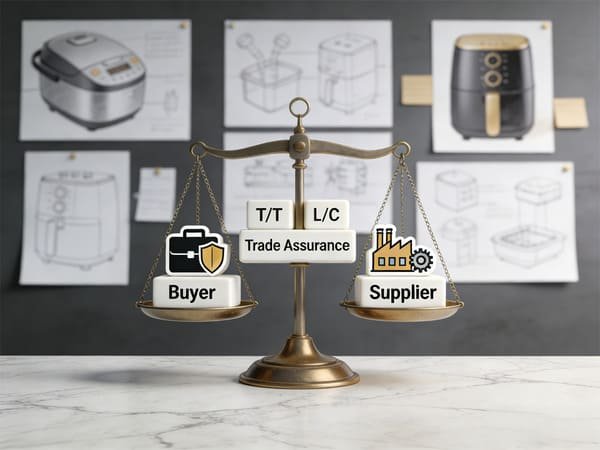
The primary risk for buyers is paying for goods that are defective or never shipped. For suppliers, the risk is shipping goods and not getting paid. Different methods like T/T, L/C, and escrow services distribute these risks differently between parties.
Understanding the Risk Spectrum
Payment methods exist on a spectrum, from high risk for the buyer to high risk for the supplier. Understanding where your proposed method falls on this spectrum is key to a successful negotiation.
-
100% Advance T/T7 (Telegraphic Transfer): This is maximum risk for you, the buyer. You have paid everything upfront and have no leverage if the air fryers are low quality, delayed, or not shipped at all. This is only advisable for small sample orders or with highly trusted, long-term suppliers.
-
Partial Deposit T/T8 (e.g., 30/70): This is the middle ground. Your initial risk is limited to the deposit. However, you must still pay the full amount before you receive and inspect the goods in your own country. The risk is that the goods arrive with hidden defects not caught by a pre-shipment inspection.
-
Letter of Credit (L/C)9: An L/C is a promise from a bank to pay the supplier once they present specific documents proving shipment (like the Bill of Lading). This is very secure for both parties. However, L/Cs are complex, slow, and expensive due to bank fees. They are typically only used for very large orders (>$50,000) and many smaller factories, including ours, may prefer simpler methods due to the paperwork involved.
-
Escrow Services10 (e.g., Alibaba Trade Assurance): Escrow services act as a neutral third party. You pay the escrow service, which holds the money until you confirm you have received the goods as described. This offers excellent protection for the buyer. For the supplier, it can mean a delay in receiving funds.
Buyer vs. Supplier Risk Comparison
Here is a simple table outlining the core risks associated with the most common payment methods.
| Payment Method | Buyer’s Primary Risk | Supplier’s Primary Risk | Best For |
|---|---|---|---|
| 100% Advance T/T7 | Product quality issues or non-shipment. Total loss of funds. | None. | Samples, very small orders, or trusted long-term partners. |
| 30/70 T/T | Loss of deposit; receiving defective goods after final payment. | Buyer defaults on final payment after production is complete. | Most standard B2B orders from China. |
| Letter of Credit (L/C)9 | Strict document requirements; bank fees can be high. | Payment delays or rejection due to minor document errors. | Large value orders (>$50,000) where trust is low. |
| Escrow Service | Delays in resolving disputes if goods are unsatisfactory. | Payment delays; platform may unfairly favor the buyer in a dispute. | New suppliers, or orders placed through platforms like Alibaba. |
When we onboard a new client for an OEM air fryer project, we often recommend starting with a 30/70 T/T payment structure, but with the condition that the 70% balance is only paid after the client’s designated third-party inspection agent has approved the batch at our factory. This provides a crucial layer of security for the buyer before the final payment is made.
How Do I Secure Flexible and Safe Payment Arrangements?
So you know the risks and the common terms, but how do you tie it all together into a concrete proposal? You want a deal that protects your cash flow without scaring away a good supplier. We find the best partnerships are built on clear, milestone-based agreements.
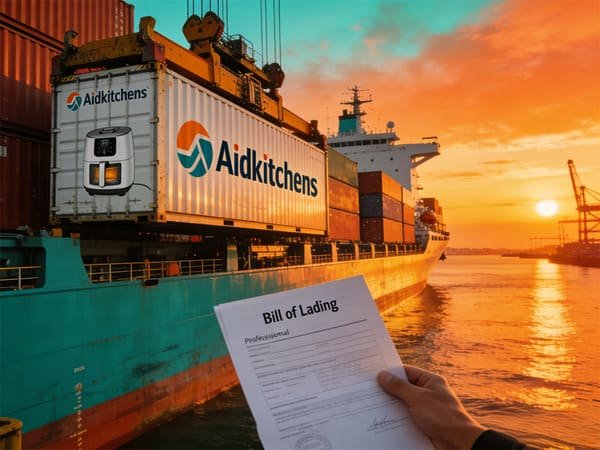
Secure flexible terms by proposing a milestone-based payment plan. For example, pay a small deposit upfront, a second payment after a successful pre-shipment inspection, and the final balance against the Bill of Lading copy. This protects both parties at each stage.
Proposing a Milestone-Based Structure
Instead of thinking in terms of just two payments (deposit and balance), break the process into key production milestones. Tying payments to these tangible steps makes a supplier feel much more comfortable deferring the final balance. It shows you are engaged in the process and builds a rhythm of trust.
A balanced, professional proposal for an air fryer order could look like this:
- Payment 1: 20-30% Deposit. Paid upon signing the Proforma Invoice (PI)11 to begin raw material procurement.
- Payment 2: 40% Intermediate Payment. Paid after the goods have been produced and have passed a third-party Quality Control (QC) inspection at the factory.
- Payment 3: 30-40% Final Balance. Paid after the goods have been shipped and the supplier provides a copy of the Bill of Lading (B/L).
This structure is a win-win. We, the manufacturer, are covered for materials and production costs. You, the buyer, confirm the quality before releasing the majority of the funds and confirm shipment before paying the final balance.
Practical Tactics for Your Negotiation
When you present this structure, reinforce it with professionalism and risk-reducers.
- Use a Third-Party Inspector: Explicitly state in your contract that an intermediate payment is conditional on the goods passing an inspection from a reputable firm like QIMA, SGS, or V-Trust. This takes the pressure off both you and the supplier to be the sole judge of quality.
- Get It in Writing: Do not rely on verbal agreements. Your Purchase Order (PO)12 and the supplier’s Proforma Invoice (PI)11 should clearly state the payment terms, percentages, and triggers for each payment. Insist on a bilingual contract if possible.
- Leverage a Standard Product: When ordering air fryers with standard specifications, remind the supplier that their risk is lower. Unlike a highly custom product, they can easily resell standard units if the deal falls through. Use this as a point to negotiate the initial deposit down from 50% or 40% to a more reasonable 30%.
In our factory, when a buyer proactively suggests a milestone plan and names their preferred third-party inspection company, we immediately view them as a serious, experienced professional. This instantly builds the confidence needed for us to agree to more flexible, secure payment terms.
Conclusion
Securing competitive payment terms is a process of building trust and aligning incentives. By presenting a professional case and proposing structured, milestone-based payments, you can protect your capital and build stronger, lasting partnerships with your suppliers.
-
Understanding this payment structure can help you negotiate better terms and manage risks effectively. ↩
-
Exploring the challenges SMEs face can provide insights into their operational strategies and financial management. ↩
-
Understanding how to craft a compelling company profile can enhance your business relationships and negotiations. ↩
-
A well-structured purchase forecast can significantly improve your negotiation power with suppliers. ↩
-
Learning about Higher MOQ can help you leverage better terms in your supplier negotiations. ↩
-
Exploring the advantages of Long-Term Contracts can provide insights into securing favorable supplier agreements. ↩
-
Understand the potential pitfalls of 100% Advance T/T to safeguard your investments in international purchases. ↩ ↩
-
Discover the risks and benefits of Partial Deposit T/T to make informed decisions in your transactions. ↩
-
Explore this link to understand how L/Cs can secure your transactions while navigating their complexities. ↩ ↩
-
Learn about escrow services to see how they can protect your payments and ensure safe transactions. ↩
-
Learning about Proforma Invoices can help streamline your purchasing process and ensure accurate agreements. ↩ ↩
-
A Purchase Order is crucial for clarity in transactions, protecting both buyers and suppliers. ↩