At Aidkitchens, we know the fear of customs seizures. Ignoring patent checks when importing our air fryers can turn a profitable launch into a legal nightmare.
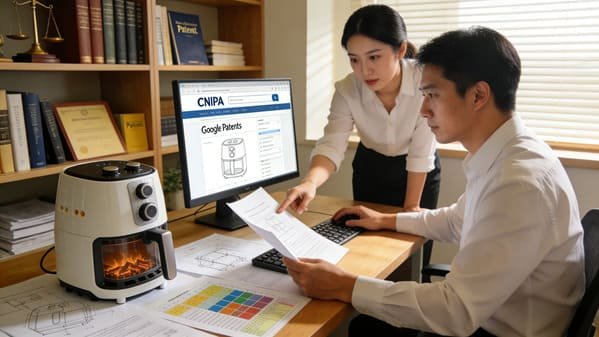
To determine patent scope, you must conduct a Freedom-to-Operate (FTO) analysis combining database searches on CNIPA and Google Patents with claim mapping. Verify the supplier’s utility models and design patents against your target market’s registry to ensure the product’s technical features do not infringe on active intellectual property rights.
Navigating intellectual property laws across borders is complex, but taking the right steps early protects your investment.
What questions should I ask suppliers about patent coverage?
When we negotiate with component providers, vague answers raise red flags. You need specific details to avoid liability, not just verbal assurances that everything is fine.
Ask suppliers for specific patent registration numbers, including utility models and design patents, and request written declarations of non-infringement. Inquire about the territorial scope of their IP rights and whether they own the molds or license technology from third parties to ensure they legally control the production.
Distinguishing Between Patent Types
In our daily operations at the factory, we deal with different types of intellectual property protections. When you speak to a supplier, you must understand exactly what they are claiming. A common pitfall for buyers is hearing "we have a patent" and assuming it covers the entire invention globally. In China, the system is split primarily into Invention Patent1s, Utility Model2s, and Design Patents3.
You need to ask specifically if their patent is an Invention Patent1 (which is harder to get and covers the method or product strictly) or a Utility Model2. Utility models are very common in our industry for small appliances like air fryers. They are granted quickly with less rigorous examination. A supplier might boast about a patent that is actually quite weak or easy to invalidate. Furthermore, ask about Design Patents3. On platforms like Alibaba, you will often see "Exclusive Design Patent." This usually only protects the aesthetic look—the curve of the handle or the shape of the basket—not the heating technology inside.
The Territorial Question
One of the most critical questions involves geography. We often remind our clients that a Chinese patent4 does not protect them in the United States or Europe. You must ask the supplier: "Is this patent registered in my target market?" If they only hold a Chinese patent4, and a competitor holds a US patent for the same technology, you cannot legally sell that product in the US.
Ownership and Licensing
Finally, dig into the ownership structure. Does the factory actually own the IP, or are they licensing it? We have seen cases where a factory assembles the product but buys the patented heating element from a third party. If that relationship sours, your supply cuts off.
Key Questions Checklist
Use this table to guide your conversation with potential suppliers.
| Question Category | Specific Question to Ask | Desired Answer | Red Flag Answer |
|---|---|---|---|
| Patent Type | "Is this a Utility Model2, Design Patent, or Invention Patent1?" | "It is a Utility Model2 for the basket mechanism, number CN…" | "It’s just a patent, don’t worry." |
| Territory | "In which countries is this patent currently active?" | "China and the USA (Patent US…)." | "It is a global patent." (Rarely exists simply) |
| Ownership | "Do you own this IP or is it licensed?" | "We own the rights to the mold and design." | "We buy parts from the market." |
| Validity | "Can you provide the most recent annuity payment receipt?" | "Yes, here is the receipt from last month." | "The certificate is from 2018." (Might be expired) |
How can I research the extent of patent protection for air fryer models?
Our engineering team spends weeks analyzing competitor filings before we cut a single mold. Without this research, you risk launching a product that is legally unsellable.
Research patent extent by using databases like Google Patents, Espacenet, and CNIPA to search for assignee names and specific keywords. Analyze independent claims to see if your product’s features—such as the heating mechanism or basket design—literally map onto protected elements, distinguishing between expired patents and active utility models.

Utilizing Public Databases
You do not need to be a lawyer to start this process. We recommend starting with Google Patents5 because it is user-friendly and translates Chinese patents (CN) into English automatically. You can search by keywords like "air fryer," "hot air circulation," or "cooking device." However, the most effective method is searching by Assignee. If you know the Chinese name of your manufacturer, plug it into the search bar. This will reveal every patent they have filed.
For more specific Chinese data, the CNIPA (China National Intellectual Property Administration)6 database is the official source. It can be slower and harder to navigate for non-Chinese speakers, but it provides the most accurate legal status. Another excellent tool is Espacenet (by the European Patent Office), which is great for finding "patent families"—seeing if a Chinese patent has a corresponding US or EU version.
Analyzing the Claims
Finding the patent is only step one. The "scope" of protection is defined entirely by the Claims section of the document, not the Abstract or the drawings. When we review patents, we look specifically at "Independent Claims7" (usually Claim 1).
- Broad vs. Narrow: If Claim 1 says the patent covers "a container with a handle," that is very broad. If it says "a container with a handle, a specific locking mechanism, and a mesh bottom of 2mm thickness," that is narrow.
- The All-Elements Rule: Generally, for you to infringe a patent, your product must contain every element listed in an independent claim. If the patent requires elements A, B, and C, and your air fryer only has A and B, you likely do not infringe.
Understanding Legal Status
A patent listed in a database might be dead. In China, utility models require annual fees. If a manufacturer stops paying, the patent expires. We always check the "Legal Events8" tab in these databases. Look for terms like "Expiration of patent right due to non-payment of fees." If it is expired, the technology is in the public domain, and you are free to use it.
Database Comparison
Here is a breakdown of the tools you can use for your research.
| Database Name | Best Use Case | Pros | Cons |
|---|---|---|---|
| Google Patents5 | Initial broad search and reading translations. | Fast, good English translation, easy interface. | Legal status data can sometimes be delayed. |
| CNIPA | Verifying official status in China. | The authoritative source for Chinese IP. | Interface can be slow; translation tools required. |
| Espacenet | Finding international equivalents (Family search). | Excellent for seeing if a CN patent exists in the US/EU. | Slightly more complex interface than Google. |
| Patsnap/Derwent | Professional, deep analytics (Paid). | Visual maps, FTO analysis tools, legal status alerts. | Expensive subscription fees. |
What documentation helps clarify patent scope?
We maintain extensive documentation for every model we export. Relying on a simple sales brochure instead of technical files leaves you blind to potential infringement risks.
Essential documentation includes the official Patent Certificate to verify validity and expiration dates, alongside a detailed Bill of Materials (BOM) to cross-reference components. Additionally, obtain a Freedom-to-Operate (FTO) opinion letter from legal counsel and a signed Indemnity Agreement from the factory to shift financial liability in case of disputes.

The Patent Certificate and Evaluation Reports
The first document to request is the Patent Certificate. However, for Chinese Utility Models, the certificate alone is not enough because these patents are granted without a substantive examination of novelty. Therefore, you should also ask for a Patent Evaluation Report9 (PGE). This is an official document generated by the patent office that assesses whether the utility model actually holds up against prior art. If a supplier refuses to show this, be cautious.
Bill of Materials (BOM)10 and Technical Drawings
To truly understand scope, you need to know exactly what is inside the machine. We provide our serious B2B partners with a Bill of Materials (BOM)10. This list details every component—the fan motor, the heating coil, the control board.
Why is this important? Because a third party might hold a patent on a specific type of high-efficiency motor. By checking the BOM, you can research the specific component suppliers. If the motor comes from a reputable brand like Mabuchi or a licensed supplier, you are safer. Technical drawings (exploded views) also help you visually compare your product against patent drawings found in your search.
Freedom-to-Operate (FTO) Opinion
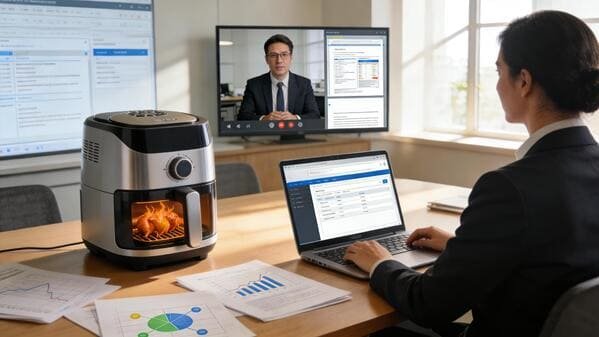
For large orders, internal documents are not enough. You need an FTO Opinion11. This is a legal document prepared by a qualified patent attorney. The attorney reviews the product and the patent landscape in your target market (e.g., the USA) and gives a professional opinion on whether the product infringes any active patents.
While this costs money (often between $2,000 to $10,000 depending on depth), it is an insurance policy. If you are sued later, having an FTO opinion can prove you did not "willfully" infringe, which can save you from triple damages in US courts.
Indemnity Agreements
Finally, the contract itself is documentation. You must have a strong Indemnity Clause12. This legal language states that if a third party sues you for patent infringement based on the supplier’s product, the supplier must pay for the legal defense and any damages.
Document Checklist
Ensure you have these files before finalizing your down payment.
| Document Name | Purpose | Who Provides It? |
|---|---|---|
| Patent Certificate | Proves the IP exists and belongs to the supplier. | Supplier |
| Patent Evaluation Report9 | Validates the stability of a Utility Model. | Supplier (from CNIPA) |
| Bill of Materials (BOM)10 | Identifies components to check for third-party IP. | Supplier |
| FTO Opinion11 | Legal assessment of infringement risk. | Your IP Attorney |
| Indemnity Agreement | Contractual protection against financial loss. | Your Lawyer / Supplier |
How do I avoid infringement on existing patents?
In our factory, we often modify designs to navigate around existing IP claims. Failing to adapt your product specifications can lead to costly lawsuits and inventory destruction.
Avoid infringement by conducting a claim mapping exercise where you compare your product’s features against the independent claims of active patents. If a conflict exists, negotiate a licensing agreement, request a "design-around" modification from the manufacturer, or source from a factory that already holds valid licenses for the technology.
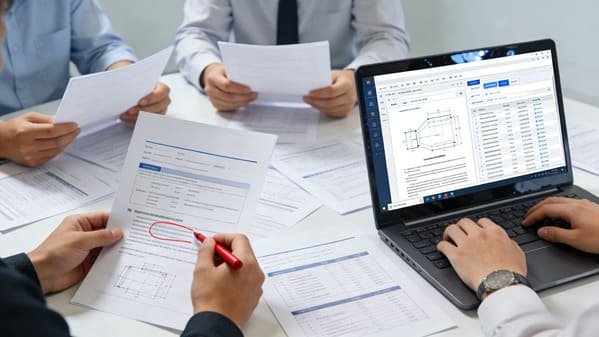
The Art of Claim Mapping13
The most effective technical method to avoid infringement is Claim Mapping13. This involves creating a chart. On the left side, you list the elements of the competitor’s patent claim (e.g., "a removable basket with a non-stick coating"). On the right side, you describe your product.
If your product matches every single element of the claim, you are likely infringing. However, if the patent specifies "a mechanical timer" and your product uses "a digital touch screen," you might be safe. This analysis requires precision. In the famous Philips air fryer disputes, the outcomes often turned on very specific technical definitions of how the air circulated.
Design-Around Strategies
If we find that a standard model infringes on a valid patent, we look for a "design-around14." This means changing the product just enough so it no longer meets the patent’s claims.
- Functional Changes: If a patent covers a specific way of attaching the handle, we engineer a different attachment method.
- Component Swapping: If a specific heating element is patented, we switch to a different type of heater that achieves the same result through a different physical process.
This is why working with an ODM (Original Design Manufacturer) like us is valuable. We have the engineering capability to alter the CAD drawings and molds to bypass IP roadblocks, ensuring your product is unique and compliant.
Licensing15 and Authorization
Sometimes, the patented technology is simply too good to ignore (like specific rapid-air technology). In this case, the legal path is Licensing15. You or your supplier can approach the patent holder and pay a royalty fee to use the technology.
Always verify that your supplier has the license before you buy. Ask for the "License Agreement" and check if it allows them to manufacture for export. Some licenses are restricted to domestic sales in China only.
The Danger of "Doctrine of Equivalents16"
Be careful with minor changes. In patent law, there is a concept called the Doctrine of Equivalents16. Even if you change a part slightly, if it performs substantially the same function in substantially the same way to achieve the same result, a court might still rule it as infringement. This is why a professional legal opinion is superior to a DIY check.
Conclusion
Protecting your business starts with due diligence. By asking the right questions, verifying documents, and mapping claims, you ensure your air fryer launch is profitable and secure.
-
Understanding Invention Patents is crucial for ensuring robust protection for your innovations. ↩ ↩ ↩
-
Explore the benefits of Utility Models to make informed decisions about your product’s protection. ↩ ↩ ↩ ↩
-
Learn about Design Patents to safeguard the aesthetic aspects of your products effectively. ↩ ↩
-
Discover the implications of holding a Chinese patent for your global business strategy. ↩ ↩
-
Explore Google Patents for a user-friendly interface and automatic translations, making patent research easier. ↩ ↩
-
Learn about CNIPA for accurate legal status of patents in China, essential for thorough research. ↩
-
Understanding Independent Claims is crucial for assessing patent protection scope and potential infringement. ↩
-
Discover the significance of Legal Events to ensure you’re aware of a patent’s current legal standing. ↩
-
Understanding the significance of a Patent Evaluation Report can help you assess the validity of a utility model. ↩ ↩
-
Exploring BOM creation can enhance your product development process and ensure compliance with patent laws. ↩ ↩ ↩
-
Learning about FTO Opinions can protect your business from patent infringement risks and potential legal issues. ↩ ↩
-
Understanding Indemnity Clauses can safeguard your business against financial losses from patent infringement lawsuits. ↩
-
Understanding Claim Mapping is crucial for avoiding patent infringement and ensuring product compliance. ↩ ↩
-
Exploring design-around strategies can help you innovate while avoiding infringement on existing patents. ↩
-
Learning about Licensing can provide insights into legally using patented technology without infringement. ↩ ↩
-
Understanding the Doctrine of Equivalents is essential to avoid unintentional patent infringement. ↩ ↩