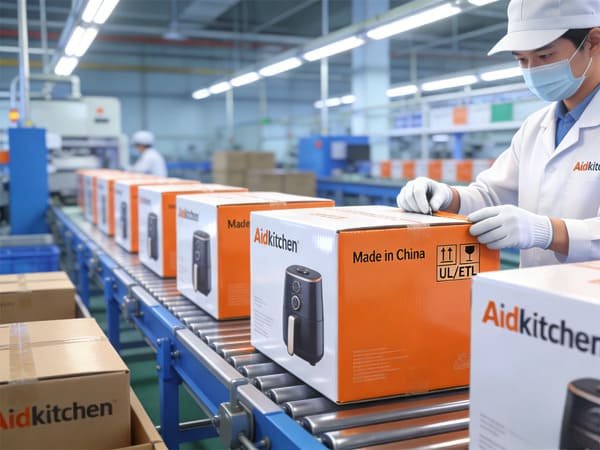
Are you worried about your air fryer shipment being rejected by US customs due to packaging errors? We’ve seen this happen, causing costly delays. Getting packaging right from the start is key.
To ensure your air fryer packaging meets US requirements, you must verify legal labeling, safety marks, and clear instructions. Build these specifications into your purchase order and enforce a strict artwork approval process with your Chinese factory before mass production begins.
Understanding these rules is not just about compliance; it’s about ensuring a smooth path from our factory floor to your customer’s kitchen. Let’s break down the essential requirements you need to manage.
What packaging standards must be met for US market entry?
Navigating the web of US packaging rules can feel overwhelming. A single mistake can lead to your entire shipment being held at port, erasing your profits. We help our clients navigate this every day.
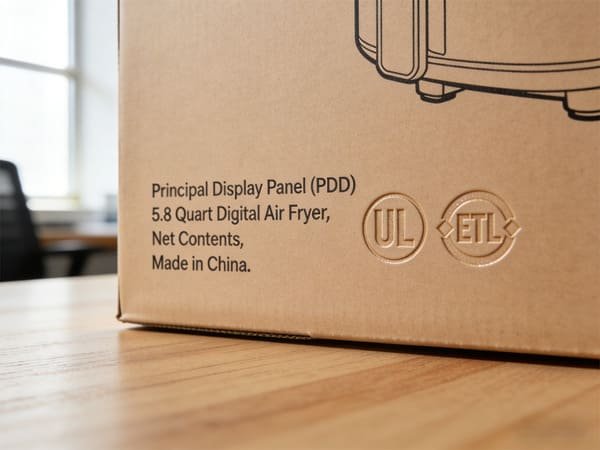
For US market entry, air fryer packaging must clearly state product identity, net quantity, country of origin, and the US-based responsible party. It must also display all required safety certification marks (like UL or ETL) and any necessary warning labels.
To ensure your product is accepted, you need to focus on several key areas of packaging compliance. These are not suggestions; they are mandatory requirements enforced by US authorities. Failing to meet them can result in fines, forced re-labeling, or even destruction of your goods. From our experience shipping thousands of units to the US, meticulous attention to detail at the design stage prevents costly problems later.
Mandatory Labeling Elements
The Principal Display Panel (PDP)1, which is the side of the box most likely to be shown to consumers, has specific requirements. It must contain the most critical information for the buyer. Other panels can hold additional details, but the PDP is non-negotiable.
Here is a breakdown of the essential information your packaging must include:
| Element | Description | Example |
|---|---|---|
| Product Identity | A clear statement of what the product is. | "5.8 Quart Digital Air Fryer" |
| Net Quantity | The amount of product inside. For air fryers, this is often volume. | "Net Contents: 5.8 QT (5.5 L)" |
| Responsible Party | Name and address of the US-based manufacturer, importer, or distributor. | "Imported by: BrandCo, 123 Main St, Anytown, USA" |
| Country of Origin | A clear marking indicating where the product was made. | "Made in China" |
Safety Marks and Regulatory Text
Beyond basic identification, your packaging must carry the correct safety certification marks2. These logos are not decorative. They prove that your product has been tested by an accredited laboratory and meets US safety standards. You must provide us, your manufacturer, with high-resolution vector files for these marks. We will then confirm their size, color, and placement on the packaging proofs before we proceed to mass production. It is also critical to include any legally required warnings, such as suffocation warnings on plastic bags used for accessories.
How can I communicate my packaging requirements to suppliers?
Have you ever approved a sample, only to find the final production run has different colors or incorrect text? Miscommunication on packaging details is a common but preventable issue in our industry.
Effectively communicate packaging needs by providing a detailed specification sheet with all text, logos, barcodes, and material requirements. Always demand and approve digital and physical pre-production samples before authorizing mass production.
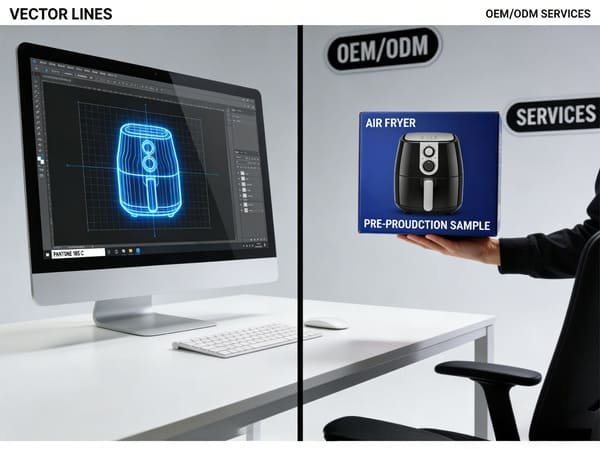
A simple email with a few instructions is not enough. To get exactly what you want, you need to create a comprehensive document that leaves no room for interpretation. We call this a "Packaging Specification Sheet." This document becomes part of our manufacturing agreement and serves as the ultimate source of truth for our production and quality control teams. It ensures that everyone, from the printing press operator to the final inspector, is working from the same set of instructions. This minimizes errors and ensures the packaging that arrives at your warehouse is exactly what you approved.
Building a Bulletproof Specification Sheet3
Your spec sheet is your primary tool for communication. It should be clear, concise, and comprehensive. Think of it as a blueprint for your packaging. We rely on these documents to execute your vision perfectly.
Your sheet should include:
- All Text Content: Every word that must appear on the box, including marketing copy, features, instructions, and warnings.
- Graphic Elements: Logos, icons, and safety marks provided in vector format (.ai or .eps).
- Color Codes: Specify Pantone (PMS) colors to ensure brand consistency across all print runs.
- Material Specifications: Define the type of cardboard (e.g., 350GSM C1S), finish (e.g., matte lamination, UV coating), and any internal supports.
- Barcodes: Provide the UPC/EAN barcode number and its required placement.
Creating a Supplier Communication Checklist4
Use a checklist to ensure you’ve covered all bases before signing off on production. This helps formalize the process and reduces the risk of costly assumptions.
| Communication Step | Detail | Status |
|---|---|---|
| Submit Spec Sheet | Provide a complete document with all requirements. | ☐ Done |
| Provide Vector Artwork | Send all logos and marks in high-resolution vector files. | ☐ Done |
| Confirm Pantone Colors | List all PMS color codes for printing. | ☐ Done |
| Request Digital Proof | Review a PDF file of the final artwork (dieline). | ☐ Approved |
| Request Physical Sample | Approve a fully assembled pre-production sample. | ☐ Approved |
| Sign-Off for Production | Provide written confirmation to begin mass printing. | ☐ Sent |
This structured approach is how we ensure alignment with our clients and deliver consistent, compliant packaging for every order.
What testing or certifications are needed for compliant packaging?
Are you concerned that your packaging might not withstand the rigors of shipping? Damaged packaging can lead to product returns and harm your brand’s reputation, a problem we work hard to prevent.
While the air fryer itself needs UL/ETL certification, the packaging must pass physical transit tests like ISTA standards. This ensures it protects the product during shipping. Some materials may also need RoHS or heavy metal testing.
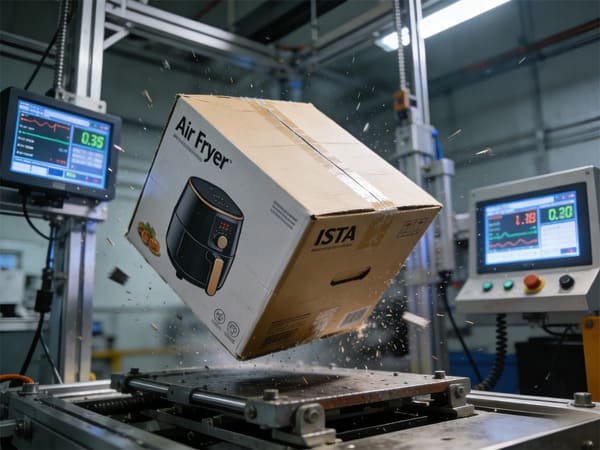
While the focus is often on the product’s electrical certifications, the packaging’s physical integrity is just as important. Your product must arrive in your customer’s hands in perfect condition. To guarantee this, packaging should be subjected to transit testing. These tests simulate the drops, vibrations, and compression forces that a package endures during its journey from our factory in China to a warehouse in the US. The International Safe Transit Association (ISTA) provides standard testing protocols that are widely recognized. We often perform these tests in-house or with a third-party lab to validate our packaging designs. Furthermore, some states, like California, have specific regulations (Proposition 65) regarding chemicals in packaging materials, which may require additional testing to ensure compliance and avoid liability.
Understanding Key Packaging Tests
Transit testing5 is crucial for ensuring your product’s safety. Without it, you are gambling with every shipment. Here are some of the most common tests we perform to validate packaging designs.
| Test Type | Purpose | Why It Matters |
|---|---|---|
| Drop Test | Simulates the package being dropped from various heights and angles. | Ensures the packaging and internal supports can absorb impact and protect the air fryer. |
| Vibration Test | Simulates the vibrations of truck or ocean transport. | Prevents scuffing, component loosening, or damage from prolonged shaking. |
| Compression Test | Simulates the weight of other boxes stacked on top during shipping and storage. | Confirms the box has enough structural strength to avoid being crushed. |
Material Compliance and Certifications6
The materials used in your packaging also matter. Regulations like RoHS (Restriction of Hazardous Substances) limit the use of specific hazardous materials in electrical and electronic products, and this can extend to packaging. Similarly, tests for heavy metals like lead and cadmium may be required. Ensuring your packaging materials are compliant protects you from regulatory penalties and demonstrates your commitment to consumer safety and environmental responsibility. We work with our material suppliers to source compliant paper and inks, providing documentation upon request.
How do I handle packaging design approvals?
How do you ensure the final packaging looks exactly like the design you approved months ago? Drifts in color or layout can happen without a rigid approval process, which is why we have a strict system.
Handle design approvals by implementing a multi-stage process. First, approve a digital artwork file laid out on the die-line. Next, approve a physical, fully printed pre-production sample. Do not give final production approval until this physical sample is perfect.
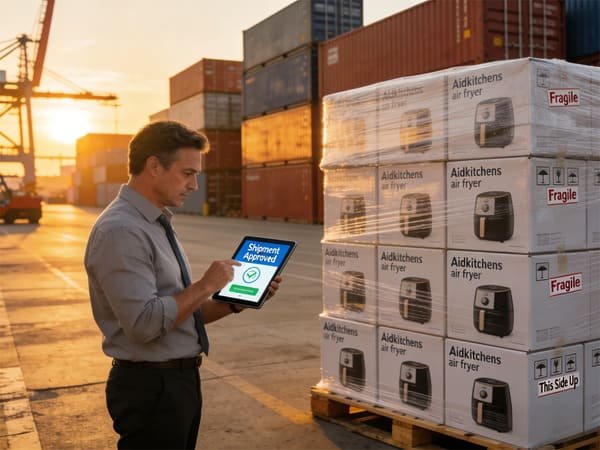
The approval process should be methodical and documented. It’s the final gate before committing to thousands of units. Rushing this step is a common mistake that leads to disappointment. When we work with a client on a new air fryer model, we start with a digital proof. This is a flat PDF showing how your artwork fits onto the box’s die-line. Once you approve this for layout and content, we produce a physical sample. This is your chance to see and feel the final product—to check the colors under real light, test the material’s strength, and confirm the finish. Only after you provide written approval of this physical sample will we proceed with mass production. This two-step verification ensures there are no surprises when your shipment arrives.
The Digital Proof7 Stage
The digital proof, often called an artwork proof or die-line proof, is your first checkpoint. At this stage, you should meticulously check for:
- Typos and Grammatical Errors: Read every single word on the packaging.
- Correct Information: Verify all specs, features, and model numbers.
- Logo and Mark Placement: Ensure all logos (your brand, safety marks, barcodes) are in the correct position and are legible.
- Layout and Alignment: Check that all design elements are properly aligned and visually balanced.
Requesting changes at this stage is easy and free. Requesting them after printing has started is expensive and causes significant delays.
The Physical Sample8 Stage
Holding the physical sample is the moment of truth. The digital proof cannot convey texture, true color, or structural integrity. When you receive the pre-production sample from us, evaluate:
- Color Accuracy: Compare the printed colors to your brand’s Pantone (PMS) standards. Colors can look different on screen versus in print.
- Material and Finish Quality: Does the cardboard feel sturdy? Is the lamination smooth? Does the gloss or matte finish match your expectations?
- Assembly and Fit: Check how the box assembles and if the internal supports hold the air fryer securely.
If the sample isn’t right, provide clear feedback for revisions. We will produce a new sample until you are 100% satisfied. This careful process is fundamental to a successful product launch.
Conclusion
In short, mastering US packaging requirements is a non-negotiable step. Proactive planning, clear communication, and a rigorous approval process will ensure your air fryers arrive safely and compliantly, ready for market success.
-
Understanding PDP requirements is crucial for compliance and effective marketing of your product. ↩
-
Exploring safety certification marks ensures your product meets legal standards and builds consumer trust. ↩
-
Understanding a Specification Sheet is crucial for effective communication in packaging design, ensuring your vision is executed flawlessly. ↩
-
A Supplier Communication Checklist is essential for streamlining the production process and avoiding costly mistakes. ↩
-
Explore this link to understand how transit testing safeguards your products during shipping. ↩
-
Learn about the significance of compliance and certifications to ensure safety and regulatory adherence. ↩
-
Understanding the Digital Proof stage is crucial for ensuring your packaging is error-free and meets all specifications before printing. ↩
-
Exploring the significance of the Physical Sample stage helps ensure your product meets quality standards and aligns with your brand’s vision. ↩