Finding a supplier who can build your unique air fryer vision is tough. It’s frustrating when you have a great idea but can’t tell if a factory truly offers custom product development.
To verify a supplier’s OEM/ODM capabilities, assess their self-presentation for custom service keywords, ask targeted questions about design and tooling, request evidence of their R&D team, and demand proof like past project portfolios, certifications for custom models, and product samples.
This process helps you filter out traders and unqualified factories. To help you find a reliable partner, let’s dive into the specifics of what to look for and what to ask.
What questions should I ask to confirm OEM/ODM capabilities?
When we discuss new air fryer projects with clients, the conversation gets specific fast. Vague questions get vague answers, which is a major red flag. You need to ask questions that a simple trader can’t answer.
Ask targeted questions about their process for new tooling, mold modifications, and software changes. Inquire about their R&D team structure, the number of engineers, and request a detailed OEM/ODM project development timeline. A capable supplier can answer these questions with confidence and detail.
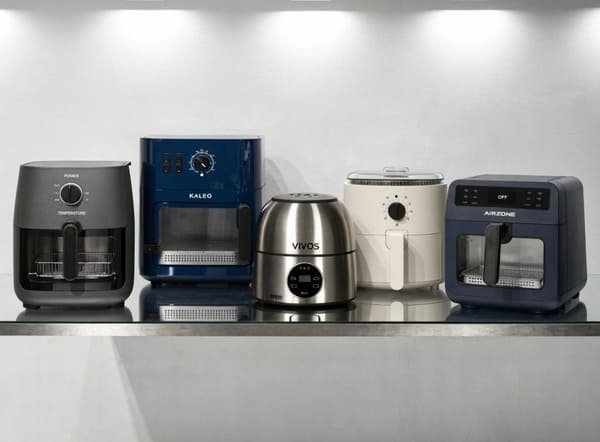
To truly confirm a supplier’s capabilities, you need to go beyond surface-level inquiries. Your questions should force them to demonstrate their technical knowledge and internal processes. A true OEM/ODM partner will welcome these questions as an opportunity to showcase their expertise.
Questions for OEM vs. ODM
First, it’s crucial to understand the difference between OEM and ODM, as the questions you ask will differ. OEM (Original Equipment Manufacturer)1 involves creating a product based on your unique designs and specifications. ODM (Original Design Manufacturer)2 involves selecting one of the factory’s existing product designs and customizing it with your branding and minor modifications.
| Feature | OEM (Original Equipment Manufacturer)1 | ODM (Original Design Manufacturer)2 |
|---|---|---|
| Concept | You provide the full product design and specs. | You choose a pre-existing design from the supplier. |
| Intellectual Property3 | You own the design and tooling. | The supplier owns the original design and tooling. |
| Customization4 | High (new molds, functions, electronics). | Low to Medium (color, logo, packaging, materials). |
| Initial Cost | High (requires investment in new molds). | Low (uses existing tooling). |
| Time to Market | Longer, due to design and tooling phases. | Faster, as the core product is already developed. |
Key Questions to Ask a Potential Supplier
Use a structured approach to your questioning. A supplier who can’t provide clear answers to these is likely not a true manufacturer with in-house capabilities.
| Category | Sample Question | What a Good Answer Looks Like |
|---|---|---|
| OEM Capability | "If I provide a 3D file for a new housing, what is your process for mold fabrication, and what are the typical costs and timelines?" | They can provide a step-by-step process, mention mold materials (e.g., P20, 718H), estimate tooling costs, and give a timeline (e.g., 45-60 days). |
| ODM Flexibility | "For your model X, what parts can be customized? Can we change the control panel UI, add a new preset, or use a different handle material?" | They can immediately list customizable elements and explain any limitations or MOQ (Minimum Order Quantity) requirements for each change. |
| Technical Depth | "What is the wattage and capacity of your heating element and fan motor in this unit? Can they be upgraded for higher performance?" | They provide exact specs and can discuss the engineering implications of an upgrade, including potential certification changes. A trader would have to "check and get back to you." |
| Process & Timeline | "Can you walk me through your standard OEM project workflow, from NDA to mass production?" | They present a clear, phased plan: Design Review -> Prototyping -> Tooling -> Pilot Run -> Mass Production, complete with typical durations for each stage. |
Asking these specific, technical questions is the most effective way to separate experienced OEM/ODM manufacturers from intermediaries.
How can I review the supplier’s experience with customization projects?
Every supplier’s website says they have "rich experience," but you can’t risk your investment on a marketing claim. When we onboard a new partner, we expect them to vet our history, and you should do the same.
To review a supplier’s experience, ask for a portfolio of past customization projects. Request non-confidential case studies or photos of branded products they have produced for other markets. Discuss the specific challenges they faced and overcame in those projects to gauge their problem-solving skills.
A supplier’s past work is the best predictor of their future performance. A factory that is proud of its OEM/ODM work will be prepared to share examples. While they must respect client confidentiality, they can usually show you enough to prove their capabilities.
Analyzing Their Project Portfolio
An experienced manufacturer will have a collection of case studies5 or examples. When you review them, don’t just look at the finished product. Ask critical questions:
- What was the original brief? Understanding the client’s goal helps you see how the factory translated an idea into a physical product.
- Which parts were fully custom? Was it just a color change (simple ODM), or did they develop a new chassis, control board, or cooking mechanism (complex OEM)?
- What was the biggest technical challenge? Their answer reveals their engineering depth. A good answer might be, "We had to redesign the airflow path to achieve even cooking in a smaller, custom-shaped basket, which required multiple rounds of CFD simulation and prototyping." A weak answer is, "The client changed the color many times."
Looking for Social Proof and Market Presence
Look for evidence of their work in the real world. You can ask: "Can you show us examples of air fryers you’ve made for the US or EU markets?"
A factory with a strong OEM/ODM6 business will have products on shelves (physical or virtual) under various brand names. They may not be able to name the brands due to NDAs, but they can often share photos of the products themselves with the brand logos blurred. Seeing a range of designs for different international markets is a strong signal that they understand global standards and consumer trends.
In-Depth Project Discussions
Move beyond email. Schedule a video call to discuss a past project in detail. This allows you to read their body language and see how fluently they discuss technical details. A project manager or engineer from a real OEM/ODM6 factory can speak for hours about material selection, tooling strategies, and production line calibration. A salesperson at a trading company will struggle to go beyond the product’s basic features.
What documentation or samples demonstrate their OEM/ODM expertise?
Talk is cheap. Solid documentation and physical samples are where a supplier’s claims are put to the test. When our factory develops a new custom model, it generates a mountain of paperwork and multiple prototype iterations.
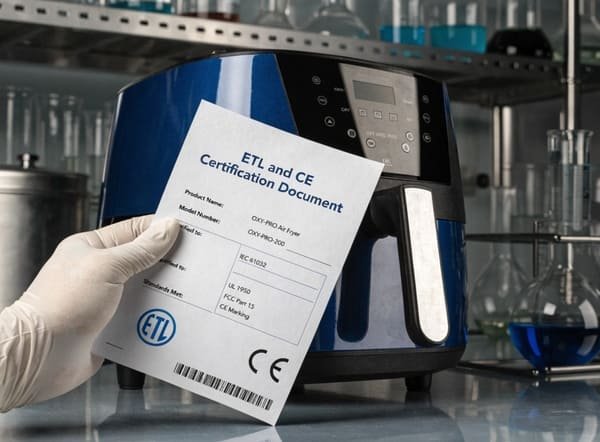
The best proof is in the documentation. Ask for certifications (like ETL, CE, GS) linked to specific custom models they’ve built, not just their standard products. Also, request a physical sample of an existing ODM model to evaluate their baseline quality and finish firsthand.
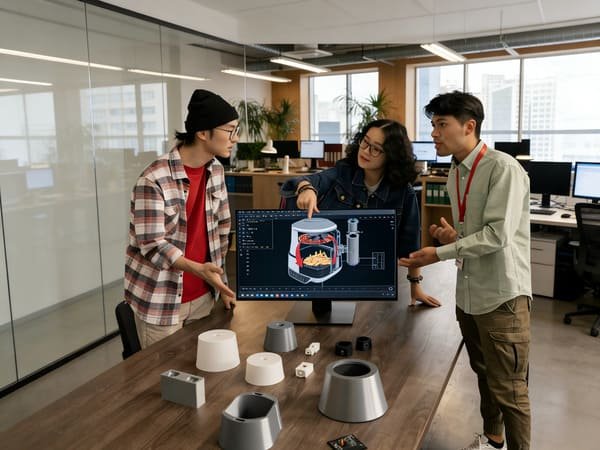
Documentation proves they can navigate the complex regulatory landscape, and samples provide tangible evidence of their manufacturing quality. A serious supplier will have these readily available.
Key Documents to Request
Don’t accept generic quality management certificates like ISO 9001 as proof of OEM/ODM skill. You need product-specific and process-specific documents.
| Document Type | What It Proves | Red Flags |
|---|---|---|
| Product Certifications (ETL, CE, CB, GS)7 | They can design and manufacture products that meet the safety and performance standards of your target market (e.g., US, EU). | Certificates are for a different factory name (they might be a trader) or only for old, standard models. |
| Bill of Materials (BOM) for a similar model8 | Shows their component sourcing strategy and transparency. It demonstrates they manage a complex supply chain for key parts like controllers, motors, and heating elements. | Unwillingness to share even a partial or redacted BOM. Vague descriptions of components. |
| Internal QC Reports9 | Proves they have a robust quality control system in place throughout the production process, from incoming materials (IQC) to final assembly (FQC). | They can only provide a final inspection report from a third party, suggesting they don’t have their own internal QC process. |
The Importance of a Physical Sample10
Never commit to a large order without first evaluating a sample. While it may not be your exact custom design yet, an existing ODM product from the supplier is incredibly revealing.
- Build Quality: Check the plastic seams, the feel of the drawer mechanism, and the sturdiness of the handle. Are the gaps even? Does it feel cheap or solid?
- Fit and Finish: Look at the surface finish. Is the color consistent? Are there any blemishes or scratches from the molding or assembly process?
- User Experience: Turn it on. Is the interface intuitive? Is the fan noisy? Does the touch panel respond accurately?
From our production lines, we know that these small details reflect the overall quality-consciousness of the factory. A supplier that delivers a high-quality sample is more likely to deliver a high-quality custom product.
How do I assess their development and engineering resources?
The ‘D’ in OEM/ODM stands for ‘Design’ and ‘Development’. A supplier without a strong in-house engineering team is not a true development partner. They are, at best, an assembler. Our R&D team is the core of our custom projects.
Assess their resources by asking for the size and structure of their R&D team, including roles like industrial designers, mechanical engineers, and firmware developers. Request a tour (virtual or physical) of their R&D office and lab to see their design software and testing equipment.
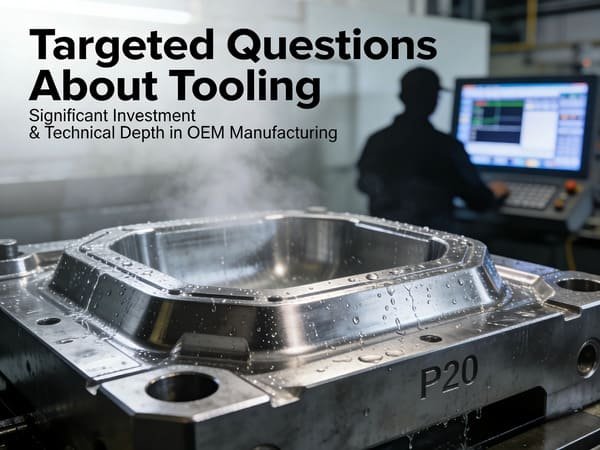
A supplier’s investment in its people and tools is a direct indicator of its commitment to innovation and customization. A team of experienced engineers is your greatest asset in bringing a unique product to market successfully.
Understanding the R&D Team Structure
A capable R&D department is more than just one "engineer." It’s a multidisciplinary team. Ask them directly: "Can you tell me about your R&D team?" Look for these roles:
- Industrial Designers (ID): Responsible for the product’s appearance, aesthetics, and user ergonomics.
- Mechanical/Structural Engineers (ME)11: They turn the ID’s concept into a manufacturable product, designing the internal structure, moving parts, and ensuring durability. They are experts in 3D CAD software like SolidWorks or Pro/E.
- Electronics Engineers (EE): Design the printed circuit boards (PCBs), select components, and ensure the product’s electronic functions and safety.
- Firmware/Software Engineers: Write the code that runs the appliance, from the user interface logic to the cooking algorithms.
A supplier who can introduce you to leaders from each of these departments is a strong candidate.
Evaluating Their Tools and Facilities
Engineers need the right tools. During a factory tour or video call, ask to see their development facilities.
- Software: Are they using professional CAD and design software? Ask them to show you a model they are working on.
- Prototyping Equipment12: Do they have 3D printers for creating rapid prototypes of new housing designs? This dramatically speeds up the development cycle.
- Testing Lab: A serious manufacturer has an in-house lab for performance and reliability testing. Look for equipment like temperature probes, power meters, life-testing rigs (for button presses or drawer pulls), and drop-test areas. The ability to perform these tests in-house is critical for an efficient development process. A factory that relies solely on third-party labs for basic testing will be slow and less agile.
By confirming they have both the right people and the right tools, you can be much more confident in their ability to execute your custom air fryer project.
Conclusion
Verifying a supplier’s OEM/ODM capabilities is about asking the right questions and demanding proof. By doing this homework, you can find a true partner and avoid costly mistakes.
-
Understanding OEM is essential for businesses looking to create unique products tailored to their specifications. ↩ ↩
-
Exploring ODM helps businesses identify cost-effective ways to customize existing designs for their brand. ↩ ↩
-
Understanding IP rights is crucial for protecting your designs and ensuring compliance in manufacturing. ↩
-
Learning about customization options can help businesses make informed decisions on product development. ↩
-
Exploring case studies helps you assess a manufacturer’s experience and problem-solving skills, ensuring they can deliver quality products. ↩
-
Understanding OEM and ODM is crucial for evaluating manufacturers’ capabilities and ensuring they meet your project needs. ↩ ↩
-
Understanding these certifications can help you ensure product safety and compliance in your target market. ↩
-
A BOM provides insight into a supplier’s sourcing strategy and transparency, crucial for quality assurance. ↩
-
These reports indicate the robustness of a manufacturer’s quality control processes, essential for product reliability. ↩
-
Assessing a sample helps gauge build quality and user experience, ensuring you make informed purchasing decisions. ↩
-
Understanding the role of Mechanical/Structural Engineers is crucial for evaluating their impact on product development. ↩
-
Exploring prototyping equipment can reveal how quickly and effectively a team can bring ideas to life. ↩