
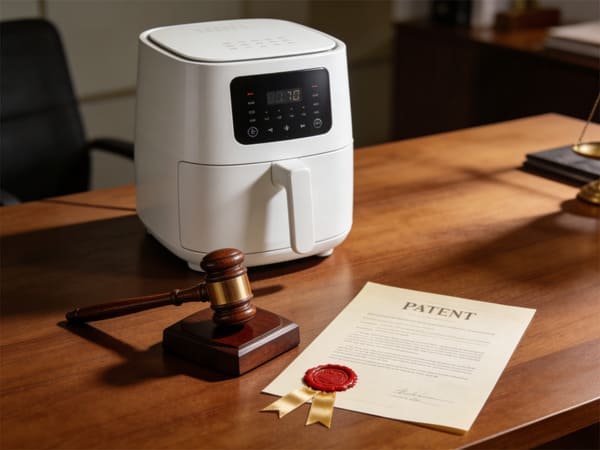
Are you worried that a fantastic air fryer deal from China might lead to a lawsuit? IP infringement can stop your shipment at customs and cause immense damage to your brand’s reputation. We can show you how to navigate these risks safely.
To avoid IP disputes, you must proactively verify a product’s originality, secure China-enforceable contracts like an NNN agreement, and partner with reputable manufacturers who respect intellectual property. Registering your own IP in China is also a critical defensive step for brand protection.
Navigating the complexities of international trade requires careful planning. Let’s break down the essential steps to protect your business and ensure a smooth sourcing process.
What steps should I take to verify the IP status of air fryer products?
Finding a unique air fryer at a great price can feel like a huge win. However, if you don’t check its IP status, you might be walking into a legal trap. In our experience, due diligence at this stage is non-negotiable.
Verify IP status by requesting patent certificates and brand authorizations from your supplier. Conduct preliminary searches on patent databases like Google Patents and trademark databases in your target markets. Also, critically evaluate the product’s design for similarities to major brands.
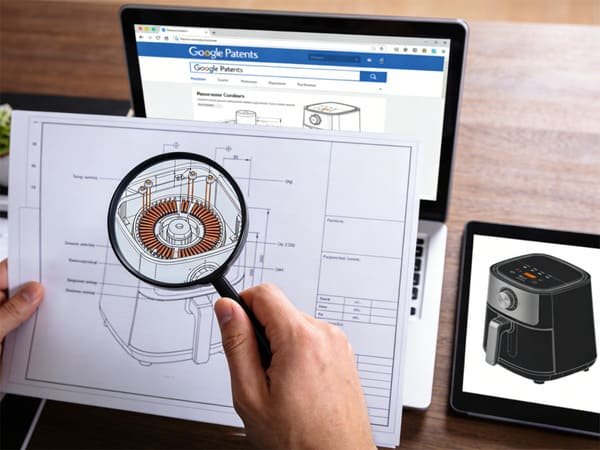
Verifying a product’s intellectual property status is a multi-layered process. It’s not enough to just take a supplier’s word for it. You need to combine their documentation with your own independent research. We always advise our partners to start with the supplier but finish with their own verification.
Supplier Documentation Review
Your first step is to ask the supplier direct questions. A transparent and reliable manufacturer will have no problem providing documentation. If a supplier is evasive or refuses to provide proof, consider it a major red flag. On our production lines, all IP-related documents for OEM/ODM projects are filed and readily available for our clients.
Key documents to request include:
- Patent Certificates1: Ask for copies of any design or utility model patents they hold for the product, both in China and internationally.
- Brand Authorization Letters2: If the product uses a brand name or technology licensed from another company, they must provide a letter of authorization from the IP owner.
- Internal R&D Records3: While more sensitive, a supplier might share proof that they developed the design in-house, demonstrating originality.
Independent IP Searches
Never rely solely on the supplier’s claims. Conducting your own preliminary search is a crucial step for risk mitigation. You don’t need to be a lawyer to perform a basic check.
- Trademark Search4: Use the official databases for your main sales markets, such as the USPTO (United States) or EUIPO (European Union), to ensure the product name or logo isn’t already registered.
- Patent Search: Use free tools like Google Patents or Espacenet. Search for keywords related to the product’s unique features (e.g., "dual basket air fryer," "smart control air fryer," "self-cleaning air fryer"). Look for patents that cover the product’s core mechanism or appearance.
| Document Type | Purpose | What to Look For |
|---|---|---|
| Design Patent | Protects the ornamental appearance of the product. | The drawing in the patent matching the product’s shape. |
| Utility Model Patent | Protects the functional structure or a new technical solution. | The claims describing how a specific feature works. |
| Brand Authorization | Proves the right to use another company’s IP. | The name of the supplier and the specific product model. |
How can I ensure my procurement does not infringe on existing patents?
You’ve found a supplier you trust. But what if their product, even with the best intentions, infringes on a patent you don’t know about? This is a common fear. Let’s look at how we build safeguards into the procurement process.
Ensure non-infringement by choosing generic or original designs over "lookalikes." Work with factories that have a clear R&D process. Most importantly, include an indemnity clause in your contract, making the supplier liable for any IP infringement claims against you.
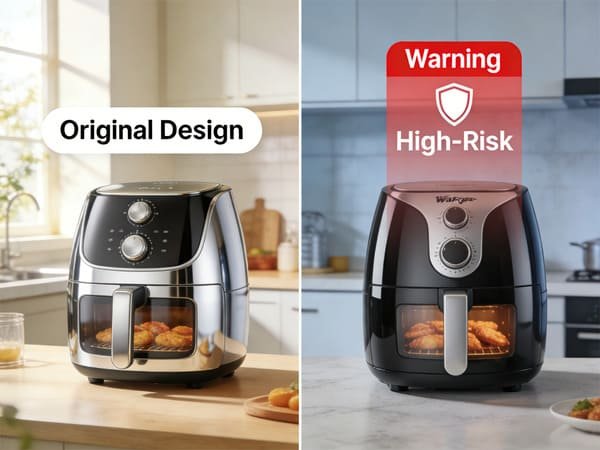
The simplest way to avoid infringement is to avoid products that are direct copies of well-known designs. At Aidkitchens, we focus on developing original designs with our clients, which is the safest path. However, when sourcing existing models, a keen eye for detail and understanding market trends is essential.
Understanding Freedom to Operate5 (FTO)
While a full "Freedom to Operate5" analysis by a law firm can be expensive, you can apply its basic principles. FTO means ensuring your commercial activities (selling the product) do not infringe on someone else’s valid IP rights. The key is to assess the risk level of a product. A generic, round-basket air fryer has a much lower risk profile than one with a unique, patented dual-drawer system that looks identical to a major brand’s new release. Always ask your supplier: "Has an FTO analysis been done for this product in my target market?"
Red Flags in Product Design6
Certain features are more likely to be patented. Be extra cautious if a product includes:
- A unique mechanism (e.g., a specific type of automatic stirring arm).
- A distinctive visual design that is heavily marketed by another brand.
- Proprietary software or a unique user interface on a smart screen.
- Specialized cooking technology names that are trademarked (e.g., "Rapid Air").
Products that are advertised as "like Ninja" or "same as Philips" but at a fraction of the price are almost always infringing. The risk is not worth the potential savings.
| Risk Level | Example Product Characteristics | Recommended Action |
|---|---|---|
| Low | Generic design, basic functions, widely available from many factories. | Proceed with standard due diligence and a good contract. |
| Medium | Unique color or finish, but standard mechanism. Minor design tweaks. | Request supplier’s design patents; conduct your own search. |
| High | Looks identical to a newly released, heavily marketed brand-name product. | Avoid purchasing. The risk of litigation is too high. |
What contract terms help protect my intellectual property rights?
A handshake or a simple purchase order is not enough when IP is involved. We’ve seen buyers lose their designs because their contracts were unenforceable in China. The right legal framework is your most powerful shield.
Protect your IP with a China-enforceable NNN (Non-Disclosure, Non-Use, Non-Circumvention) agreement written in Chinese. Your manufacturing contract should also clearly define IP ownership, include indemnity clauses for third-party infringement, and specify penalties for breaches.
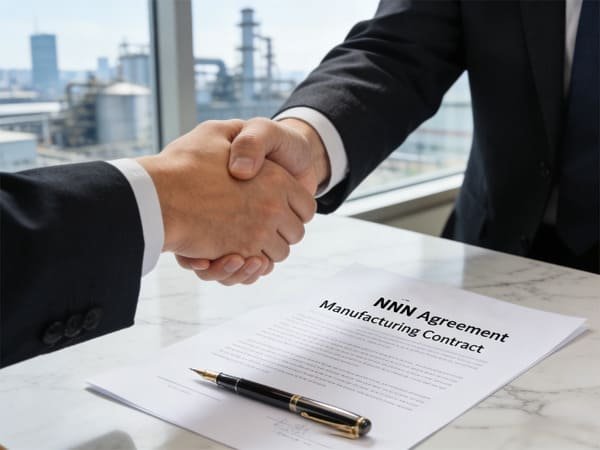
Many Western companies assume their standard NDA will protect them in China. This is a critical mistake. Chinese courts prioritize contracts that are written in Chinese and explicitly governed by Chinese law. Without this, your agreement may be worthless.
The Power of an NNN Agreement
An NNN agreement is your first line of defense, especially before you reveal any sensitive information about your brand or product ideas. It is far stronger than a typical NDA.
- Non-Disclosure7: The factory cannot share your confidential information.
- Non-Use: The factory cannot use your IP to create products for themselves or other clients. This is crucial—it prevents them from taking your design and becoming your competitor.
- Non-Circumvention: The factory cannot bypass you and sell directly to your customers.
We always recommend having this agreement drafted by a lawyer specializing in Chinese law to ensure it is fully enforceable.
Essential Clauses in Your Manufacturing Agreement
Your main production contract must reinforce and expand upon the NNN. It should be a detailed document that leaves no room for ambiguity.
| Clause | Function | Why It’s Critical |
|---|---|---|
| IP Ownership8 | Clearly states who owns the IP for the design, molds, and tooling. | Prevents the factory from claiming ownership of custom designs you paid for. |
| IP Indemnification9 | The supplier agrees to defend and pay for any losses if you are sued for infringement. | Shifts the financial risk of an IP lawsuit from you to the supplier. |
| Penalty Clause10 | Specifies a pre-agreed sum of money the supplier must pay if they breach the contract. | Makes it easier and faster to get compensation in a Chinese court. |
| Governing Law & Venue | States that the contract is governed by Chinese law and will be tried in a specific Chinese court. | Ensures the contract is enforceable where the supplier’s assets are located. |
These clauses transform your contract from a simple piece of paper into a powerful tool that protects your investment and your brand.
How do I handle IP concerns with suppliers?
Approaching a supplier with IP concerns can feel confrontational, but it doesn’t have to be. Clear, professional communication is key. We find that the best partners appreciate this transparency, as it shows you are a serious and knowledgeable buyer.
Handle IP concerns by communicating clearly and professionally from the start. Frame your IP verification questions as standard procedure for your business. Be prepared to walk away from any supplier who is uncooperative or dismissive of your concerns.

The way a supplier responds to your IP questions tells you a lot about their business practices. A professional manufacturer understands that IP protection is a mutual interest. It protects your brand and it protects their reputation as a reliable exporter.
Building a Foundation of Trust
Start the conversation early, even before you request a quote. Introduce your IP requirements11 as a standard part of your company’s sourcing policy. You can say something like, "As part of our quality control and risk management process, we need to verify the IP status of all products we source. Could you please provide the patent information12 for this model?"
This approach is non-accusatory and frames the request as a routine business requirement. A good supplier will understand and comply. If they push back, hesitate, or claim their information is "secret," it is a significant warning sign. They may be hiding something or simply lack the professionalism you need in a long-term partner.
What to Do If You Suspect a Problem
If your due diligence uncovers a potential issue—for example, the product looks very similar to a patented design—address it directly with the supplier. Present your findings calmly and ask for an explanation.
There could be a valid reason. The supplier might have a license, or the patent you found may not apply in your country. However, if their explanation is weak or they become defensive, your best move is to stop the negotiation. The risk of proceeding is too high. Losing a potential supplier is far less costly than fighting a legal battle, dealing with seized inventory, and suffering damage to your brand. Remember, there are thousands of excellent, ethical suppliers in China. There is no need to take a chance on a questionable one.
Conclusion
Avoiding IP disputes is about being proactive, not reactive. By verifying IP, using strong contracts, and partnering with transparent manufacturers, you protect your brand and ensure long-term success.
-
Understanding Patent Certificates is crucial for verifying a supplier’s legitimacy and protecting your business from IP issues. ↩
-
Brand Authorization Letters are essential for confirming that a supplier has the right to use specific brands, protecting your investment. ↩
-
Exploring Internal R&D Records helps assess a supplier’s innovation capabilities and authenticity in product development. ↩
-
A thorough Trademark Search can save you from legal troubles and ensure your product name is unique and protected. ↩
-
Understanding FTO is crucial for businesses to navigate IP rights and avoid legal issues. Explore this link for comprehensive insights. ↩ ↩
-
Identifying red flags can save you from costly infringements. This resource provides essential tips for product design safety. ↩
-
Understanding the significance of Non-Disclosure agreements can help you protect your sensitive information effectively. ↩
-
Exploring IP Ownership in manufacturing agreements is crucial for safeguarding your designs and innovations. ↩
-
Learning about IP Indemnification can help you shift legal risks and protect your business from infringement lawsuits. ↩
-
Discovering the role of a Penalty Clause can streamline compensation processes in case of contract breaches. ↩
-
Understanding IP requirements is crucial for ensuring compliance and protecting your business from legal issues. ↩
-
Obtaining patent information helps you verify product legitimacy and avoid potential legal disputes. ↩