
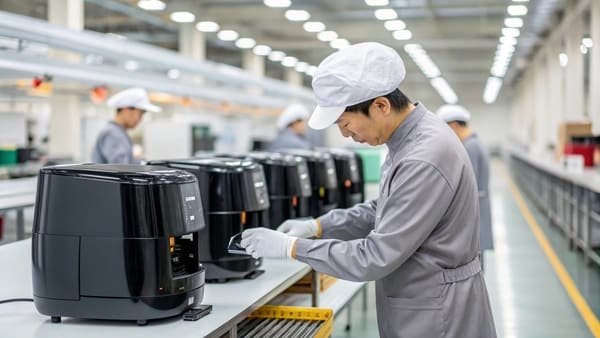
Worried the perfect "golden sample" won’t match your bulk order? We’ve seen importers get burned by inconsistent quality, a problem that erodes brand trust and profits.
To evaluate a factory’s quality management system (QMS), you must verify their certifications online, audit their process control records for IQC, IPQC, and FQC stages, and confirm they have essential in-house testing equipment. This systematic approach looks beyond the product to the system that produces it.
Evaluating a supplier goes far beyond the sample they send. You need to dig into the systems that ensure every single unit leaving our production lines meets the exact same high standard. Let’s break down the professional way to conduct this audit.
What quality assurance certifications should I look for in a manufacturing factory?
A factory shows you an impressive ISO 9001 certificate, but is it legitimate? We know that some documents aren’t what they seem, potentially covering the wrong products or being completely fake.
Look for a valid ISO 9001 certificate with a scope covering "kitchen appliances" or "air fryers," not just components. Also, check for product-specific safety certifications like ETL for North America or CE for Europe, and verify their authenticity through official online databases.

Certifications are the first layer of due diligence. However, simply receiving a PDF of a certificate is not enough. In our experience, serious buyers always verify these claims independently. A legitimate manufacturer will expect and welcome this scrutiny. The goal is to separate actual factories with robust systems from trading companies or workshops with weak controls.
How to Verify Key Documents
The most critical mistake is taking documents at face value. Before you even discuss pricing, a quick "digital audit" can save you from wasting time on the wrong suppliers. You need to verify not just that a certificate exists, but that it is valid, current, and relevant to the product you are buying.
| Document / Claim | How to Verify | What to Look For |
|---|---|---|
| Business License | China’s NECIPS Database | The "Scope of Business" must include "Manufacturing" or "Production" . If it only says "Sales" or "Trade," they are a middleman. |
| ISO 9001 Certificate1 | IAF CertSearch or CNCA website | Ensure the certificate is active and the scope explicitly covers "Air Fryers" or "Household Kitchen Appliances." A certificate for "Plastic Injection Molding" is not sufficient. |
| Major Client Claims | Ask for Audit Reports | If a factory claims to supply major retailers like Walmart or Ninja, ask to see the cover page of a recent technical or social audit from that brand. They should have this readily available. |
Product-Specific vs. System-Wide Certifications
It’s important to understand the difference between system and product certifications.
- ISO 9001: This certifies the system for managing quality. It shows the factory has defined and repeatable processes for production, inspection, and continuous improvement. It doesn’t guarantee a good product, but it proves a framework is in place.
- Product Certifications (ETL, CE, CB, RoHS)2: These certify that the product itself has been tested and meets specific safety, health, or environmental standards for a particular market. Without these, your product cannot be legally sold. Always ask for the test reports that support these certifications.
How can I assess the effectiveness of a supplier’s quality management processes?
A factory tour can be misleading; a clean floor doesn’t guarantee quality products. The real quality story is hidden in their daily process records, which can reveal systemic weaknesses.
Assess effectiveness by demanding to see the actual records for Incoming (IQC), In-Process (IPQC), and Final (FQC) quality control. An effective system shows evidence of catching and correcting defects, not just logs of "100% Pass" for months on end.
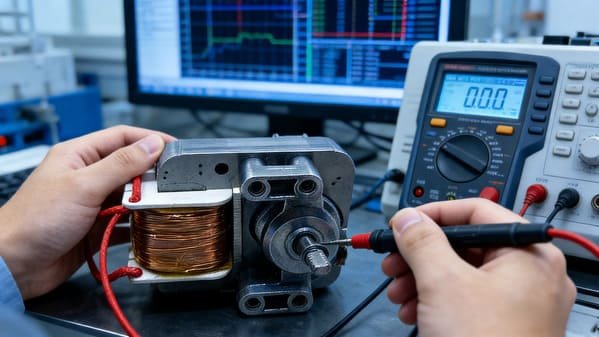
When we build a new production line, we design it around these three pillars of process control. A truly effective QMS is a living system that actively finds and solves problems. It’s not a set of documents that sits on a shelf. The best way to see this system in action is to review the data it generates. A factory that is proud of its processes will be transparent and willing to show you both its successes and its challenges.
The Three Pillars of Process Control
A robust QMS is built on three distinct stages of inspection. For each stage, you should ask to see not only the Standard Operating Procedure (SOP) documents but also the actual, filled-out record logs from the last three months.
-
IQC (Incoming Quality Control)3: This is the first line of defense. It involves checking raw materials and components before they enter the production line. For air fryers, the most critical components are heating elements, motors, and PCBs.
- What to ask for: The "IQC Rejection Log." A log that is empty or only shows perfect pass rates is a major red flag. No supplier receives flawless components 100% of the time. A real log will show entries like, "Batch #A402 motors rejected due to 5% RPM variance above spec." This proves their system is working.
-
IPQC (In-Process Quality Control): These are checks performed during assembly. They are designed to catch issues early before thousands of faulty units are produced.
- What to ask for: The "Cross-Cut Tape Test Record." The number one customer complaint for air fryers is a peeling non-stick coating on the basket. This test involves cutting a grid into the coating and using strong adhesive tape to see if the coating lifts off. It should be performed on samples from every batch.
-
FQC (Final Quality Control)4: This is the final check on fully assembled products before they are packaged. It verifies both function and safety.
- What to ask for: The calibration certificate for their Hi-Pot (High Potential) and ground continuity testers. Every single unit must undergo these electrical safety tests. If the testing machine itself hasn’t been calibrated recently, the results are meaningless.
What questions should I ask about their quality control procedures?
You’re on a video call with a potential supplier, but asking generic questions gets you generic "yes, we do quality control" answers. You need to ask specific, technical questions to truly gauge their expertise.
Ask specific, data-oriented questions. For example: "What is your current first-pass yield rate for air fryer assembly?" or "What are the top 3 defects you find during IPQC, and what corrective actions have you implemented?"
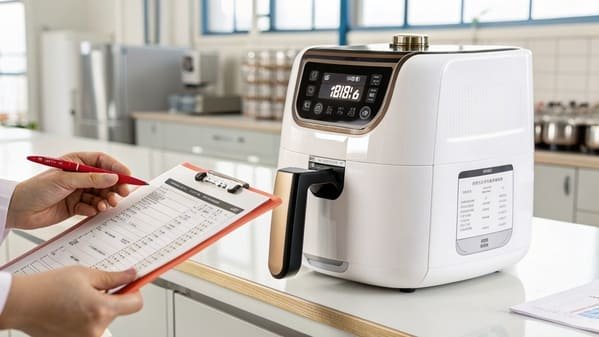
When we train our own sales and engineering teams, we focus on being able to answer these tough questions. A supplier who can’t provide specific data or seems reluctant to discuss defect rates likely has a weak or non-existent quality system. The goal is to move past marketing claims and into a technical discussion that reveals their true capabilities. A good partner will appreciate your detailed questions because it shows you are a serious and knowledgeable buyer.
Moving Beyond "Yes/No" Answers
The key is to ask open-ended questions that require them to show you data or explain a process. This reveals how deeply quality is embedded in their culture.
| Topic | Weak Question | Strong Question |
|---|---|---|
| Defect Rate | "Do you have a low defect rate5?" | "What is your FQC defect rate1 for the last quarter? Can you show me the report and the corrective action plan for the main issue?" |
| Component Testing | "Do you test incoming motors?" | "What are your testing parameters for incoming fan motors? What is your acceptable tolerance for RPM and noise level (dB)?" |
| Process Control | "Do you have IPQC?" | "Can you walk me through your IPQC station for the basket and handle assembly? What specific checkpoints do you have?" |
| Problem Solving | "How do you handle quality problems6?" | "Describe a recent time a quality issue was found during production. What was your root cause analysis and what was the result?" |
Red Flags to Watch For in Their Answers
- The "Zero Defect" Claim: If a potential supplier tells you their defect rate5 is "0%" or they "never have problems," they are not being honest. Every manufacturing process has variations. A good manager knows their numbers, such as "Our current final defect rate5 is 1.2%, primarily due to minor cosmetic scratches on the housing, and here is how we are addressing it."
- Vague Generalities: Answers like "We have a very strict quality team" or "We check everything" are meaningless without specific procedures, data, and records to back them up.
- Reluctance to Show "Bad" Data: A factory that only wants to show you perfect records is hiding something. A transparent partner will be willing to discuss problems because it demonstrates their commitment to fixing them.
How do I request and review quality audit reports?
You’ve verified certifications and asked the right questions. The final step before placing an order is to review formal audit reports, which provide an objective snapshot of the factory’s operations.
Request the full, unedited report from a recent social (like BSCI) or technical audit conducted by a major brand or a third-party firm. When reviewing, focus on the "Findings" or "Non-Conformities" section to understand their real-world operational weaknesses.

We undergo numerous audits every year from our clients in Europe and the US. It’s a standard part of doing business. A mature factory will have these reports on file and should be willing to share them, possibly with sensitive client information redacted. If they refuse or claim they don’t have any, it’s a significant red flag, suggesting they don’t work with major, quality-conscious buyers.
What to Look for in an Audit Report
An audit report is a treasure trove of information if you know how to read it. Don’t just look at the final score. Dive into the details.
Key Sections to Analyze:
- Audit Scope: Confirm the audit was for the correct facility and covered product categories relevant to air fryers.
- Summary of Findings / Non-Conformities (NCs): This is the most important section. Audits will categorize issues as Minor, Major, or Critical.
- Critical NCs: These are deal-breakers (e.g., evidence of child labor, major safety hazards like no machine guards).
- Major NCs: These indicate significant system failures (e.g., no calibration records for critical test equipment, no raw material inspection process). A high number of Major NCs is a serious concern.
- Minor NCs: These are typically procedural gaps or isolated incidents (e.g., a fire extinguisher blocked by a box, an outdated document). A few minors are normal.
- Corrective Action Plan (CAP)7: Look to see if the factory identified the root cause of the findings and proposed a concrete plan with deadlines. More importantly, ask them to provide evidence that they actually implemented the corrective actions from that audit. This separates factories that just want to pass an audit from those that use them to genuinely improve.
- In-House Laboratory Equipment8: A good technical audit report will list and evaluate the factory’s internal testing lab. Check if they have the essential equipment like a life-cycle tester, salt spray tester, and drop tester. If this section is missing or shows they lack this equipment, it means they are not performing critical reliability tests or are outsourcing them, which adds time and risk.
Conclusion
Evaluating a factory’s QMS is not about a single "gotcha" moment. It’s about building a complete picture through systematic verification of claims, processes, and documentation to ensure consistent quality.
-
Understanding ISO 9001 is crucial for ensuring quality management in manufacturing processes. ↩ ↩
-
Exploring product certifications helps ensure compliance with safety and environmental standards. ↩
-
Understanding IQC is crucial for ensuring raw materials meet quality standards before production, safeguarding product integrity. ↩
-
Exploring FQC helps grasp the final safety and functionality checks that ensure only quality products reach consumers. ↩
-
Understanding defect rates is crucial for quality control and improving manufacturing processes. Explore this link to learn more. ↩ ↩ ↩
-
Discover effective strategies for addressing quality issues in production, ensuring better outcomes and reliability. ↩
-
Understanding CAP is crucial for ensuring that factories not only identify issues but also implement effective solutions. ↩
-
Exploring this topic reveals how essential lab equipment impacts product reliability and safety in manufacturing. ↩