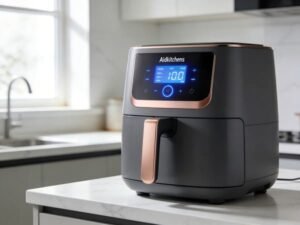

Struggling with post-purchase support for your imported air fryers? We see clients worry that unresolved customer issues will hurt their brand. Securing solid after-sales training from your supplier is crucial.
To arrange after-sales training when buying air fryers from China, you must negotiate it directly with the supplier before finalizing your order. Specify training needs, formats, and responsibilities in your purchase agreement. This ensures your team receives the necessary knowledge on product use, maintenance, and troubleshooting.
Let’s break down how you can set this up effectively.
What types of after-sales training can suppliers provide?
Unsure what training options a supplier can offer? Mismatched training can be ineffective and costly. We typically provide several formats to ensure our partners’ teams are fully prepared for market launch.
Chinese suppliers can provide various training types, including remote video sessions, detailed documentation and manuals, and in-person training at their factory. Some may even offer to send a technician to your location for hands-on workshops, depending on the order volume and agreement.
When we work with a new partner, one of the first things we discuss is their support plan. The type of training you need depends on your business model, budget, and team structure. Most established manufacturers are flexible and can offer a mix of options.
H3: Common Training Formats
Remote training is the most common and cost-effective method. It includes live webinars, pre-recorded video tutorials, and extensive documentation. These materials can cover everything from basic operation to complex troubleshooting. They are easy to distribute to a large team and can be reviewed anytime.
In-person training offers a more hands-on experience. You can send your technical team to our factory in China. Here, they can see the production line, meet the engineers, and get deep, hands-on training. For very large orders, we can sometimes arrange for one of our engineers to travel to your facility. This is the most effective but also the most expensive option.
Here is a comparison of the different training formats we can provide:
| Training Format | Best For | Pros | Cons |
|---|---|---|---|
| Remote (Video/Webinar) | Teams of all sizes, quick onboarding | Cost-effective, scalable, accessible | Less hands-on, potential language barriers |
| Documentation & Manuals | Self-paced learning, reference | Available 24/7, detailed information | Can be dry, lacks interaction |
| In-Factory Training | Key technical staff, new partners | Deeply immersive, builds relationships | High travel costs, time-consuming |
| On-Site Trainer | Large-scale rollouts, complex products | Highly effective, tailored to your team | Most expensive, requires significant coordination |
Ultimately, a blended approach often works best. You can start with comprehensive digital resources and follow up with a focused in-person session for your lead technicians.
How can I coordinate training sessions for my team or customers?
Worried about the logistics of scheduling training across different time zones? It can seem complicated, but a clear plan solves this. We find that early communication is the key to smooth coordination.
To coordinate training, first designate a single point of contact on your team to liaise with the supplier. Then, schedule sessions well in advance, considering time zone differences. Use shared calendars and communication tools like WhatsApp or email for efficient planning and confirmation of attendees.
Coordinating training shouldn’t be a headache. It’s a collaborative process. We always assign a dedicated account manager to our clients to handle these logistics. Your first step is to identify who on your team needs training. Is it your sales staff, your customer service agents, or your repair technicians? Each group has different needs.
H3: A Step-by-Step Coordination Plan
- Define Your Audience: Create a list of all employees who will attend. Separate them by role (e.g., customer service, technical support).
- Appoint a Coordinator: Choose one person from your company to be the main contact for all training-related communication. This prevents confusion and mixed messages. Our project managers work directly with this person.
- Propose a Schedule: Suggest several potential dates and times for the training. Remember to account for time zone differences. It’s helpful to propose times in both your local time and the supplier’s local time (e.g., PST and CST).
- Confirm the Platform: For remote sessions, agree on the technology. Will it be Zoom, Google Meet, or another platform? Test the connection beforehand to avoid technical glitches on the day of the training.
- Share an Agenda: Ask the supplier for a detailed agenda. Share this with your team so they know what to expect and can prepare questions.
Here’s a sample checklist you can adapt:
| Coordination Task | Responsible Party | Status | Notes |
|---|---|---|---|
| Identify Trainees & Roles | Your Company | To Do | E.g., 5 service agents, 2 technicians |
| Appoint Training Coordinator | Your Company | To Do | John Doe, j.doe@example.com |
| Propose Dates/Times | Your Coordinator | To Do | Suggest 3 options |
| Confirm Platform | Both Parties | To Do | Test Zoom link |
| Distribute Agenda | Supplier/Coordinator | To Do | Request agenda 1 week prior |
| Send Calendar Invites | Your Coordinator | To Do | Include meeting link and agenda |
Clear communication and proactive planning are essential. Don’t be afraid to use direct channels like WhatsApp for quick questions with your supplier’s contact person. It’s often much faster than formal emails.
What topics should be covered in after-sales training?
You’ve scheduled the training, but what should your team actually learn? If the content is too generic, it’s a waste of time. When we design our training programs, we focus on practical, real-world knowledge.
After-sales training should cover product specifications, key features, and standard operating procedures. It must also include common troubleshooting steps, maintenance guidelines, warranty policies, and procedures for ordering and replacing spare parts. This ensures your team can handle most customer inquiries confidently.
The goal of training is to empower your team. They should feel confident answering customer questions and solving common problems without needing to escalate every issue. A comprehensive training program goes beyond just "how to turn it on." It should cover the entire product lifecycle from the customer’s perspective.
H3: Essential Training Modules
Your training agenda should be broken down into clear modules. Here are the core topics that we insist on covering for our air fryer models.
- Product Deep Dive: This goes beyond the marketing materials. It includes detailed technical specifications, a breakdown of internal components, and the unique selling propositions. Your team needs to know why your air fryer is better.
- Usage & Best Practices: Cover everything from first-time setup to advanced cooking functions. Include tips and tricks that aren’t in the standard user manual. For example, how to get the crispiest results or how to clean a specific non-stick coating without damaging it.
- Troubleshooting Common Issues: This is the most critical part for customer support. Create a list of the top 5-10 most common customer complaints or problems and provide a step-by-step resolution for each.
- Maintenance and Care: Explain the proper cleaning procedures, long-term care instructions, and what users should avoid doing. This reduces preventable damage and returns.
- Warranty & Spare Parts: Outline the warranty process clearly. Explain how your team can identify a warrantable issue, what the procedure is for a claim, and how to order and replace common spare parts like baskets or heating elements.
A well-structured training plan might look like this:
| Module | Key Topics | Goal for Your Team |
|---|---|---|
| 1. Product Overview | Specs, features, materials, certifications (UL/ETL) | Become product experts. |
| 2. Operation | Basic functions, cooking modes, safety features | Confidently guide new users. |
| 3. Troubleshooting | "Not turning on," "uneven cooking," error codes | Solve 80% of issues on the first call. |
| 4. Maintenance | Cleaning, storage, filter replacement | Educate customers on product longevity. |
| 5. Service Process | Warranty claims, ordering spare parts | Provide fast and effective service. |
Insist that your supplier provides this level of detail. Good training transforms your customer service from a cost center into a brand-building asset.
How do I ensure training effectiveness and support?
You’ve completed the training, but how do you know it worked? One-off training is not enough. We’ve learned that ongoing support is what truly makes a partnership successful and keeps end-customer satisfaction high.
To ensure effectiveness, record all training sessions for future reference and conduct a post-training quiz to assess comprehension. Establish a direct line of communication with the supplier’s technical team for ongoing questions and request regular updates on new product features or issues.
Training is not a single event; it’s the start of a continuous learning process. The real test comes when your team starts handling live customer issues. You need a system to measure effectiveness and a channel for ongoing support.
H3: Measuring Success and Maintaining Knowledge
After the initial session, you must have mechanisms in place to reinforce the learning. Recording the training is a simple but powerful first step. It allows new hires to get the same base knowledge and lets existing staff refresh their memory.
Next, assess comprehension. A simple online quiz with 10-15 questions about the key topics can show you who understood the material and who might need extra help. This isn’t about testing employees; it’s about identifying knowledge gaps before they become customer problems.
Most importantly, you need a plan for long-term support. Your supplier should provide you with a dedicated contact for technical escalations. At our company, we provide partners with direct access to an engineering support agent via a shared chat group or email. This ensures that when your team encounters a truly new or complex problem, they can get an expert answer quickly.
Finally, schedule periodic refresher sessions. Products evolve, and new issues can emerge as your sales volume grows. A brief 30-minute quarterly call with your supplier can keep your team updated on any new findings, software updates, or manufacturing improvements. This proactive approach shows your commitment to quality and service.
Conclusion
Arranging after-sales training is a non-negotiable step when importing air fryers. By discussing it early and integrating it into your contract, you ensure your team is ready to support your customers effectively.