Choosing between a direct air fryer factory and a trading company depends on the buyer’s order structure, customization needs, sourcing capability, and risk-control requirements. The better choice is not always the supplier with the lowest quotation, but the partner that can create the right balance between manufacturing capability, communication efficiency, transparency, and procurement risk management.
Problem: Many air fryer buyers assume that direct factory sourcing automatically means lower prices and lower risks, while trading companies only add extra cost.
Agitation: In real B2B procurement, choosing the wrong sourcing model can create problems such as unclear responsibility, inconsistent production quality, document issues, delayed delivery, and higher management costs.
Solution: Buyers should evaluate supplier capability, responsibility boundaries, verification methods, and total procurement value before deciding whether to work with a factory, trading company, or another sourcing partner.
Snippet: Air fryer buyers should choose between direct factories and trading companies based on order volume, OEM requirements, supplier management ability, quality control needs, and risk management priorities instead of price alone.
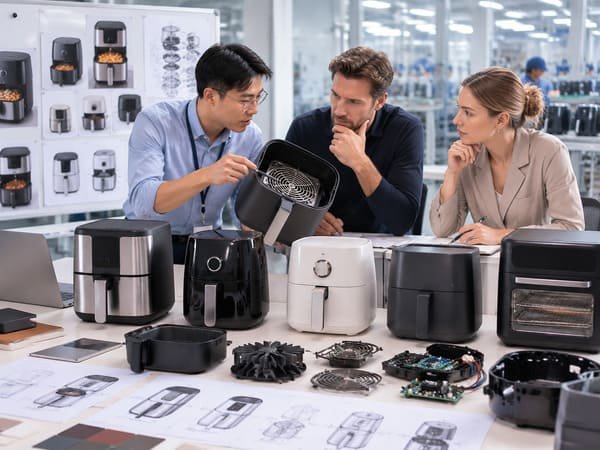
Choosing the right supply chain model is one of the earliest decisions that affects an air fryer project. From supplier communication to product development, quality control, and after-sales responsibility, the sourcing structure influences how smoothly the project can move from idea to finished product.
Why Does Supplier Model Choice Matter for Air Fryer Buyers?
The supplier model matters because air fryers involve more than simple product purchasing. Buyers need to manage product specifications, production consistency, documentation, quality expectations, and market requirements throughout the procurement process.
In our daily communication with buyers, we often see that the first question is usually about price. However, many later challenges come from areas that were not discussed early enough, such as product configuration, packaging details, quality standards, or responsibility boundaries.
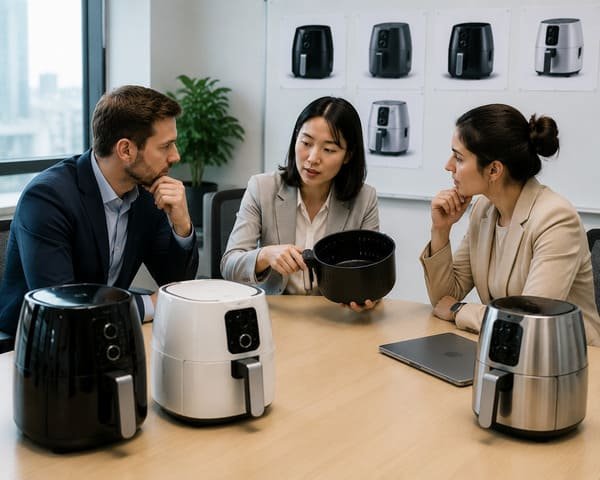
Air Fryers Are More Complex Than Simple Consumer Products
Air fryers are small household appliances, which means procurement decisions may involve more technical and operational considerations than many standard consumer products.
Depending on the product model and target market, buyers may need to confirm:
- Product specifications
- Power and voltage requirements
- Plug configuration
- Packaging requirements
- Product labeling
- Testing documents
- Quality inspection process
- After-sales responsibility
These details should be confirmed before mass production because changes later in the process may increase cost, delay production, or create quality risks.
What Is the Real Difference Between a Direct Air Fryer Factory and a Trading Company?
A direct factory mainly creates value through manufacturing capability, production control, and product development, while a trading company or sourcing partner may create value through supplier coordination, communication support, and supply chain management. The right choice depends on what problems the buyer needs to solve.
What Value Can a Direct Air Fryer Factory Provide?
A direct factory can provide advantages when buyers need closer connection with manufacturing processes.
Potential advantages include:
- Direct production communication
- Better understanding of manufacturing processes
- More direct OEM/ODM discussions
- Easier coordination for production changes
- Long-term manufacturing cooperation opportunities
From a production perspective, clear communication before manufacturing is extremely important. In our experience, many production issues are not caused by the factory process itself, but by unclear specifications before production starts.
For example, confirming:
- Product functions
- Appearance requirements
- Packaging details
- Inspection standards
before production helps reduce misunderstanding between buyers and manufacturers.
However, working directly with a factory also requires buyers to have stronger supplier management ability. Buyers may need to handle more communication, follow-up, inspection coordination, and supplier evaluation work themselves.
How Can Trading Companies or Sourcing Partners Create Supply Chain Value?
Trading companies and sourcing partners can create value when they provide real services beyond simply transferring information.
Depending on the business model, they may help with:
- Supplier comparison
- Factory communication
- Product sourcing
- Quality follow-up
- Export coordination
- Multi-supplier management
- Documentation communication
The key question is not whether a company is a factory or intermediary.
The better question is:
Does this partner reduce procurement complexity and create measurable value for the buyer?
A service-based sourcing partner may help buyers reduce internal management costs, especially when the buyer does not have local sourcing experience or wants to manage multiple product categories.
Is Direct Factory Sourcing Always Cheaper for Air Fryers?
Direct factory sourcing may reduce some costs in suitable situations, but the lowest unit price does not always represent the lowest total procurement cost.
Why Unit Price Is Not the Same as Total Procurement Cost
Many buyers compare only product quotations. However, the real procurement cost may also include:
- Product price
- Sample development cost
- Packaging development cost
- Inspection cost
- Communication time
- Supplier management effort
- Production modification cost
- Delay-related costs
- Quality failure costs
A supplier with a lower quotation may not always create lower total cost if additional management or correction costs appear later.
A more complete evaluation method is to consider Total Cost of Ownership (TCO).
When Does Factory Direct Create Real Cost Advantages?
Direct factory sourcing may be suitable when buyers have:
- Stable order volume
- Long-term purchasing plans
- Experienced procurement teams
- Internal quality control capability
- Clear product specifications
For example, an established brand that already understands its market requirements may benefit from working closely with a manufacturer to improve production efficiency over time.
However, buyers should still verify supplier capability instead of assuming that factory status alone guarantees better results.
Does Supplier Identity Matter More Than Supplier Capability?
Supplier identity alone does not determine procurement success. A factory is not automatically the safest choice, and a trading company is not automatically a higher-cost option.
Why Being a Factory Does Not Automatically Mean Lower Risk
A manufacturer may have strong production capability, but buyers still need to evaluate:
- Communication quality
- Quality control process
- Documentation management
- Production consistency
- Response ability when problems occur
A factory’s ability to produce a product does not automatically prove that it can support every buyer’s sourcing requirements.
Supplier claims should be verified through evidence such as:
- Production information
- Sample evaluation
- Quality records
- Relevant documents
- Contract responsibilities
The More Important Question: Who Owns Responsibility When Problems Happen?
Experienced buyers often focus on responsibility before problems occur.
| Area | Question to Confirm |
|---|---|
| Product quality | Who manages quality improvement actions? |
| Specifications | Who confirms final requirements? |
| Production changes | Who approves modifications? |
| Documentation | Who checks required information? |
| Delivery issues | Who coordinates solutions? |
Clear responsibility reduces confusion when unexpected issues happen.
When Should Air Fryer Buyers Choose a Direct Factory?
Direct factory sourcing may fit buyers who need stronger manufacturing connection and have the ability to manage supplier relationships.
Direct Factory May Fit Buyers With Strong Procurement Capability
This approach may work well for:
- Established brands
- Large-volume importers
- Companies with purchasing teams
- Buyers with quality control resources
These buyers may benefit from:
- Direct technical communication
- Production optimization
- Long-term product improvement
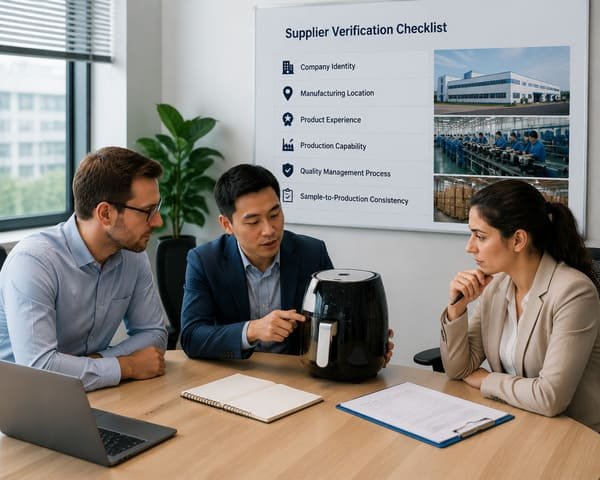
What Should Buyers Verify Before Working Directly With a Factory?
Before placing an order, buyers should verify:
- Company identity
- Manufacturing location
- Product experience
- Production capability
- Quality management process
- Sample-to-production consistency
A supplier introduction or online profile is only an initial reference. Buyers should verify important claims before making major commitments.
When Can a Trading Company or Sourcing Partner Reduce Procurement Risk?
A trading company or sourcing partner may create value when buyers need more coordination support, supplier comparison, or local communication assistance.
Why New Importers May Need More Supply Chain Support
New buyers often face challenges such as:
- Limited supplier knowledge
- Difficulty comparing factories
- Lack of local communication support
- Unclear production processes
A sourcing partner may help organize information and reduce the buyer’s operational burden.
When Supplier Integration Creates More Value
For buyers sourcing multiple products or managing complex projects, supplier integration can become valuable.
Examples include:
- Multiple product categories
- Multiple factories
- Different production schedules
- Complex quality follow-up
In these situations, coordination ability may become as important as manufacturing capability.
How Should Buyers Verify an Air Fryer Supplier Before Bulk Production?
Before moving into bulk production, buyers should verify supplier capability, product details, and production controls.
How to Verify Supplier Identity and Manufacturing Capability
Buyers should review:
- Business information
- Production location
- Manufacturing scope
- Product experience
- Factory communication ability
The goal is not simply proving whether a supplier is a factory. The goal is understanding whether the supplier can support the specific buying requirement.
How to Verify Air Fryer Product Documents and Requirements
Document review should focus on matching information with the actual product model and target market.
Buyers should confirm:
- Product specifications
- Model information
- Required documentation
- Labeling requirements
- Market-specific requirements
Documentation requirements may depend on the product model, target country, sales channel, and current regulations. Buyers should verify the applicable requirements before production and shipment.
Why Sample-to-Mass Production Control Matters
A sample approval is an important step, but it should not be treated as the only quality safeguard.
A stronger process may include:
- Confirming approved samples
- Recording specifications
- Managing production changes
- Performing quality checks before shipment
From our production experience, many avoidable problems come from differences between what buyers expected and what was recorded during the production process.
What Production Experience Teaches Us About Air Fryer Procurement Risks?
Real procurement challenges often happen before production starts, especially when expectations are not clearly aligned.
Common Problems Before Mass Production
Some common risk areas include:
- Product specifications changing after quotation
- Packaging requirements not being finalized
- Different understanding of product functions
- Missing document confirmation
- Unclear inspection standards
These issues are not only manufacturing problems. They are communication and process management problems.
Why Clear Communication Protects Both Buyers and Suppliers
A clear procurement process benefits both sides.
A practical workflow often includes:
- Requirement confirmation
- Supplier evaluation
- Sample approval
- Specification confirmation
- Trial order or production preparation
- Quality inspection
- Shipment confirmation
Good communication reduces unnecessary changes and helps both buyers and suppliers manage expectations.
Should OEM Air Fryer Brands Choose Factories or Trading Partners?
OEM buyers should evaluate product development ability, manufacturing capability, and project coordination rather than choosing only based on supplier category.
OEM Requires More Than Manufacturing
Private label and OEM projects may involve:
- Product customization
- Packaging development
- Specification management
- Production consistency
- Quality control coordination
The right partner should be able to support the complete project process.
Why Hybrid Supply Chain Models Can Work
Some buyers may benefit from a hybrid approach:
- Manufacturing capability from factories
- Coordination support from sourcing partners
This approach may suit buyers who need production expertise while also requiring additional supply chain management support.
Which Sourcing Model Fits Different Air Fryer Buyers?
The suitable sourcing model depends on the buyer’s situation.
| Buyer Situation | Possible Suitable Approach |
|---|---|
| Large stable orders | Evaluate direct factory cooperation |
| New importer | Consider additional sourcing support |
| OEM brand project | Evaluate manufacturing and development capability |
| Multiple product categories | Consider supplier integration support |
| Experienced procurement team | Direct supplier management may fit |
There is no universal answer. The best choice depends on which option reduces risk and supports the buyer’s commercial goals.
What Questions Should Buyers Ask Before Choosing a Supplier Model?
Before selecting a sourcing approach, buyers should ask practical questions.
Manufacturing Questions
- Who controls production?
- How are product specifications managed?
- How are production changes approved?
Quality Questions
- How are samples approved?
- How is production quality checked?
- How are quality issues handled?
Documentation Questions
- Which documents match this specific product?
- Who manages document updates?
- What should be verified before shipment?
These questions help buyers evaluate supplier suitability beyond simple supplier categories.
Air Fryer Supplier Selection Checklist Before Placing Orders
Supplier Verification
☐ Company identity reviewed
☐ Manufacturing capability evaluated
☐ Product experience confirmed
Product Verification
☐ Specifications confirmed
☐ Sample approved
☐ Requirements documented
Production Verification
☐ Production standards confirmed
☐ Quality control process understood
☐ Shipment inspection plan considered
FAQ
Is a direct air fryer factory always better than a trading company?
No. The better choice depends on the buyer’s order structure, sourcing capability, customization needs, and risk management requirements.
Are trading companies only adding extra cost?
Not necessarily. A trading company or sourcing partner may create value through supplier coordination, communication support, quality follow-up, and supply chain management.
How can buyers verify an air fryer factory?
Buyers should verify company information, production capability, product experience, sample consistency, and relevant documentation instead of relying only on supplier claims.
What is the safest sourcing model for new air fryer importers?
New importers should evaluate which model helps them control supplier communication, quality checks, documentation, and operational risks.
Should OEM air fryer brands work directly with manufacturers?
OEM brands should evaluate manufacturing capability, development support, quality management, and project coordination before choosing a supplier model.
Conclusion
Choosing between a trading company and a direct air fryer factory is not about finding one universally better option. The right decision depends on whether the chosen partner can provide the capabilities, transparency, and responsibility structure needed for the buyer’s situation.
A successful sourcing decision should consider:
- Manufacturing capability
- Total procurement cost
- Quality control process
- Documentation verification
- Communication efficiency
- Long-term cooperation potential
The goal is not simply to remove every intermediary. The goal is to build a supply chain where responsibilities are clear, risks are controlled, and each partner creates measurable value.
CTA
If you are evaluating an air fryer sourcing model and are unsure whether direct factory cooperation, a trading partner, or another sourcing approach fits your project, feel free to contact us through the inquiry form, WhatsApp, or WeChat.
We can help you review your product requirements, target market considerations, order structure, supplier questions, and potential risk points before moving forward with procurement.